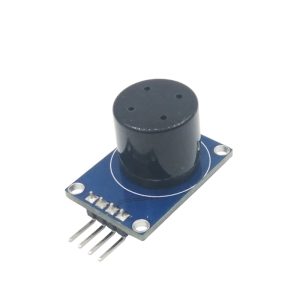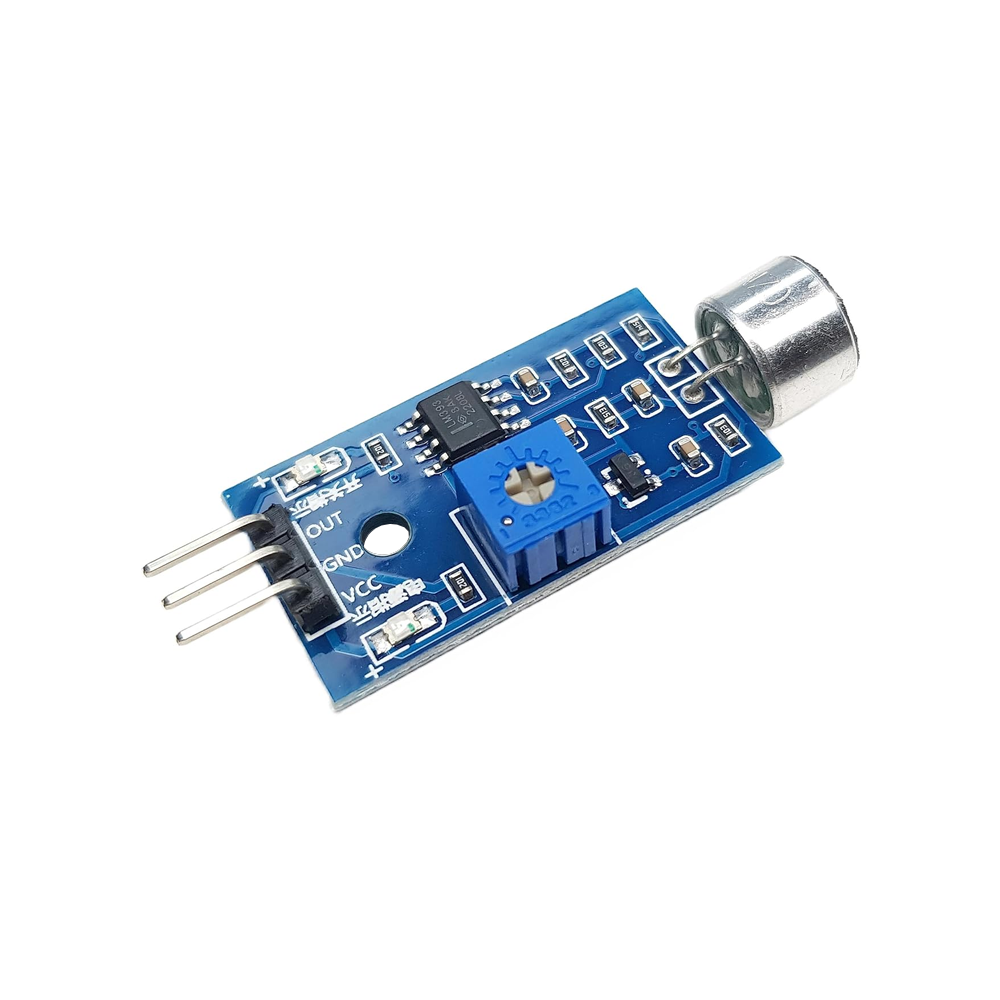
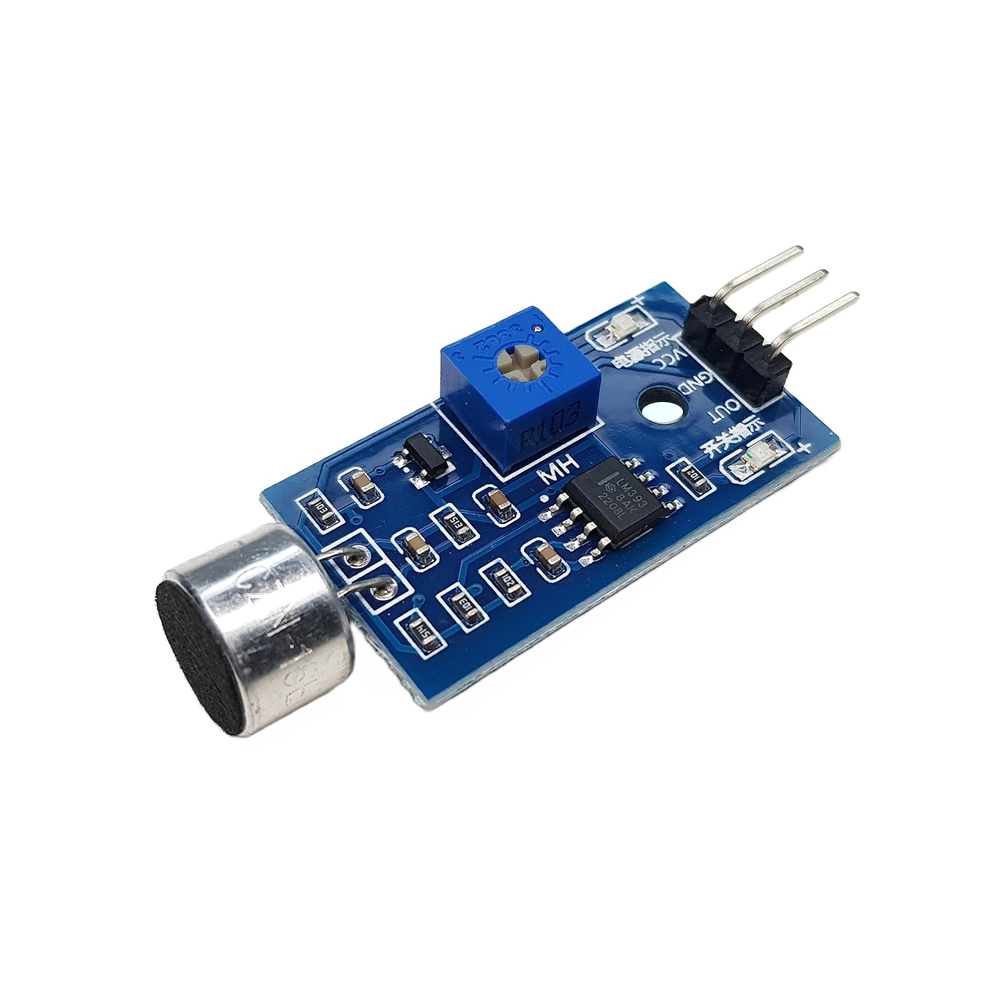
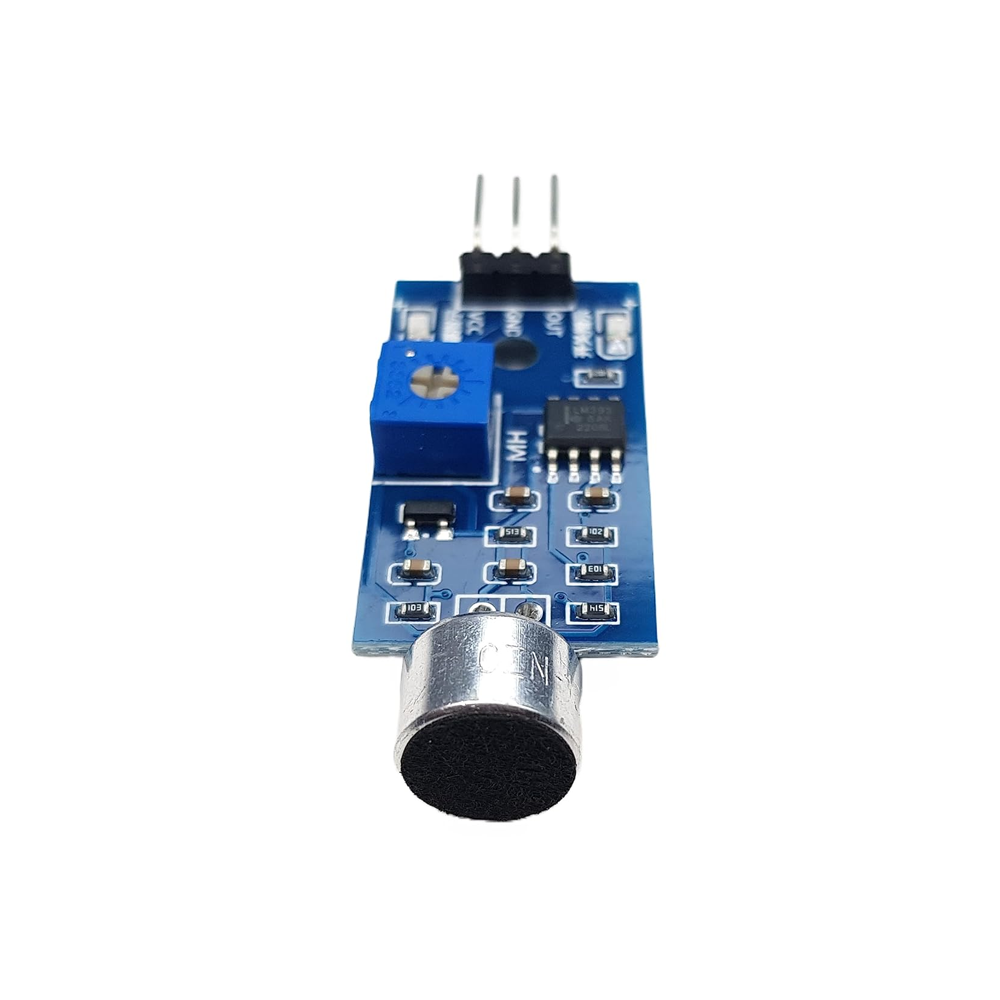
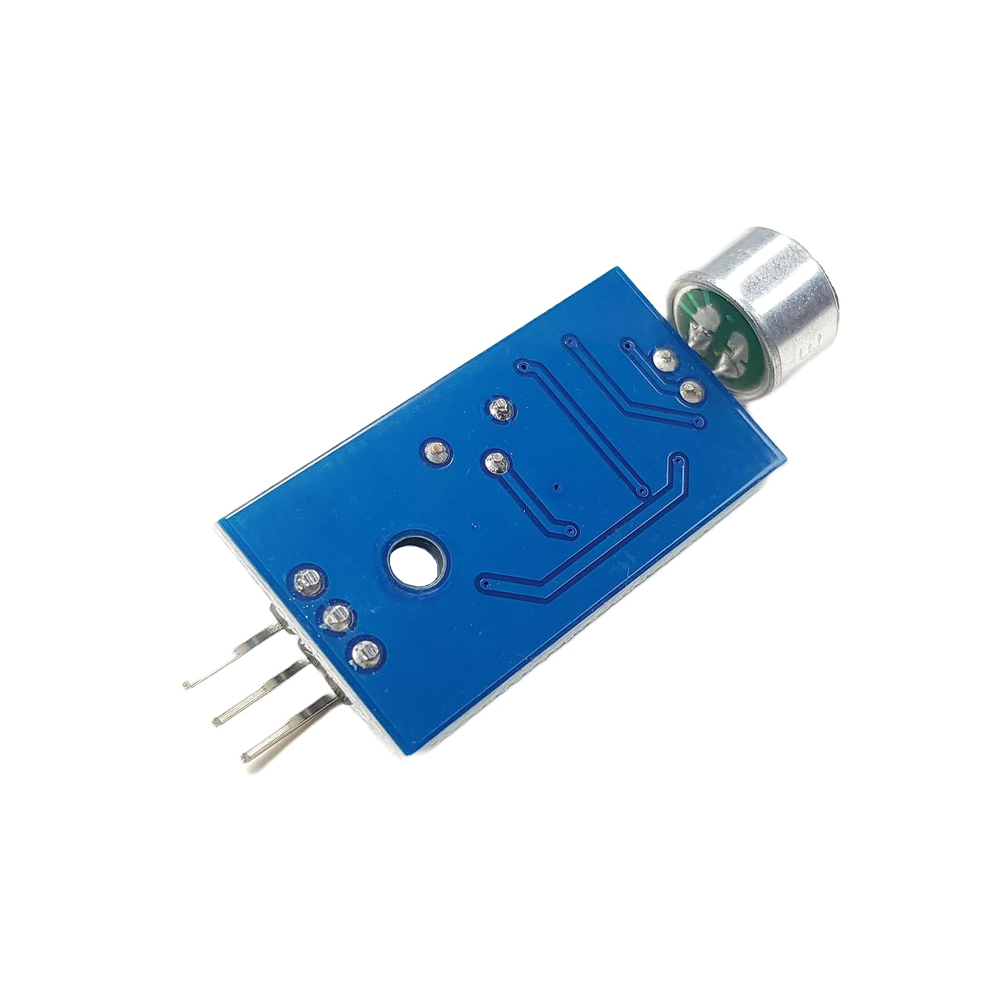
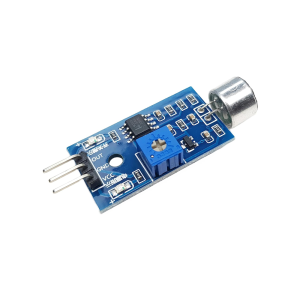
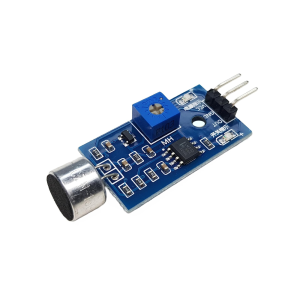
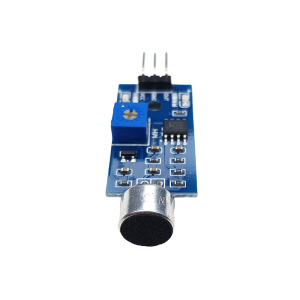
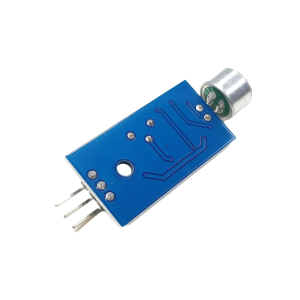
The Whistle Sound Detection Sensor Module is a compact, easy-to-use audio detection board designed specifically to recognize whistle sounds and provide a clean digital output for microcontroller projects. Unlike general-purpose sound sensors that respond to any loud noise, this module is tuned to detect the high-frequency, tonal characteristics of a whistle, making it ideal for whistle-activated switches, sound-controlled robots, and interactive DIY projects.
At the heart of the module is a high-sensitivity electret microphone paired with a frequency-selective amplifier circuit. The circuit is designed to respond primarily to the high-frequency range typical of human whistling (approximately 2kHz–4kHz), while filtering out lower-frequency ambient noise such as speech, music, and background hum. This selective tuning significantly reduces false triggers compared to standard sound sensor modules.
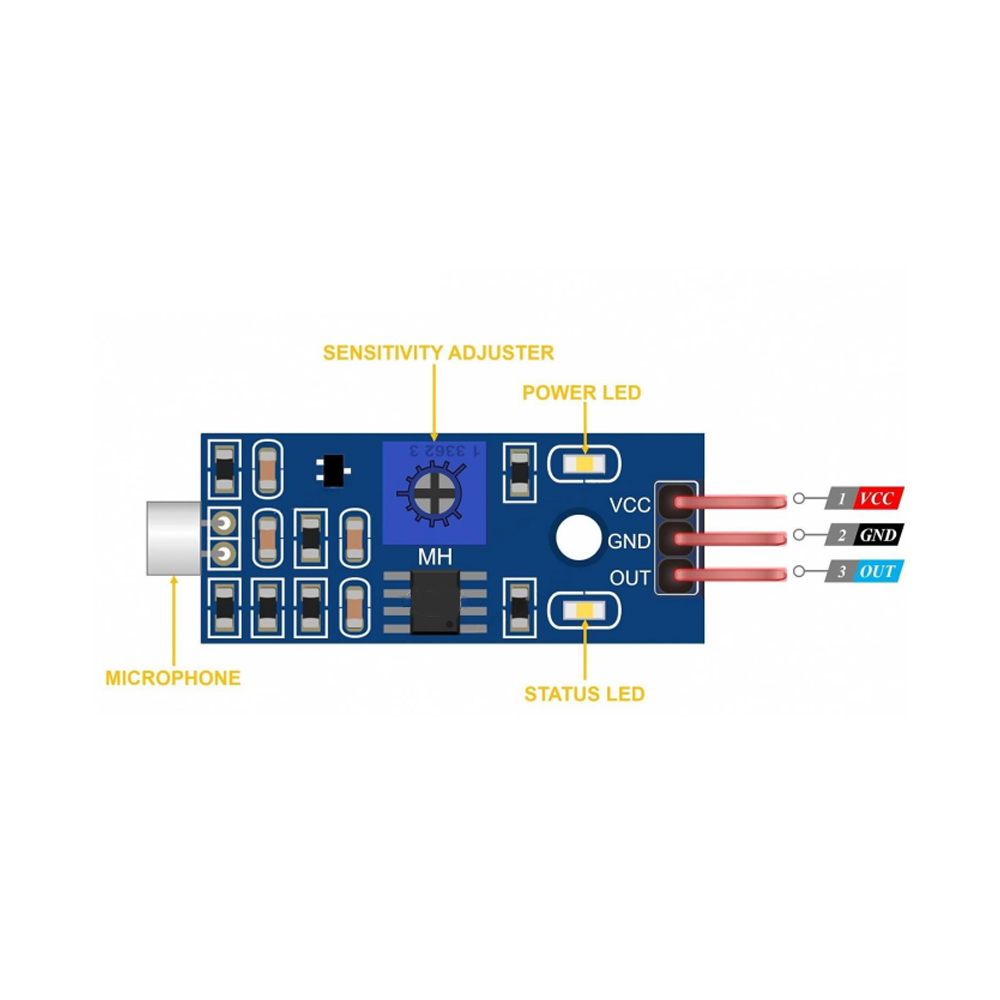
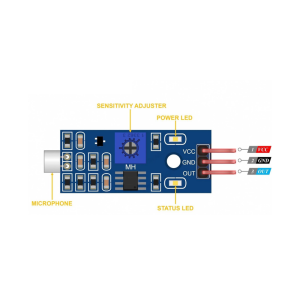
The module provides a digital output with selectable high/low level output via an onboard jumper or solder pad. This allows you to configure the output logic to match your microcontroller’s requirements — either active-high (output goes HIGH when a whistle is detected) or active-low (output goes LOW when a whistle is detected). An onboard potentiometer allows you to adjust the detection sensitivity, making it easy to calibrate for different environments and whistle volumes.
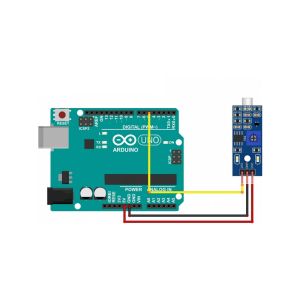
An LED indicator lights up when a whistle is detected, providing immediate visual feedback during setup and operation. The module operates from a 3.3V to 5V DC supply, making it compatible with Arduino, ESP32, STM32, Raspberry Pi, and other microcontrollers. The compact form factor with mounting holes allows easy integration into custom enclosures, robot chassis, and portable devices.
The Whistle Sound Detection Sensor Module is widely used in whistle-activated switches, sound-controlled robots, clap and whistle detectors, interactive toys, security systems, smart home automation, and educational STEM projects. It is also popular in DIY electronics and maker projects where hands-free, sound-based control is desired.
Important Note: The module is tuned to detect whistle sounds specifically, but may also respond to other high-pitched sounds such as some musical instruments or alarms. For best results, calibrate the sensitivity potentiometer in your specific environment. The module is not waterproof and should be kept dry. Avoid placing the module near constant high-frequency noise sources, as this may cause continuous triggering.
Whether you are building a whistle-controlled robot, a sound-activated switch, or an interactive toy, the Whistle Sound Detection Sensor Module provides a reliable, affordable solution. It is suitable for individual makers, students, and businesses purchasing in bulk for product development or educational programs.
Features
-
Whistle-specific detection — Tuned to high-frequency whistle sounds (2kHz–4kHz)
-
Selectable output logic — High or low level output via jumper/solder pad
-
Adjustable sensitivity — Onboard potentiometer for calibration
-
LED indicator — Visual feedback when whistle is detected
-
High-sensitivity microphone — Detects whistles from a distance
-
Wide voltage range — 3.3V to 5V DC, compatible with Arduino, ESP32, STM32, Raspberry Pi
-
Compact form factor — With mounting holes for easy integration
-
Wide application range — Whistle-activated switches, sound-controlled robots, interactive toys
-
Simple interface — Single digital output for easy MCU integration
-
Cost-effective — Affordable solution for whistle detection in volume production
Technical Specifications
| # | Parameter | Specification |
|---|---|---|
| 1 | Module Type | Whistle sound detection sensor |
| 2 | Sensor Type | Electret condenser microphone |
| 3 | Detection Frequency | Approximately 2kHz – 4kHz (whistle range) |
| 4 | Operating Voltage | 3.3V – 5V DC |
| 5 | Output Type | Digital (selectable high/low level) |
| 6 | Sensitivity Adjustment | Onboard potentiometer |
| 7 | Indication | LED indicator |
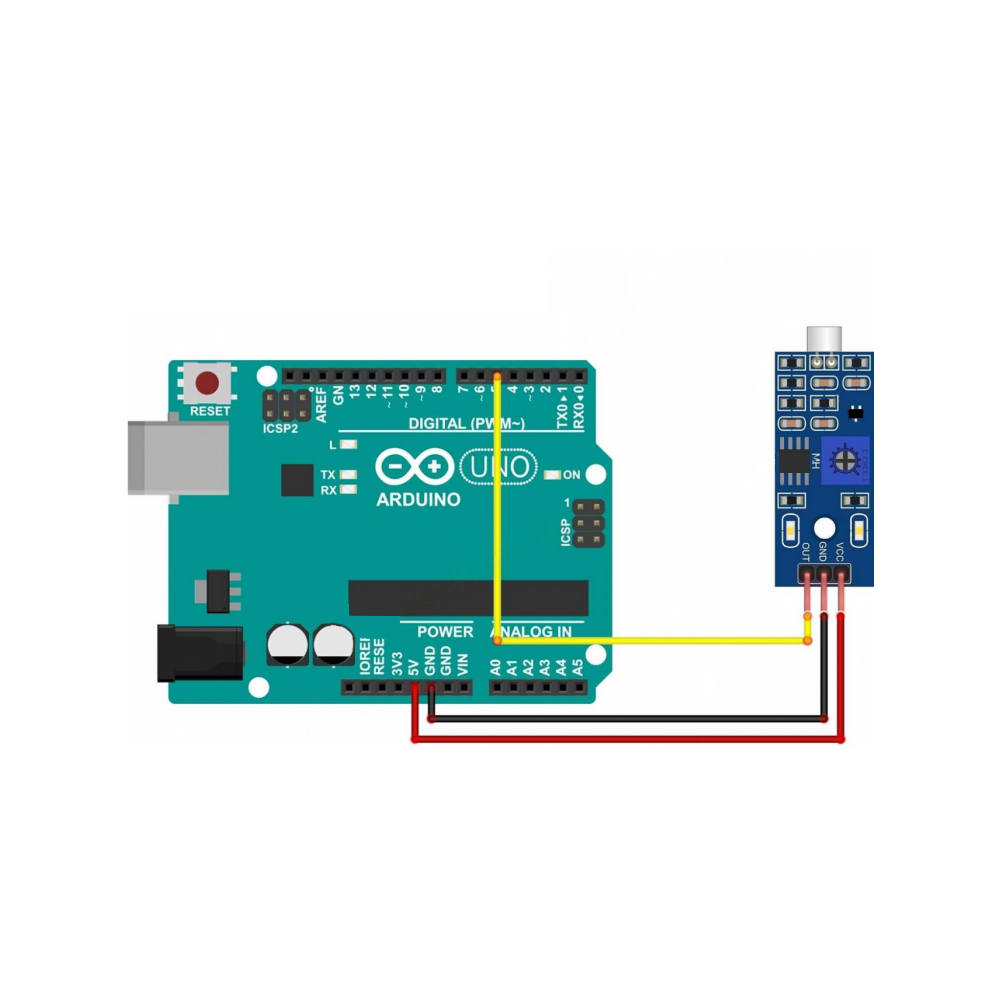
| 8 | Pin Count | 3 pins (VCC, GND, OUT) |