
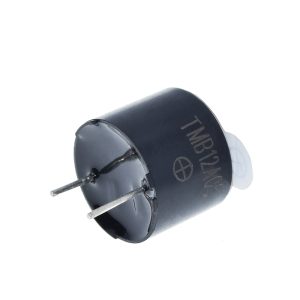
TMB12A05 Active Buzzer 5V 12095

SKU: FA3048-1
Model

TMB12A05

Buzzer Type

Electromagnetic Active Buzzer (built-in oscillator)

Rated Voltage

5V DC

Operating Voltage Range

4V – 8V DC

Resonant Frequency

2.3kHz ± 400Hz

Sound Pressure Level

≥85dB @ 5V, 10cm

Current Consumption

~15–30mA (typical)

Package Size

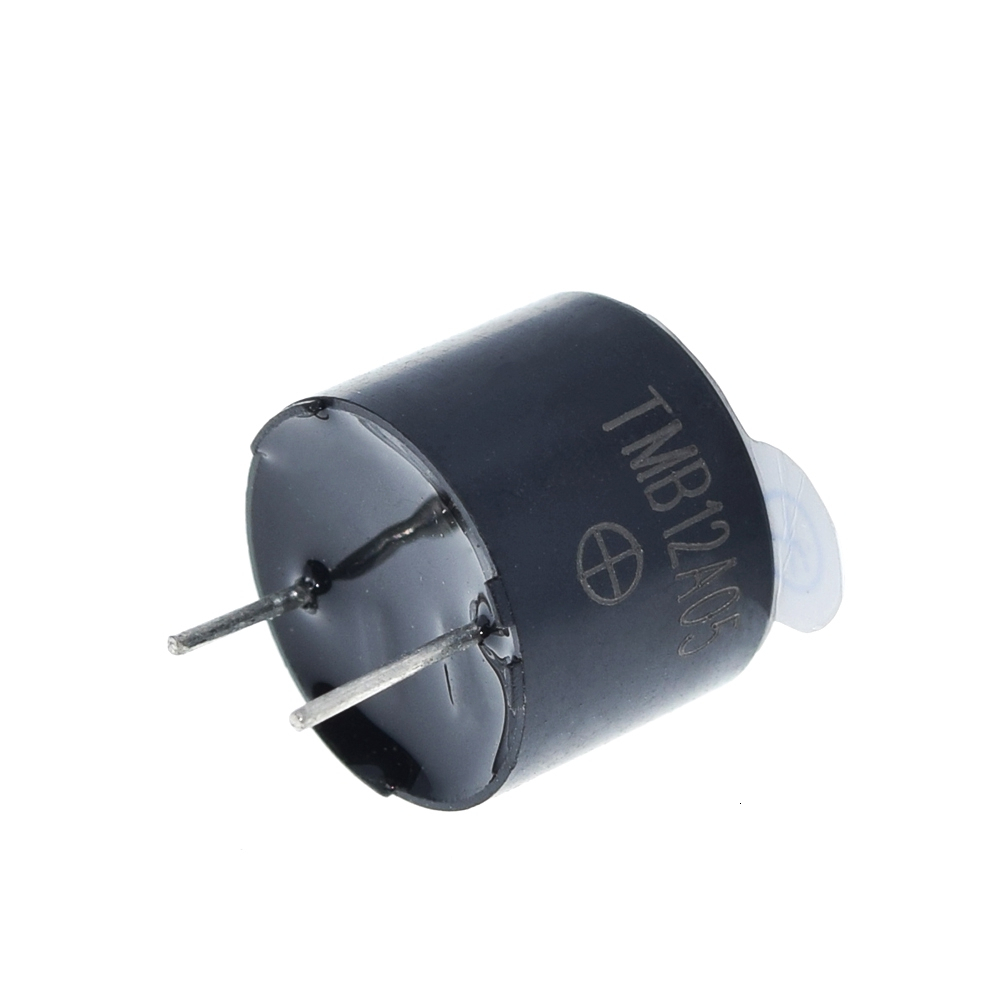
Φ12mm × 9.5mm (DIP, 2-pin)

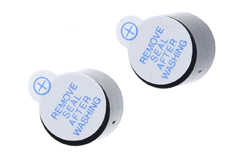
The TMB12A05 Active Buzzer is a compact, high-performance electromagnetic sound generator designed for a wide range of electronic applications requiring audible alerts, notifications, and status feedback. Housed in a standard 12mm × 9.5mm cylindrical package, this active buzzer features a built-in oscillation circuit, meaning it produces a fixed-frequency tone simply by applying a DC voltage — no external PWM signal or driver circuitry is required .

At the heart of the TMB12A05 is an electromagnetic driving mechanism combined with an integrated oscillator module . When a DC voltage (typically 5V) is applied across its two pins, the internal circuit generates an alternating current that drives the electromagnetic coil. This creates a cyclic magnetic field that causes the internal diaphragm to vibrate at a fixed resonant frequency of approximately 2.3kHz to 2.4kHz, producing a clear, continuous tone . The sound pressure level reaches approximately 85dB at 10cm, making it suitable for most indoor alert and notification applications .

The TMB12A05 operates over a wide voltage range of 4V to 8V DC (with some variants supporting 3V to 12V), providing flexibility across different power supply designs . Its low current consumption of approximately 15mA to 30mA makes it suitable for battery-powered devices and energy-conscious designs . The buzzer features a 2-pin through-hole (DIP) package with a standard pin spacing of 7.5mm, making it easy to mount on breadboards and PCBs . The positive pin is clearly marked on the housing, and the longer lead indicates the anode (+) .

The TMB12A05 is widely used in security alarm systems (smoke detectors, gas alarms, door sensors), industrial control panels (fault indicators, status alerts), smart home devices (smart locks, access control, human body induction), consumer electronics (timers, toys, power banks), and medical equipment (blood pressure monitors, glucose meters) . It is also a popular choice for Arduino and DIY projects where simple audible feedback is required.

Important Note: The TMB12A05 is an active buzzer — it produces a fixed tone when powered and cannot play melodies or variable frequencies. For variable tones, use a passive buzzer with PWM control instead. When driving directly from a microcontroller GPIO pin, note that the buzzer may draw up to 30mA, which exceeds the safe continuous current rating of many MCU pins (typically 20mA). For reliable operation, especially in industrial designs, use an NPN transistor (such as 2N3904 or S8050) as a low-side switch to isolate the buzzer from the MCU . The buzzer is an open-type design and is not waterproof — avoid exposure to moisture, corrosive gases, and direct contact with water .

Features

  • Active buzzer with built-in oscillator — Produces sound directly from DC voltage; no PWM required

  • Wide voltage range — Operates from 4V to 8V DC (5V nominal), adaptable to various power supplies

  • Fixed 2.3kHz tone — Clear, stable continuous sound for alarms and notifications

  • 85dB sound pressure — Loud enough for most indoor alert applications

  • Low current consumption — Approximately 15–30mA, suitable for battery-powered designs

  • Compact 12×9.5mm package — Standard 12095 form factor for easy PCB integration

  • 2-pin through-hole mounting — Simple breadboard and PCB installation with 7.5mm pin spacing

  • Clear polarity marking — Positive pin indicated on housing and by longer lead

  • Wide application range — Security alarms, industrial control, smart home, consumer electronics, medical devices

  • Cost-effective — Affordable solution for audible indication in volume production

Technical Specifications 

# Parameter Specification
1 Model TMB12A05
2 Buzzer Type Electromagnetic Active Buzzer (built-in oscillator)
3 Rated Voltage 5V DC
4 Operating Voltage Range 4V – 8V DC
5 Resonant Frequency 2.3kHz ± 400Hz
6 Sound Pressure Level ≥85dB @ 5V, 10cm
7 Current Consumption ~15–30mA (typical)
8 Package Size Φ12mm × 9.5mm (DIP, 2-pin)

Usage

Getting Started

  1. Identify the pins — The longer lead is the positive terminal (+), and the shorter lead is the negative terminal (-). The housing also typically has a + marking near the positive pin .

  2. Connect power — Apply 5V DC directly across the buzzer pins (positive to +, negative to -). The buzzer will produce a continuous tone immediately.

  3. Control with a microcontroller — For MCU control, connect the buzzer through a transistor driver circuit (recommended) or directly to a GPIO pin if current is limited .

  4. Transistor driver circuit — Connect the buzzer positive to VCC, buzzer negative to transistor collector, transistor emitter to GND, and transistor base to MCU GPIO through a resistor (e.g., 1kΩ).

  5. Upload control code — Set the GPIO pin HIGH to turn the buzzer on, LOW to turn it off.

Pin Connections

Buzzer Pin Function
Positive (+) Connect to VCC (5V)
Negative (-) Connect to GND (or transistor collector)

Example Arduino Code (Direct GPIO Control)

cpp
#define BUZZER_PIN 8

void setup() {
  pinMode(BUZZER_PIN, OUTPUT);
}

void loop() {
  digitalWrite(BUZZER_PIN, HIGH);  // Buzzer ON
  delay(500);
  digitalWrite(BUZZER_PIN, LOW);   // Buzzer OFF
  delay(500);
}

Transistor Driver Circuit (Recommended for Reliable Operation)

Component Connection
Buzzer + VCC (5V)
Buzzer – Transistor Collector
Transistor Emitter GND
Transistor Base MCU GPIO via 1kΩ resistor

Typical Applications

  • Security alarms — Smoke detectors, gas alarms, door/window sensors

  • Industrial control — Fault indicators, machine status alerts, process warnings

  • Smart home devices — Smart locks, access control, human body induction

  • Consumer electronics — Timers, toys, power banks, remote controls

  • Medical equipment — Blood pressure monitors, glucose meters, portable health devices

  • Automotive electronics — Car alarms, parking sensors, dashboard indicators

  • Arduino and DIY projects — Simple audible feedback for makers and students

Notes for Business Buyers

  • Active buzzer — Fixed tone, no PWM required; simple DC voltage drive.

  • Transistor driver recommended — For industrial designs and MCU control, use a transistor to avoid exceeding GPIO current limits.

  • Wide voltage tolerance — 4V–8V range supports 5V USB, 3.7V lithium (with slight under-voltage), and 6V battery configurations.

  • Suitable for bulk purchasing — Ideal for security device manufacturers, industrial control panel builders, and educational institutions.

Q: What is the TMB12A05 Active Buzzer used for?

It is an active electromagnetic buzzer for producing audible alerts and notifications, used in security alarms, industrial control panels, smart home devices, consumer electronics, and medical equipment .

Q: What is the difference between an active and passive buzzer?

An active buzzer (like TMB12A05) has a built-in oscillator and produces a fixed tone when DC voltage is applied. A passive buzzer requires an external PWM signal and can produce different frequencies and melodies .

Q: What voltage does the buzzer require?

The rated voltage is 5V DC, with a wide operating range of 4V to 8V DC .

Q: What is the sound output frequency and volume?

The buzzer produces a fixed tone at approximately 2.3kHz to 2.4kHz with a sound pressure level of 85dB at 10cm .

Q: How do I connect the buzzer to an Arduino?

For direct GPIO control: connect the longer pin (+) to a digital pin and the shorter pin (-) to GND. However, for reliable operation, use a transistor driver because the buzzer may draw up to 30mA, exceeding safe GPIO current limits .

Q: Why does my buzzer only click instead of producing a continuous tone?

You may be using the Arduino tone() function, which is designed for passive buzzers. For active buzzers, use digitalWrite(pin, HIGH) to supply steady DC voltage instead .

Q: Can I use a transistor to drive the buzzer?

Yes, and it is recommended for reliable operation. Use an NPN transistor (e.g., 2N3904, S8050) with the buzzer connected between VCC and the collector, emitter to GND, and base to MCU GPIO through a 1kΩ resistor .

Q: Is the buzzer waterproof?

No. The TMB12A05 is an open-type design and is not waterproof. Avoid exposure to moisture, water, and corrosive gases .

Q: Can I play different tones or melodies with this buzzer?

No. The TMB12A05 is an active buzzer with a fixed tone. It cannot play melodies or variable frequencies. For variable tones, use a passive buzzer with PWM .

Q: Can I purchase in bulk for a product development project?

Yes. The TMB12A05 is suitable for bulk purchasing by security device manufacturers, industrial control panel builders, and educational institutions.