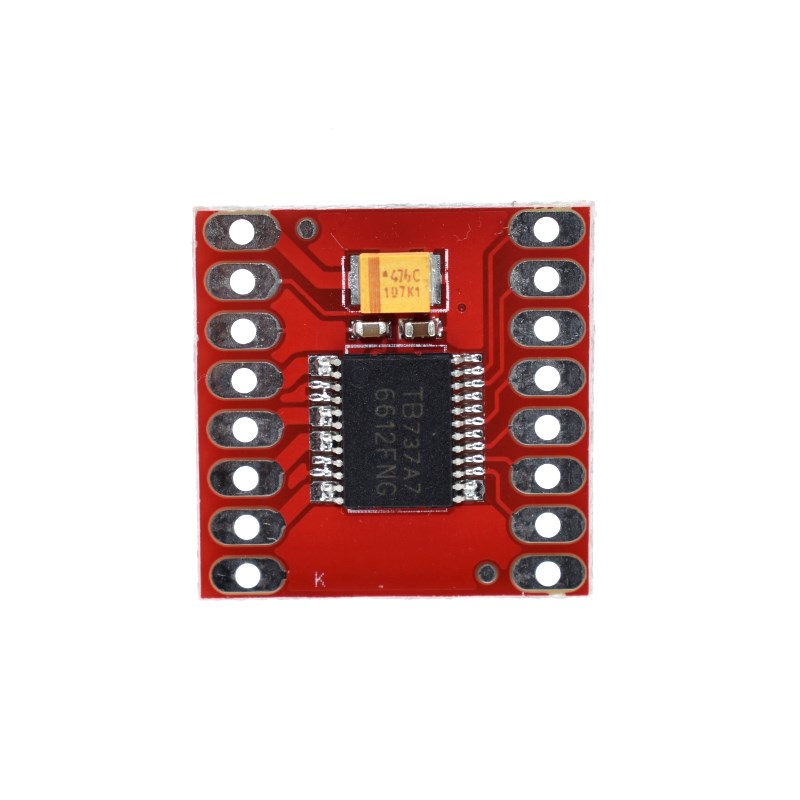
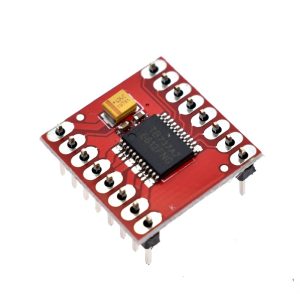
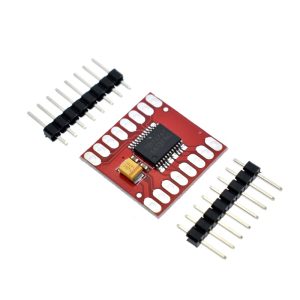
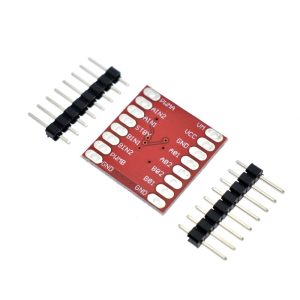
TB6612FNG Motor Driver Module – High-Performance, Ultra-Compact 3PI Package (Superior to L298N)

SKU: FA2066-1
Driver IC

Toshiba TB6612FNG

Motor Channels

2 (dual DC motors or 1 stepper)

Continuous Current

1.2A per channel

Peak Current

3.2A per channel

Motor Supply Voltage

2.5V – 13.5V DC

Logic Supply Voltage

2.7V – 5.5V DC

PWM Frequency

Up to 100kHz

Package Size

Approx. 20mm × 20mm (3PI)

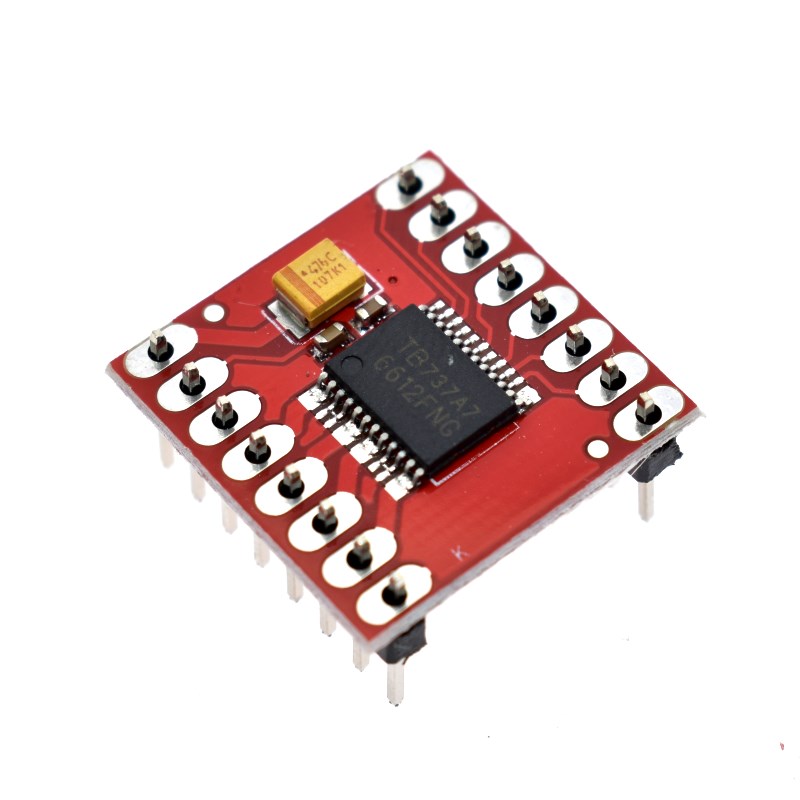
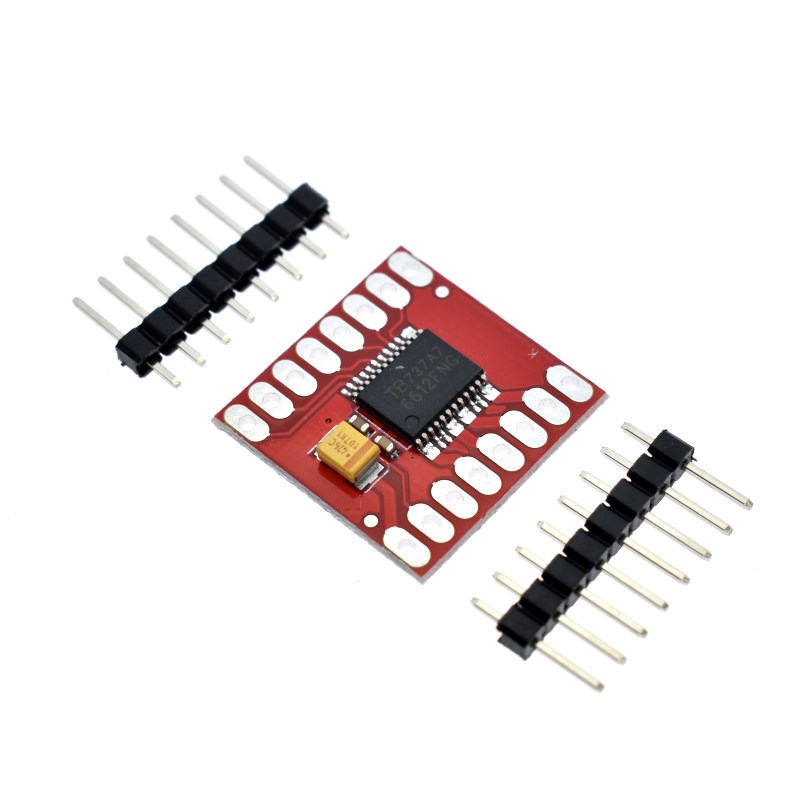
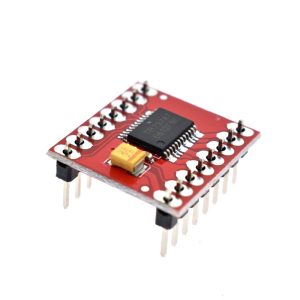
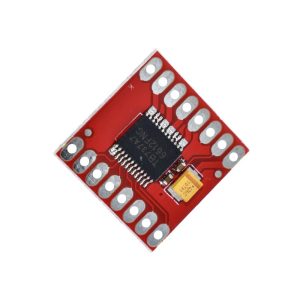
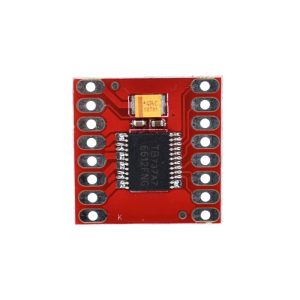
The TB6612FNG Motor Driver Module is a high-performance, ultra-compact dual motor driver designed for robotics, RC vehicles, and precision motion control applications. Built around the Toshiba TB6612FNG driver IC, this module offers significant advantages over the classic L298N — including higher efficiency, lower heat generation, smaller size, and higher peak current capability. It is an ideal solution for building compact robots, drones, and portable motorized projects where space and power efficiency are critical.

At the heart of the module is the TB6612FNG, a dual-channel driver IC that uses MOSFET-based H-bridge outputs instead of the bipolar transistors found in the L298N. This results in much lower voltage drop (typically 0.5V vs. 2V+ for L298N), meaning more of your battery voltage reaches the motors and less is wasted as heat. The module delivers 1.2A continuous current per channel (3.2A peak) — comparable to the L298N but in a fraction of the size and with far better efficiency.

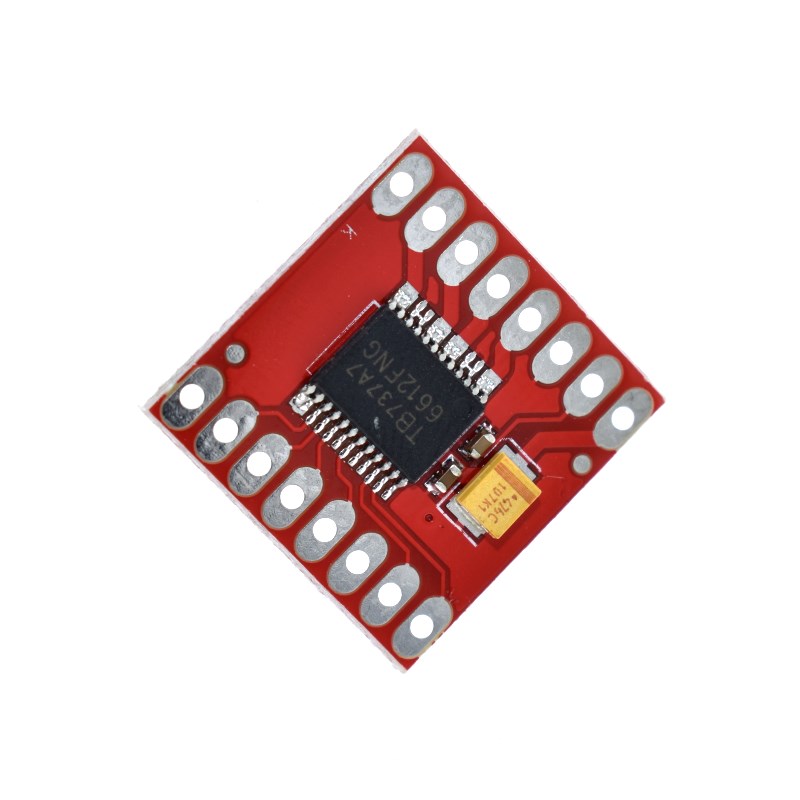
The ultra-compact 3PI package (approximately 20mm × 20mm) makes this module ideal for space-constrained designs. Unlike the L298N which requires a large heat sink, the TB6612FNG runs cool even under load, eliminating the need for bulky thermal management. This makes it perfect for small robots, micro RC vehicles, and wearable motorized projects.

The module supports motor supply voltages from 2.5V to 13.5V and logic supply from 2.7V to 5.5V, making it compatible with a wide range of battery configurations including single-cell lithium (3.7V), 2S lithium (7.4V), and 4×AA (6V) packs. The PWM frequency supports up to 100kHz, allowing smooth, quiet motor operation.

The TB6612FNG includes built-in protection features including thermal shutdown, overcurrent protection, and undervoltage lockout, ensuring safe and reliable operation even under fault conditions. The module also features a standby mode for power saving when motors are not in use.

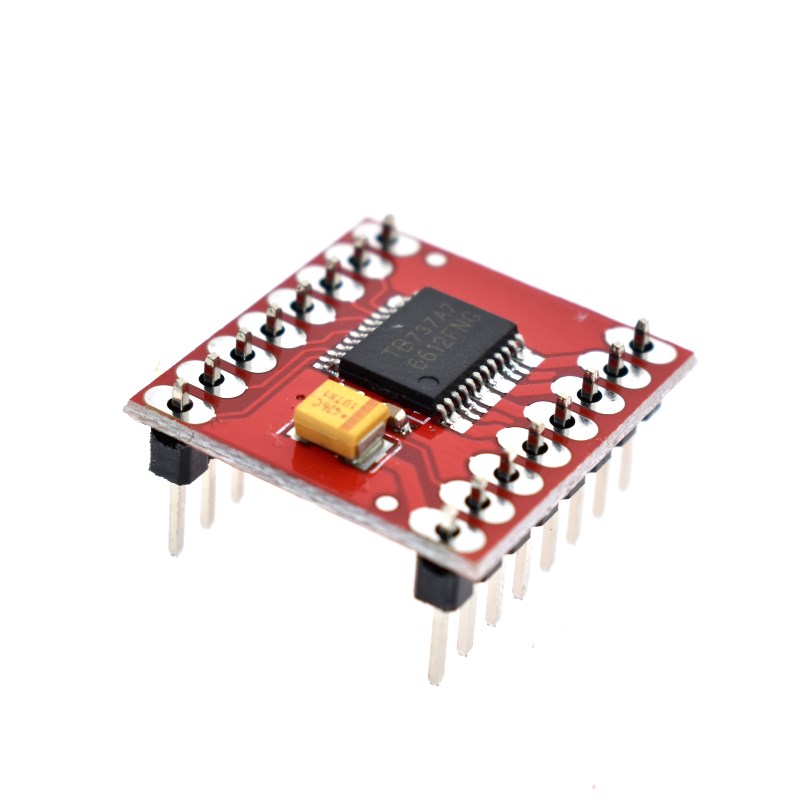
The board includes standard 0.1-inch headers for easy connection to Arduino, ESP32, STM32, and other microcontrollers. The screw terminals provide secure connections for motor wires and power supply. The module is widely used in micro robotics, line-following robots, sumo bots, drone gimbals, camera sliders, and portable motorized projects.

Important Note: The motor supply voltage must be within the 2.5V to 13.5V range. The logic supply should match your microcontroller’s logic level (3.3V or 5V). Always verify the voltage and current ratings match your motor specifications before installation. Ensure proper wiring and fusing for your application.

Whether you are building a micro robot, a portable motorized device, or a precision motion control system, the TB6612FNG Motor Driver Module provides a reliable, efficient solution that outperforms the L298N in nearly every way. It is suitable for individual makers, students, and businesses purchasing in bulk for product development or educational programs.

Features

  • TB6612FNG driver IC — High-performance MOSFET-based dual H-bridge

  • Superior to L298N — Higher efficiency, lower heat, smaller size

  • Ultra-compact 3PI package — Approximately 20mm × 20mm

  • 1.2A continuous / 3.2A peak per channel — High current in a tiny footprint

  • Low voltage drop — Typically 0.5V vs. 2V+ for L298N

  • Wide motor voltage range — 2.5V to 13.5V DC

  • Logic supply range — 2.7V to 5.5V DC

  • PWM frequency up to 100kHz — Smooth, quiet motor operation

  • Built-in protection — Thermal shutdown, overcurrent, undervoltage lockout

  • Standby mode — Power saving when motors are idle

  • Standard headers — Easy connection to Arduino, ESP32, STM32

  • Screw terminals — Secure motor and power connections

Technical Specifications 

# Parameter Specification
1 Driver IC Toshiba TB6612FNG
2 Motor Channels 2 (dual DC motors or 1 stepper)
3 Continuous Current 1.2A per channel
4 Peak Current 3.2A per channel
5 Motor Supply Voltage 2.5V – 13.5V DC
6 Logic Supply Voltage 2.7V – 5.5V DC
7 PWM Frequency Up to 100kHz
8 Package Size Approx. 20mm × 20mm (3PI)

Usage

Getting Started

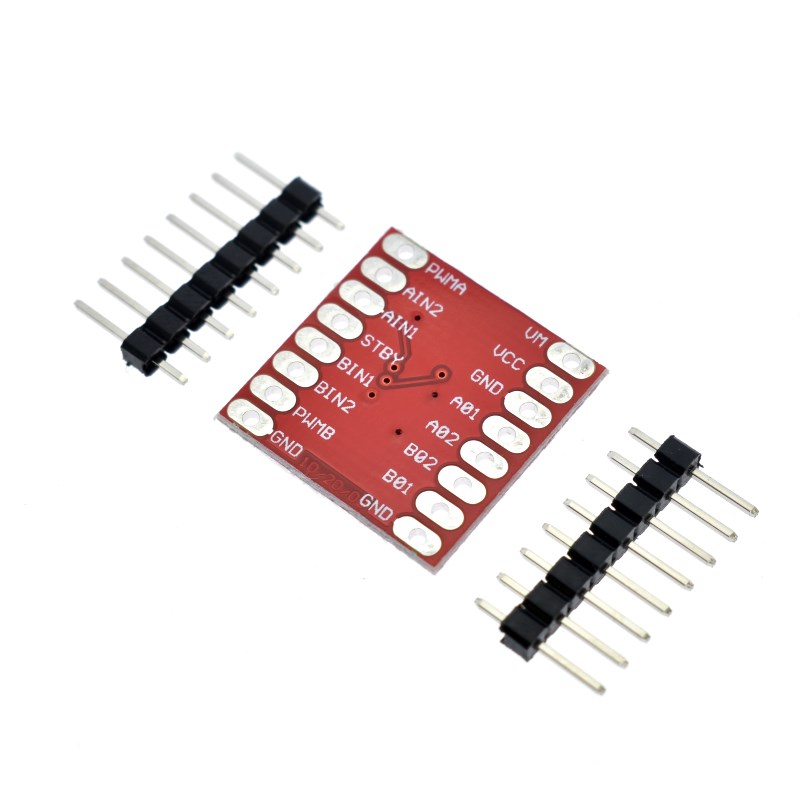
  1. Connect motor power — Connect your motor power supply (2.5V–13.5V DC) to the VM and GND terminals. Observe correct polarity.

  2. Connect logic power — Supply 2.7V–5.5V DC to the VCC and GND pins for the logic side of the driver. Use the same voltage as your microcontroller logic.

  3. Connect motors — Wire your DC motors to the AO1/AO2 (Motor A) and BO1/BO2 (Motor B) screw terminals. Observe correct polarity for forward/reverse direction.

  4. Connect control signals — Connect the control pins to your microcontroller:

    • PWMA/PWMB — PWM speed control (connect to PWM-capable pins)

    • AIN1/AIN2 — Motor A direction control

    • BIN1/BIN2 — Motor B direction control

    • STBY — Standby control (pull HIGH to enable, LOW to disable)

  5. Upload and test — Write a simple sketch to test motor operation. Use analogWrite() for speed and digitalWrite() for direction.

  6. Set STBY HIGH — The module is disabled by default. Pull the STBY pin HIGH to enable the motors.

Pin Connections (Typical)

Module Pin Function
VM Motor power supply (2.5V–13.5V)
VCC Logic power (2.7V–5.5V)
GND Ground
PWMA Motor A PWM speed control
AIN1 Motor A direction control
AIN2 Motor A direction control
PWMB Motor B PWM speed control
BIN1 Motor B direction control
BIN2 Motor B direction control
STBY Standby control (HIGH = enable)
AO1/AO2 Motor A output
BO1/BO2 Motor B output

Typical Applications

  • Micro robotics — Line-following robots, sumo bots, and small wheeled robots

  • Portable motorized projects — Battery-powered devices with space constraints

  • Drone gimbals — Camera stabilization and positioning

  • Camera sliders — Smooth motorized camera movement

  • Wearable motorized projects — Compact actuators for wearables

  • Educational projects — Teaching motor control, H-bridge operation, and PWM

  • RC vehicles — Small RC cars, boats, and tanks

Notes for Business Buyers

  • Superior to L298N — Higher efficiency, lower heat, smaller size, and no need for a large heat sink.

  • Ultra-compact — 3PI package ideal for space-constrained designs.

  • Built-in protection — Thermal shutdown, overcurrent, and undervoltage lockout for reliable operation.

  • Suitable for bulk purchasing — Ideal for robotics manufacturers, educational institutions, and product development.

Q: What is the TB6612FNG Motor Driver Module used for?

It is a high-performance dual motor driver for micro robotics, RC vehicles, drone gimbals, camera sliders, and other compact motorized projects.

Q: What is the difference between TB6612FNG and L298N?

The TB6612FNG uses MOSFET outputs instead of bipolar transistors, resulting in higher efficiency (lower voltage drop) , less heat generation, smaller size, and no need for a large heat sink. It is superior to the L298N in nearly every way.

Q: What is the maximum current rating?

The module supports 1.2A continuous per channel and 3.2A peak per channel.

Q: What motors can I drive with this module?

It drives two DC motors or one stepper motor (bipolar). The motor supply voltage range is 2.5V to 13.5V DC.

Q: What is the logic supply voltage?

The logic side operates from 2.7V to 5.5V DC, making it compatible with both 3.3V and 5V microcontrollers.

Q: How do I control motor speed?

Use the PWMA/PWMB pins with PWM signals from your microcontroller to control motor speed. Use AIN1/AIN2/BIN1/BIN2 for direction control.

Q: What is the STBY pin for?

The STBY (standby) pin enables or disables the motor driver. Pull it HIGH to enable the motors, or LOW to put the driver in low-power standby mode.

Q: Does the module have protection circuits?

Yes. It includes thermal shutdown, overcurrent protection, and undervoltage lockout for safe operation.

Q: Does the module need a heat sink?

No. The TB6612FNG runs cool even under load thanks to its high-efficiency MOSFET design. No external heat sink is required.

Q: Can I purchase in bulk for a product development project?

Yes. This module is suitable for both individual users and business purchasing, including robotics manufacturers, educational institutions, and product development.