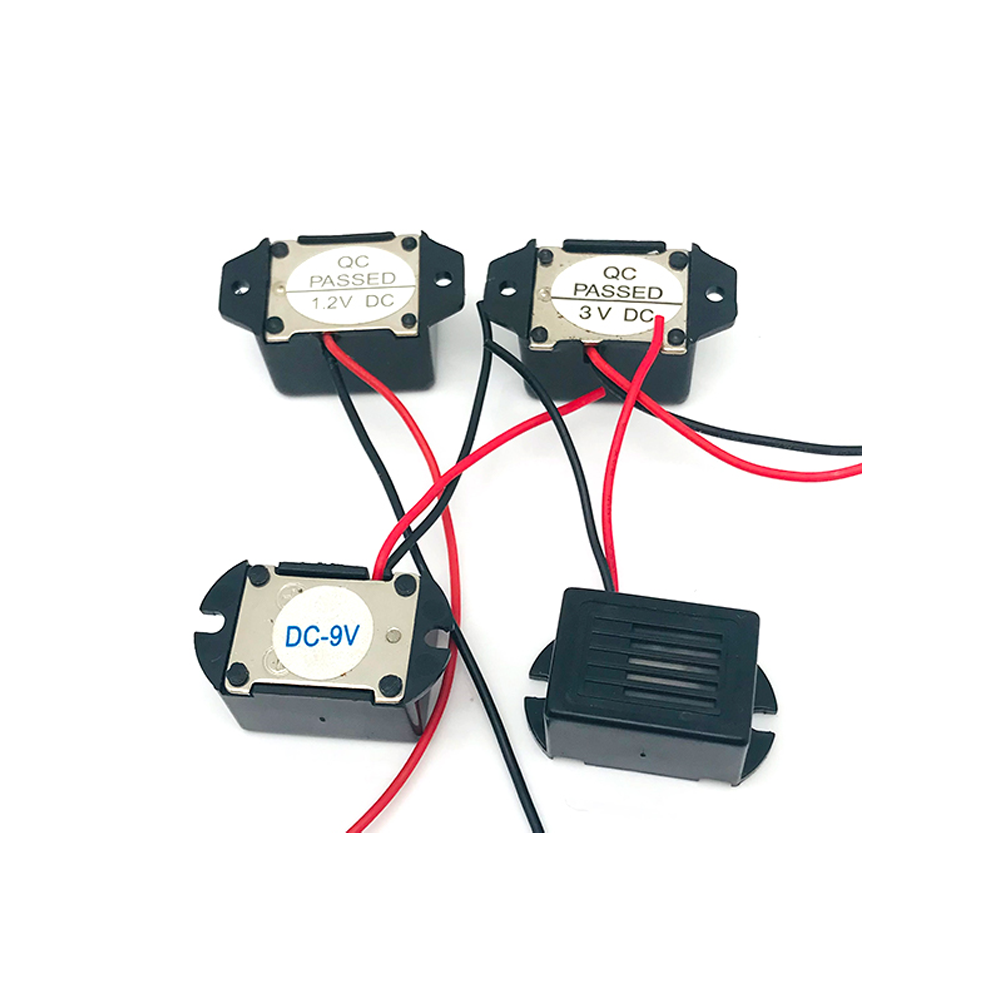
QYC3316 12V Active Piezo Buzzer – 33x16x15mm Compact Electromagnetic Alarm for Electronics (2315 Type)

SKU: FA3048-6-4
Model

QYC3316

Buzzer Type

Piezoelectric Active Buzzer (built-in oscillator)

Rated Voltage

12V DC

Resonant Frequency

~2.7kHz – 3.1kHz (typical)

Operating Temperature

-20°C to +60°C (typical)

Mounting Type

Through-hole, 2-pin solderable

Housing Dimensions

33 × 16 × 15 mm (approximate)

Sound Output

Continuous tone (audible in quiet to moderate environments)

The QYC3316 12V Active Piezo Buzzer is a compact, reliable sound generator designed for electronic applications requiring clear audible alerts, notifications, and status feedback at 12V DC operation. Housed in a standard 33×16×15mm rectangular package (2315 type), this buzzer combines a piezoelectric ceramic element with a built-in drive circuit, producing a continuous tone without any external PWM signal or oscillator circuitry. It is an ideal choice for 12V battery-powered devices, automotive systems, industrial control panels, security equipment, and embedded systems operating from 12V rails.

At the heart of the buzzer is a piezoelectric ceramic disc bonded to a metal diaphragm. When the internal drive circuit applies an oscillating voltage across the ceramic element, it expands and contracts, causing the diaphragm to vibrate at a fixed resonant frequency of approximately 2.7kHz to 3.1kHz — a tone that is clearly audible to the human ear. The built-in oscillator simplifies integration: connect the positive and negative terminals to a 12V DC source, and the buzzer produces sound immediately.

The 12V rated operating voltage makes this buzzer particularly well-suited for applications that use 12V sealed lead-acid batteries, automotive electrical systems, 12V power adapters, and industrial control circuits with 12V rails. It can also be operated from a 24V supply with a series resistor to drop the voltage to the rated level, or from a 5V USB rail with a boost converter if 12V is required.

The buzzer features solderable pin terminals for through-hole mounting on PCBs, with clearly marked polarity. The rectangular 33×16×15mm housing provides a stable mounting surface and protects the internal piezo element from dust and physical damage. The compact form factor allows integration into handheld devices, small enclosures, and space-constrained designs.

The QYC3316 is widely used in 12V battery-powered alarms, automotive warning systems, security alarm panels, industrial control panels, test instruments, medical devices, home automation devices, and educational STEM projects where a simple, reliable audible indicator is needed at 12V operation.

Important Note: The QYC3316 is an active buzzer — it produces a fixed tone when powered and cannot play melodies or variable frequencies. For variable tones, use a passive buzzer with PWM control. The 12V rated voltage means this buzzer is best suited for 12V circuits — applying higher voltage (such as 24V) directly may damage the internal drive circuit or produce excessive volume. If you need to operate from a higher voltage rail, use a series resistor or voltage regulator to drop the voltage to the rated level. The buzzer is not waterproof and should be kept dry. Verify polarity before connecting — reverse polarity may damage the internal oscillator.

Whether you are designing a 12V battery-powered alarm, an automotive warning device, or an industrial control panel, the QYC3316 12V Active Piezo Buzzer provides a reliable, integrated solution for audible feedback at 12V operation.

Features

  • 12V operating voltage — Ideal for automotive, industrial, and 12V battery-powered applications

  • Active buzzer with built-in oscillator — Produces sound directly from DC voltage; no PWM required

  • Fixed 2.7kHz–3.1kHz tone — Clear, audible continuous sound for alerts and notifications

  • Compact 33×16×15mm package — Rectangular form factor for stable PCB mounting (2315 type)

  • Piezoelectric ceramic element — Low current draw, high efficiency

  • Solderable pin terminals — Simple through-hole installation with polarity marking

  • Built-in drive circuit — No external components required

  • Wide application range — Automotive, security panels, industrial control, test instruments, medical devices

  • Cost-effective — Affordable solution for 12V audible indication

  • Reliable performance — Piezo element resists mechanical wear and has long service life

Technical Specifications

# Parameter Specification
1 Model QYC3316
2 Buzzer Type Piezoelectric Active Buzzer (built-in oscillator)
3 Rated Voltage 12V DC
4 Resonant Frequency ~2.7kHz – 3.1kHz (typical)
5 Operating Temperature -20°C to +60°C (typical)
6 Mounting Type Through-hole, 2-pin solderable
7 Housing Dimensions 33 × 16 × 15 mm (approximate)
8 Sound Output Continuous tone (audible in quiet to moderate environments)

Usage

Getting Started

  1. Identify the pins — Determine the positive (+) and negative (-) terminals. Polarity is usually marked on the housing or by pin length.

  2. Connect power — Apply 12V DC across the terminals (positive to +, negative to -). The buzzer will produce a continuous tone immediately.

  3. Control with a microcontroller — For MCU control, use a transistor driver circuit to switch the buzzer on and off. The MCU GPIO can drive the base of the transistor while the buzzer is powered from the 12V rail.

  4. Transistor driver circuit — Connect the buzzer positive to the 12V supply, buzzer negative to a transistor collector, transistor emitter to GND, and transistor base to MCU GPIO through a resistor (e.g., 1kΩ).

  5. Upload control code — Set the GPIO pin HIGH to turn the buzzer on, LOW to turn it off.

Pin Connections

Buzzer Pin Function
Positive (+) Connect to 12V supply
Negative (-) Connect to GND (or transistor collector)

Power Source Compatibility

Power Source Suitability
12V SLA Battery Yes (ideal)
12V Car System Yes (ideal)
12V Power Adapter Yes (ideal)
24V Supply Yes (with series resistor)
9V Battery No — insufficient voltage
5V USB No — requires boost converter

Example Arduino Code (via Transistor Driver)

cpp
#define BUZZER_PIN 8

void setup() {
  pinMode(BUZZER_PIN, OUTPUT);
}

void loop() {
  digitalWrite(BUZZER_PIN, HIGH);  // Buzzer ON
  delay(500);
  digitalWrite(BUZZER_PIN, LOW);   // Buzzer OFF
  delay(500);
}

Transistor Driver Circuit

Component Connection
Buzzer + 12V supply
Buzzer – Transistor Collector
Transistor Emitter GND
Transistor Base MCU GPIO via 1kΩ resistor

Typical Applications

  • 12V battery-powered alarms — Security devices, warning systems

  • Automotive warning systems — Parking sensors, reverse alarms, dashboard indicators

  • Security alarm panels — Intrusion detection, door/window sensors

  • Industrial control panels — 12V status indication and fault alerts

  • Test instruments — Measurement alerts and status indication

  • Medical devices — Patient alerts, equipment status indication

  • Home automation devices — Appliance status, doorbell, notification sounds

  • Educational STEM projects — Teaching low-voltage electronics and sound generation

Notes for Business Buyers

  • 12V rated voltage — Designed for 12V operation; do not connect directly to 24V rails without voltage reduction.

  • Active buzzer — Fixed tone, no PWM required; simple DC voltage drive.

  • Transistor driver recommended — For MCU control, use a transistor to isolate the buzzer from the MCU.

  • Suitable for bulk purchasing — Ideal for automotive suppliers, security system integrators, industrial panel builders, and educational institutions.

Q: What is the QYC3316 12V Active Piezo Buzzer used for?

It is a 12V active buzzer for producing audible alerts and notifications in automotive systems, security panels, industrial control panels, test instruments, medical devices, home automation products, and toys.

Q: What voltage does the buzzer require?

The rated voltage is 12V DC. It is designed for 12V operation, typical of automotive systems, 12V batteries, and 12V power adapters.

Q: Can I connect this buzzer directly to a 5V microcontroller pin?

No. The 12V rated voltage means 5V is insufficient to drive the buzzer to its rated output. Use a boost converter to step up 5V to 12V, or use a transistor driver with a separate 12V supply.

Q: Can I connect this buzzer directly to a 24V supply?

No. The 12V rated voltage means 24V will overdrive the internal circuit and may damage the buzzer. Use a voltage regulator or series resistor to reduce the voltage to 12V.

Q: What is the difference between an active and passive buzzer?

An active buzzer has a built-in oscillator and produces a fixed tone when powered. A passive buzzer requires an external PWM signal and can produce different frequencies and melodies.

Q: What is the sound output frequency?

The buzzer produces a tone at approximately 2.7kHz to 3.1kHz, typical for active piezoelectric buzzers.

Q: How do I connect the buzzer to an Arduino?

Use a transistor driver circuit with a 12V supply. Connect the buzzer between the 12V supply and the transistor collector, emitter to GND, and base to MCU GPIO through a resistor.

Q: Is the buzzer waterproof?

No. The QYC3316 is not waterproof and should be kept dry.

Q: Can I play different tones or melodies with this buzzer?

No. The QYC3316 is an active buzzer with a fixed tone. It cannot play melodies or variable frequencies.

Q: Can I purchase in bulk for a product development project?

Yes. The QYC3316 is suitable for bulk purchasing by automotive suppliers, security system integrators, industrial panel builders, and educational institutions.