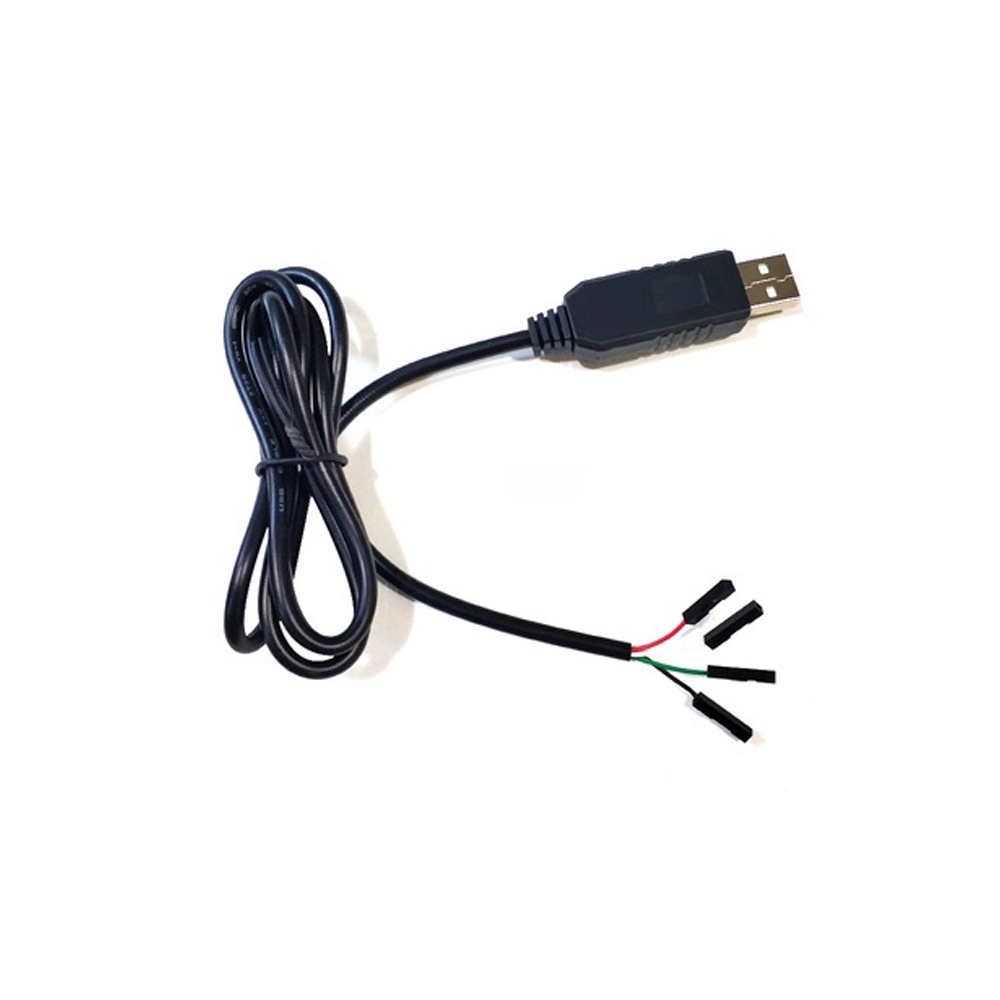
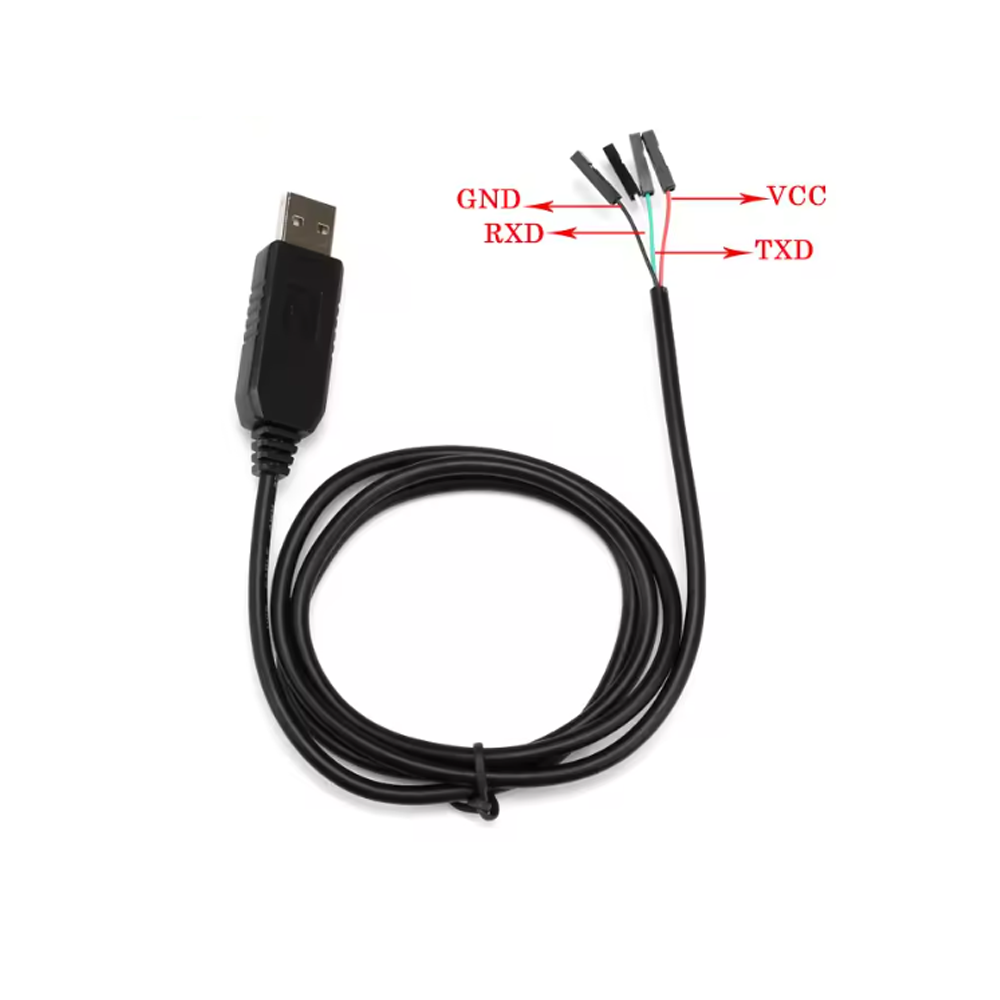
PL2303HX Download Cable USB to TTL RS232 Module 4PIN

SKU: FA2112-0-0
USB Interface Chip

Prolific PL2303HX

USB Standard

USB 2.0 (Full Speed)

Serial Interface

TTL-level UART (TXD, RXD)

Data Transfer Rate

300 bps – 1 Mbps

Output Voltage

5V or 3.3V (variant dependent)

Pin Count

4 pins (VCC, GND, TXD, RXD)

Indication

Power LED, TX/RX activity LEDs

Driver Support

Windows, Linux, macOS

The PL2303HX Download Cable is a compact, reliable USB-to-TTL serial adapter designed for programming microcontrollers, debugging embedded systems, and establishing serial communication between a computer and electronic devices. Built around the Prolific PL2303HX chip, this module provides a simple, cost-effective solution for USB-to-UART conversion, making it an essential tool for Arduino, ESP8266, ESP32, STM32, and other microcontroller projects.

At the heart of the module is the PL2303HX USB-to-serial bridge chip, a mature and widely supported interface solution known for its stability and broad driver availability. The chip handles all USB protocol processing and converts data to standard TTL-level serial signals, allowing direct connection to microcontroller UART pins. The module supports data transfer rates from 300 bps to 1 Mbps, suitable for both standard programming tasks and higher-speed serial communication.

The 4-pin interface provides access to the essential signals: VCC (5V or 3.3V), GND, TXD (transmit), and RXD (receive) . This simplified pinout is designed for quick connection to development boards and microcontroller circuits. The TXD and RXD lines are used for data transmission and reception, while the VCC pin can supply power to the target device (limited current). The GND pin provides the common ground reference.

The module features onboard LEDs for visual feedback: a power indicator shows when the module is connected to USB, and TX/RX activity LEDs provide real-time indication of data transmission and reception. This makes troubleshooting and verification straightforward, especially for beginners.

The USB Type-A connector plugs directly into a computer or USB hub, and the 4-pin header connects to your target device via jumper wires or a custom cable. The module is USB bus-powered, drawing power directly from the host computer — no external power supply is required for the adapter itself.

The PL2303HX is compatible with Windows, Linux, and macOS, with drivers available from Prolific and through operating system updates. It is widely used for Arduino programming, ESP8266/ESP32 firmware flashing, STM32 development, serial debugging, and GPS module interfacing.

Whether you are a beginner setting up your first microcontroller project, a student learning embedded systems, or a business purchasing in bulk for educational kits, the PL2303HX Download Cable provides a reliable, cost-effective foundation for USB-to-serial communication. It is suitable for individual makers, students, and businesses purchasing in bulk for product development or educational programs.


Features

  • PL2303HX chip — Mature, widely supported USB-to-serial bridge

  • USB to TTL conversion — Converts USB signals to standard TTL-level serial

  • 4-pin interface — VCC, GND, TXD, RXD for simple connection

  • Wide data rate range — 300 bps to 1 Mbps

  • Onboard LEDs — Power indicator plus TX/RX activity indicators

  • USB bus-powered — No external power supply required for the adapter

  • Wide compatibility — Works with Windows, Linux, and macOS

  • Driver support — Drivers available from Prolific and via OS updates

  • Compact form factor — Portable and easy to use in any workspace

  • Versatile application — Arduino, ESP8266, ESP32, STM32, GPS, and serial debugging


Technical Specifications 

# Parameter Specification
1 USB Interface Chip Prolific PL2303HX
2 USB Standard USB 2.0 (Full Speed)
3 Serial Interface TTL-level UART (TXD, RXD)
4 Data Transfer Rate 300 bps – 1 Mbps
5 Output Voltage 5V or 3.3V (variant dependent)
6 Pin Count 4 pins (VCC, GND, TXD, RXD)
7 Indication Power LED, TX/RX activity LEDs
8 Driver Support Windows, Linux, macOS

Usage

Getting Started

  1. Install the driver — On most systems, a one-time PL2303 driver installation is required. Windows may install automatically; Linux and macOS typically include support or can obtain drivers from Prolific.

  2. Connect to the computer — Plug the USB Type-A connector into an available USB port on your computer or USB hub. The power LED should light up.

  3. Connect to the target device — Use jumper wires to connect the 4-pin header to your microcontroller:

    • TXD → Target’s RX

    • RXD → Target’s TX

    • GND → Target’s GND

    • VCC → Target’s VCC (only if powering from the adapter, verify voltage compatibility)

  4. Identify the COM port — In Device Manager (Windows) or ls /dev/ttyUSB* (Linux), identify the COM port assigned to the adapter.

  5. Open a serial terminal or IDE — Use the Arduino IDE, PuTTY, or another serial terminal to communicate with the target device.

Important Notes

  • Cross-connect TX and RX — The adapter’s TXD must connect to the target’s RX, and the adapter’s RXD to the target’s TX.

  • Voltage compatibility — Verify the adapter’s output voltage (5V or 3.3V) matches your target device’s logic level. Some variants have a jumper to select voltage.

  • Power limitations — The VCC pin provides limited current (typically 100–500 mA depending on USB port). For power-hungry devices, use a separate power supply.

  • Driver issues — Some counterfeit PL2303 chips may not work with newer drivers. If issues occur, try an older driver version or a different adapter.

Typical Applications

  • Arduino programming — Upload sketches to Arduino Pro Mini, Nano, and custom boards

  • ESP8266/ESP32 flashing — Program WiFi modules via serial interface

  • STM32 development — Serial communication and bootloader access

  • GPS module interfacing — Connect GPS receivers to a computer

  • Serial debugging — Monitor and troubleshoot embedded systems

  • Educational projects — Learning serial communication principles

Notes for Business Buyers

  • Cost-effective — Low unit cost makes it practical for volume production and educational programs.

  • Proven technology — PL2303 is a widely adopted USB-to-serial solution with extensive documentation.

  • Driver availability — Mature drivers available for all major operating systems.

  • Suitable for bulk purchasing — Ideal for educational kits, prototyping labs, and product development.

Q: What is the PL2303HX Download Cable used for?

It is a USB-to-TTL serial adapter for programming microcontrollers, flashing firmware, and establishing serial communication between a computer and electronic devices.

Q: What devices can I program with this adapter?

It works with Arduino, ESP8266, ESP32, STM32, GPS modules, and any device with a TTL-level UART interface.

Q: Do I need to install a driver?

Yes. On most systems, a one-time PL2303 driver installation is required. Windows may install automatically; Linux and macOS typically include support.

Q: How do I connect the adapter to my target device?

Connect TXD to the target’s RX, RXD to the target’s TX, GND to GND, and VCC to VCC (if powering from the adapter). Always verify voltage compatibility.

Q: What is the difference between TTL and RS232?

TTL uses 0V/5V (or 3.3V) logic levels. RS232 uses ±12V levels. This adapter provides TTL-level signals and is not directly compatible with RS232 devices without a level converter.

Q: What voltage does the adapter output?

Output voltage depends on the variant: 5V or 3.3V. Verify your module’s specification before connecting to a target device.

Q: Can I power my target device from the adapter?

Yes, but only for low-current devices. The VCC pin provides limited current (typically 100–500 mA). For power-hungry devices, use a separate power supply.

Q: Why does my adapter not work with newer drivers?

Some counterfeit PL2303 chips are incompatible with newer Prolific drivers. If issues occur, try an older driver version or use a genuine PL2303 adapter.

Q: What is the maximum data transfer rate?

The adapter supports data rates from 300 bps to 1 Mbps.

Q: Can I purchase in bulk for a school or company?

Yes. This adapter is suitable for both individual users and business purchasing, including classroom kits, prototyping labs, and product development.