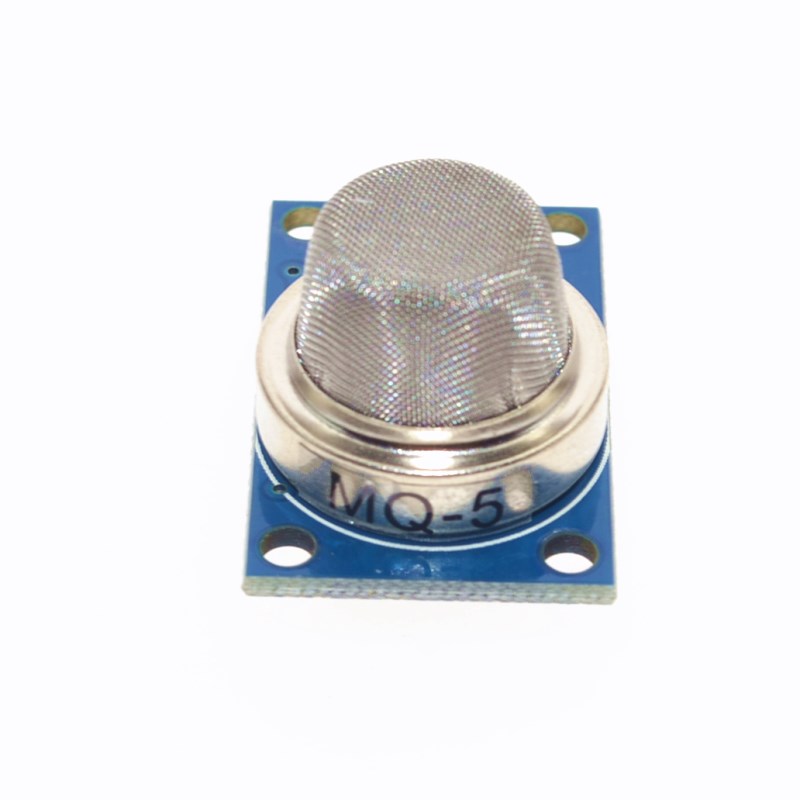
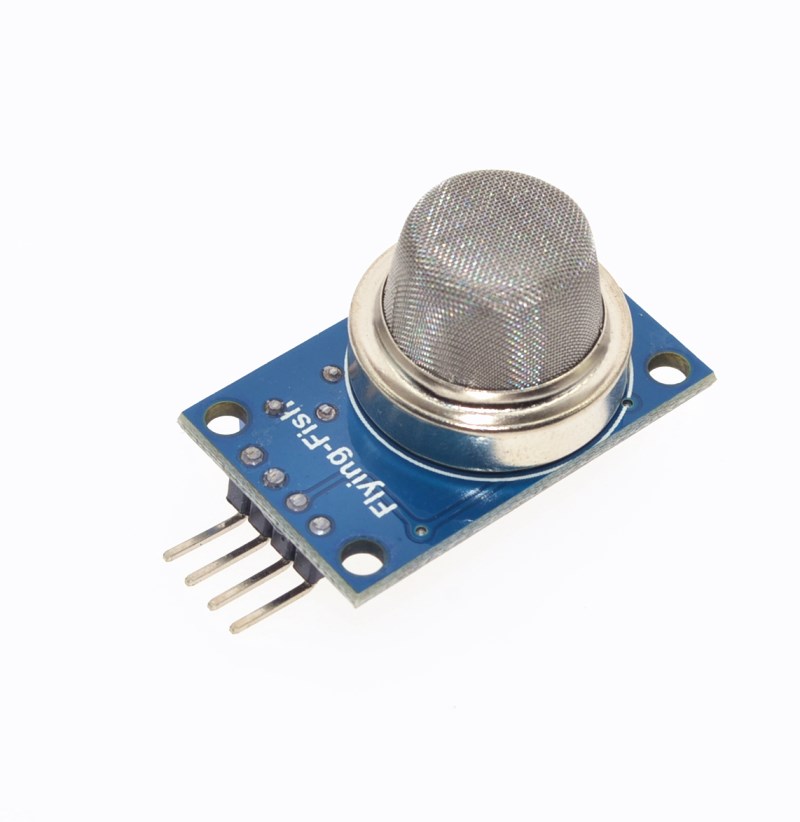
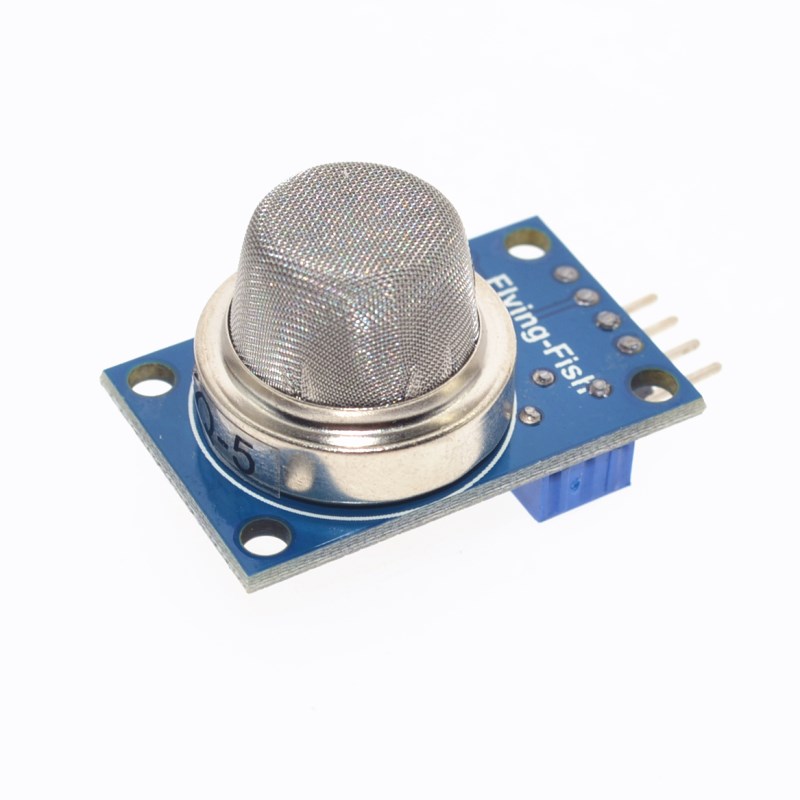
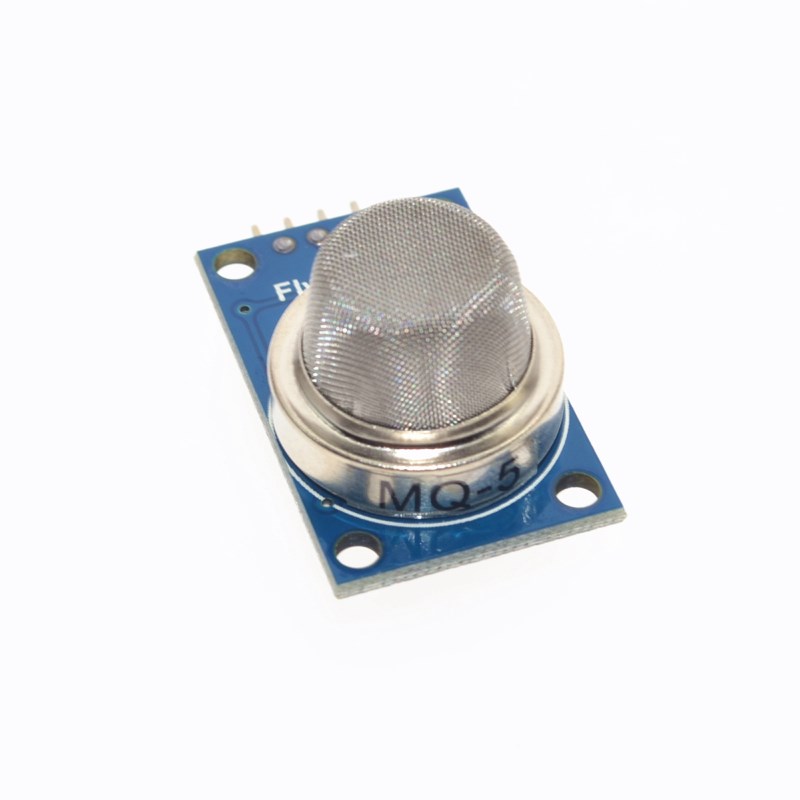
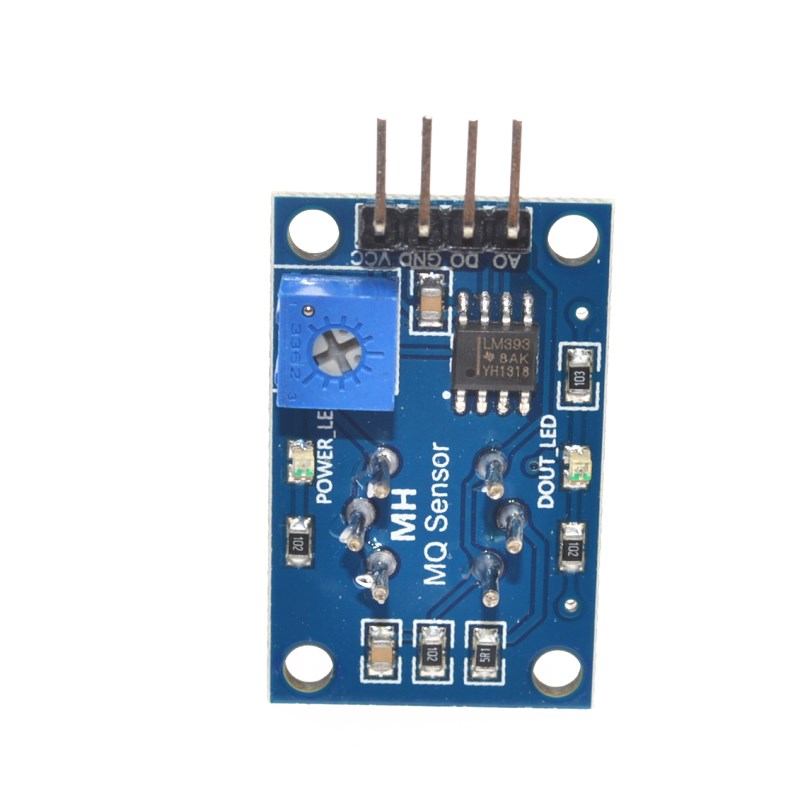
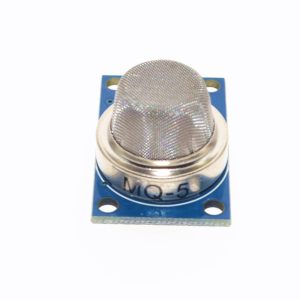
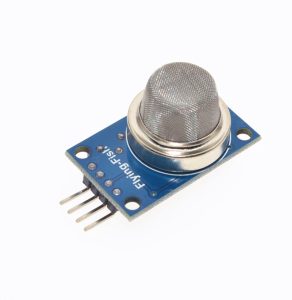
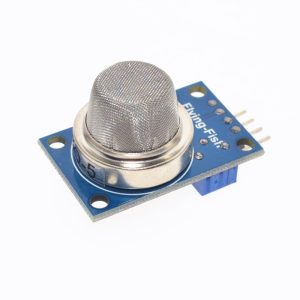
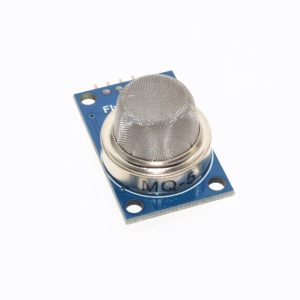
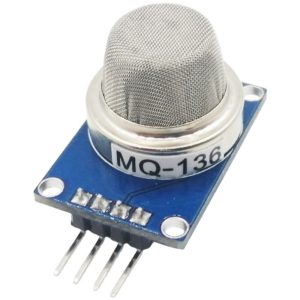
The MQ-5 Liquefied Gas Methane Gas Sensor Module is a low-cost, highly sensitive semiconductor gas detection board designed for monitoring liquefied petroleum gas (LPG), methane (CH₄), and propane (C₃H₈) in domestic, industrial, and portable gas detection applications. Built around the MQ-5 sensor with a tin dioxide (SnO₂) sensing layer, this module offers high sensitivity to combustible gases, particularly LPG and natural gas, while maintaining good anti-interference capability against alcohol and smoke . It is an ideal solution for household gas leak alarms, industrial combustible gas detectors, and portable gas detection instruments.
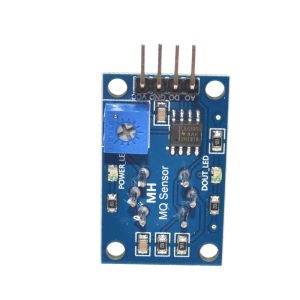
At the heart of the module is the MQ-5 sensor element, whose conductivity increases as the concentration of target gases rises. In clean air, the sensor exhibits low conductivity; when exposed to LPG, methane, or propane, its resistance drops, producing a measurable change in output . The module provides two independent outputs: an analog output (AO) that varies continuously with gas concentration for trend monitoring, and a digital output (DO) that switches when the concentration exceeds a user-adjustable threshold set by the onboard potentiometer . This dual-output design makes it suitable for both quantitative trend analysis and simple threshold-based alarm triggering.
The module operates from 5V DC with a typical current consumption of approximately 150mA . It is compatible with Arduino, ESP32, and other 5V microcontrollers; Raspberry Pi users require an external ADC. The board features a compact form factor and an onboard LED indicator that provides visual feedback for power and digital output status.
Important Note: The MQ-5 requires a significant preheat time for stable operation. New sensors should be powered on for not less than 48 hours in clean air before initial calibration . After each power-up, allow adequate time for the heater to stabilize. The sensor is not a calibrated industrial-grade detector and should not be used as a sole life-safety device. Its sensitivity degrades over time, and periodic replacement is recommended for critical applications. The sensor surface becomes hot during operation — avoid touching it. The module is not waterproof and should be kept dry.
Whether you are building a home gas leak alarm, an industrial LPG detector, or an educational sensor project, the MQ-5 module provides a reliable, affordable solution for liquefied gas and methane detection.
Features
-
MQ-5 SnO₂ semiconductor sensor — High sensitivity to LPG, methane, and propane
-
Good anti-interference — Resistant to alcohol and smoke interference
-
Dual output — Analog (AO) for concentration trends, Digital (DO) for threshold alarms
-
Adjustable threshold — Onboard potentiometer sets the digital output trigger point
-
Wide detection range — 300–10,000 ppm for methane and propane
-
5V operation — Compatible with Arduino, ESP32, and other 5V microcontrollers
-
LED indicators — Power and digital output status feedback
-
Compact form factor — 32 × 20mm PCB for easy integration
-
Long lifespan — Specified for up to 10 years under proper operating conditions
-
Wide application range — Household gas alarms, industrial detectors, portable instruments
Technical Specifications
Usage
Getting Started
-
Connect power — Connect VCC to 5V and GND to ground. The onboard power LED should light up.
-
Connect outputs — Connect AO to an analog input on your microcontroller (e.g., A0 on Arduino) and DO to a digital input if threshold detection is needed .
-
Preheat — Allow the sensor to warm up. For first-time use, power it in clean air for not less than 48 hours for best accuracy . For normal use, wait at least 5–10 minutes before taking readings.
-
Calibrate (recommended) — In clean air, note the analog reading. Adjust the onboard potentiometer so the DO output switches just above this baseline .
-
Read data — Use analogRead() for concentration trends, or digitalRead() for threshold-based alarms.
-
Implement control logic — Trigger buzzers, valves, or notifications when the sensor value exceeds your defined threshold.
Pin Connections
Example Arduino Code (Basic Reading)
#define MQ5_AO A0
#define MQ5_DO 8

void setup() {
  Serial.begin(9600);
  pinMode(MQ5_DO, INPUT);
}

void loop() {
  int analogValue = analogRead(MQ5_AO);
  int digitalState = digitalRead(MQ5_DO);

  Serial.print("Gas Level: ");
  Serial.print(analogValue);
  Serial.print(" | Alarm: ");
  Serial.println(digitalState == LOW ? "TRIGGERED" : "Normal");

  delay(1000);
}
Typical Applications
-
Household gas leak alarms — Detect LPG leaks from stoves, cylinders, and pipelines
-
Industrial combustible gas detectors — Monitor LPG and methane in workshops and facilities
-
Portable gas detection instruments — Handheld detectors for field work
-
Educational STEM projects — Teaching analog sensing, gas detection, and calibration principles
Notes for Business Buyers
-
Preheat is essential — The 48-hour initial burn-in is critical for stable readings; factor this into production testing timelines
-
Not a precision instrument — MQ sensors provide relative trend data, not exact ppm readings for specific gases
-
Sensor lifespan — Specified for 10 years under proper conditions, but practical lifespan depends on exposure to contaminants
-
Suitable for bulk purchasing — Ideal for gas alarm manufacturers, educational kit suppliers, and industrial safety product developers
Q: What is the MQ-5 module used for?
It is a gas sensor for detecting LPG, methane, and propane in household gas leak alarms, industrial combustible gas detectors, and portable gas detection instruments .
Q: What is the difference between the analog and digital outputs?
AO provides a continuous voltage that changes with gas concentration for trend monitoring. DO switches LOW when the concentration exceeds the onboard potentiometer threshold, ideal for simple alarms .
Q: Why does the sensor need a long preheat time?
The SnO₂ sensing element requires heating to reach stable operating temperature. Winsen specifies a preheat time of not less than 48 hours for reliable operation .
Q: Can I measure exact ppm with this sensor?
Not accurately without calibration. The MQ-5 is non-selective and provides relative trends. For quantitative measurement, you need calibration curves and cross-sensitivity compensation .
Q: What voltage does the module require?
It operates from 5V DC with approximately 150mA current consumption .
Q: Does the sensor respond to other gases?
The MQ-5 has high sensitivity to LPG, methane, and propane, with good anti-interference to alcohol and smoke . However, it may still respond to other combustible gases.
Q: Is the sensor safe to touch?
No. The sensor surface becomes hot during operation due to the internal heater. Avoid touching it.
Q: Can I use this module with a Raspberry Pi?
Yes, but the Pi lacks a built-in ADC. Use an external ADC (e.g., MCP3008) to read the AO output.
Q: How long does the sensor last?
The sensor is specified for up to 10 years under proper conditions, but practical lifespan depends on exposure to contaminants .
Q: Can I purchase in bulk for a product development project?
Yes. This module is suitable for bulk purchasing by gas alarm manufacturers, educational kit suppliers, and industrial safety product developers.