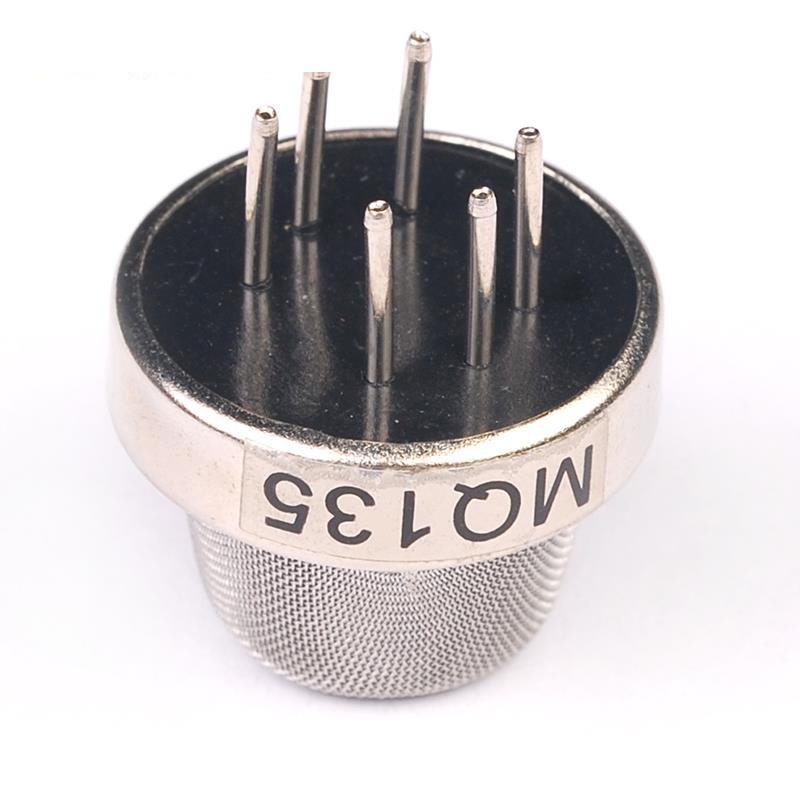
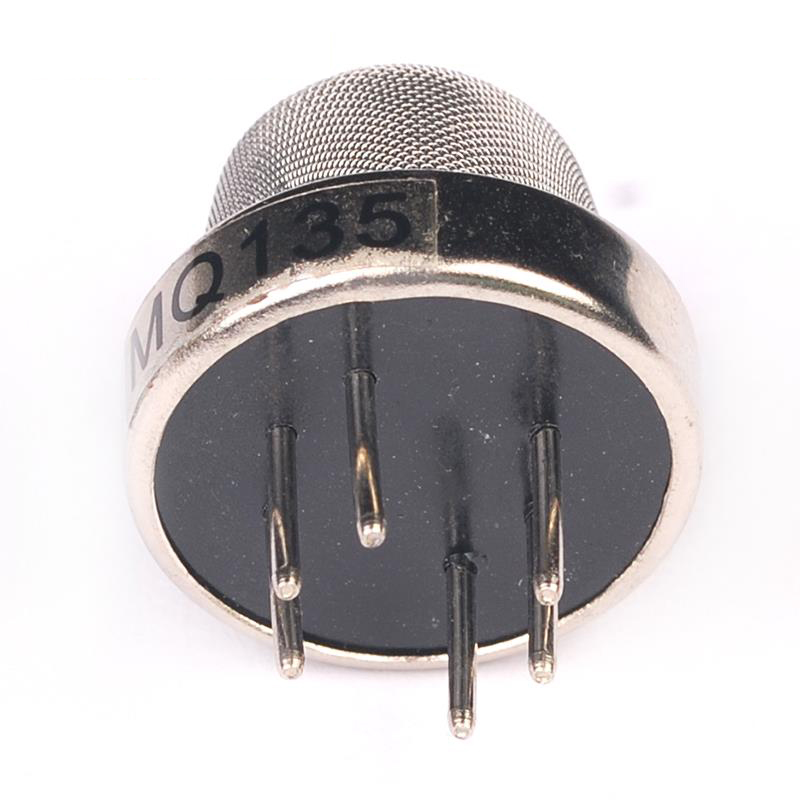
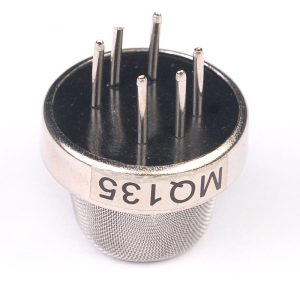
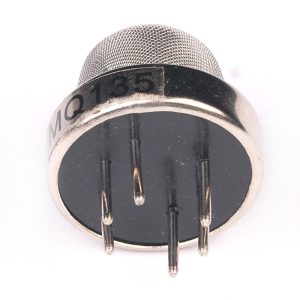
MQ-135 Air Quality Sensor

SKU: FA3054-0
Sensor Model

MQ-135 (SnO2 semiconductor)

Target Gases

NH3, sulfur compounds, benzene, smoke, alcohol, CO2 equivalent

Detection Range

10 – 1000 ppm (target gases)

Operating Voltage

5V DC

Operating Current

~150mA

Output Type

Analog (AO) + Digital (DO/TTL)

Preheat Time

24–48 hours (initial); ~20s–2min (each power-up)

PCB Dimensions

32 × 20 × 22 mm

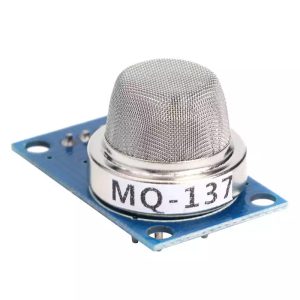
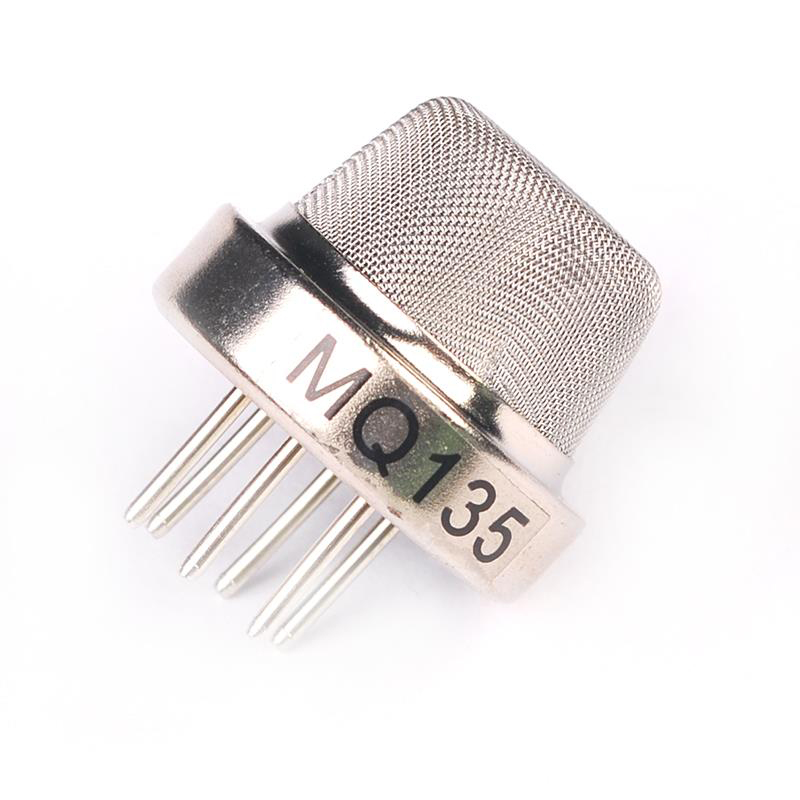
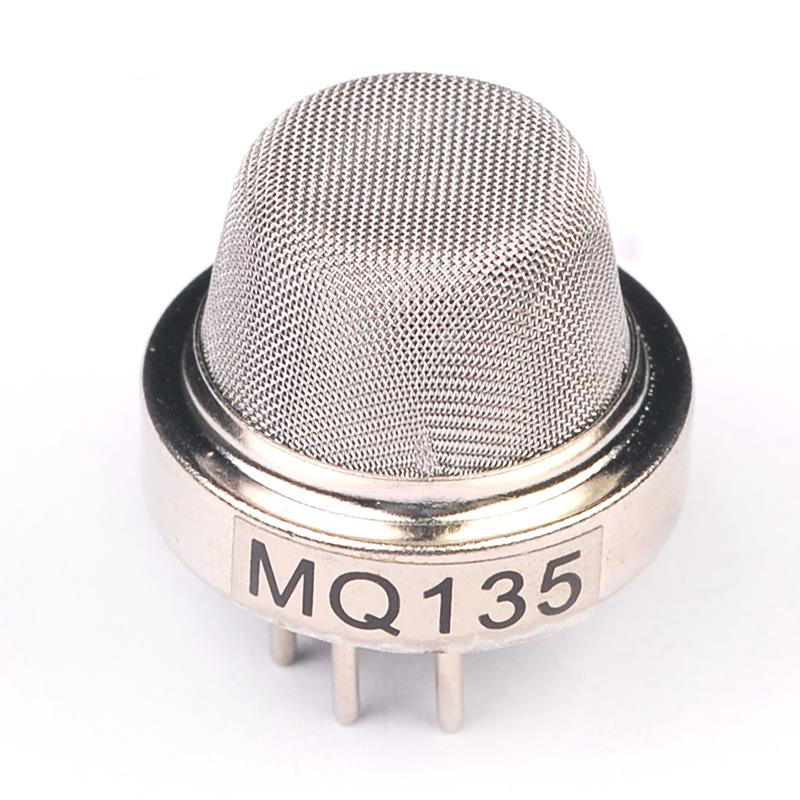
The MQ-135 Air Quality Sensor is a low-cost, highly sensitive gas detection module designed for monitoring air quality in indoor, industrial, and automotive environments. Built around the MQ-135 semiconductor sensor with a tin dioxide (SnO2) sensing layer, this module responds to a broad range of harmful gases including ammonia (NH3), sulfur compounds, benzene vapors, smoke, alcohol, and carbon dioxide equivalent (CO2eq). It is an ideal solution for home air quality monitors, gas leak alarms, smart ventilation systems, and educational sensor projects.

At the heart of the module is the MQ-135 sensor element, whose conductivity increases as the concentration of target gases rises. In clean air, the sensor exhibits low conductivity; when exposed to polluted air, its resistance drops, producing a measurable change in output. The module provides two independent outputs: an analog output (AO) that varies continuously with gas concentration for trend monitoring, and a digital output (DO) that switches when the concentration exceeds a user-adjustable threshold set by the onboard potentiometer. This dual-output design makes it suitable for both quantitative trend analysis and simple threshold-based alarm triggering.

The module operates from 5V DC with a typical current consumption of approximately 150mA. It is compatible with Arduino, ESP32, and other 5V microcontrollers; Raspberry Pi users require an external ADC. The board features four mounting holes for secure installation and a compact form factor. An onboard LED indicator provides visual feedback for power and digital output status.

Important Note: The MQ-135 requires a significant preheat time for stable operation. The sensor should be powered on for 24–48 hours in clean air before initial calibration for accurate readings. After each power-up, allow at least 20 seconds to 2 minutes for the heater to stabilize. The sensor is not a calibrated industrial-grade detector and should not be used as a primary life-safety device. Its sensitivity degrades over time, and periodic replacement is recommended for critical applications. The sensor surface becomes hot during operation — avoid touching it. The module is not waterproof and should be kept dry.

Whether you are building a home air quality monitor, a workshop safety alarm, or an educational sensor project, the MQ-135 module provides a reliable, affordable solution for broad-spectrum gas detection.

Features

  • MQ-135 SnO2 semiconductor sensor — High sensitivity to NH3, sulfur compounds, benzene, smoke, alcohol, and CO2 equivalent

  • Dual output — Analog (AO) for concentration trends, Digital (DO) for threshold alarms

  • Adjustable threshold — Onboard potentiometer sets the digital output trigger point

  • Wide detection range — 10–1000 ppm for target gases

  • 5V operation — Compatible with Arduino, ESP32, and other 5V microcontrollers

  • LED indicators — Power and digital output status feedback

  • Four mounting holes — Secure installation in enclosures and project boxes

  • Compact form factor — 32 × 20 × 22mm PCB

  • Long lifespan — Specified for up to 10 years under proper operating conditions

  • Wide application range — Home air quality monitors, gas alarms, smart ventilation, education

Technical Specifications 

# Parameter Specification
1 Sensor Model MQ-135 (SnO2 semiconductor)
2 Target Gases NH3, sulfur compounds, benzene, smoke, alcohol, CO2 equivalent
3 Detection Range 10 – 1000 ppm (target gases)
4 Operating Voltage 5V DC
5 Operating Current ~150mA
6 Output Type Analog (AO) + Digital (DO/TTL)
7 Preheat Time 24–48 hours (initial); ~20s–2min (each power-up)
8 PCB Dimensions 32 × 20 × 22 mm

Usage

Getting Started

  1. Connect power — Connect VCC to 5V and GND to ground. The onboard power LED should light up.

  2. Connect outputs — Connect AO to an analog input on your microcontroller (e.g., A0 on Arduino) and DO to a digital input if threshold detection is needed.

  3. Preheat — Allow the sensor to warm up. For first-time use, power it in clean air for 24–48 hours for best accuracy. For normal use, wait at least 20 seconds before taking readings.

  4. Calibrate (recommended) — In clean outdoor air, note the analog reading (typically 100–300). Adjust the onboard potentiometer so the DO output switches just above this baseline.

  5. Read data — Use analogRead() for concentration trends, or digitalRead() for threshold-based alarms.

  6. Implement control logic — Trigger buzzers, fans, or notifications when the sensor value exceeds your defined threshold.

Pin Connections

Module Pin Function
VCC Power (5V DC)
GND Ground
DO Digital output (LOW when threshold exceeded)
AO Analog output (voltage increases with gas concentration)

Example Arduino Code (Basic Reading)

cpp
#define MQ135_AO A0
#define MQ135_DO 8

void setup() {
  Serial.begin(9600);
  pinMode(MQ135_DO, INPUT);
}

void loop() {
  int analogValue = analogRead(MQ135_AO);
  int digitalState = digitalRead(MQ135_DO);

  Serial.print("AQI: ");
  Serial.print(analogValue);
  Serial.print(" | Alarm: ");
  Serial.println(digitalState == LOW ? "TRIGGERED" : "Normal");

  delay(1000);
}

Typical Applications

  • Home air quality monitoring — Track indoor pollution levels and CO2 trends

  • Gas leak alarms — Trigger buzzer or notification when harmful gases are detected

  • Smart ventilation control — Activate exhaust fans when air quality degrades

  • Workshop safety — Detect solvent vapors, paint fumes, and combustion byproducts

  • Educational STEM projects — Teaching analog sensing, gas detection, and calibration principles

Notes for Business Buyers

  • Preheat is essential — The 24–48 hour initial burn-in is critical for stable readings; factor this into production testing timelines

  • Not a precision instrument — MQ sensors provide relative trend data, not exact ppm readings for specific gases

  • Sensor lifespan — Sensitivity degrades over time; for long-term deployments, plan for periodic sensor replacement

  • Suitable for bulk purchasing — Ideal for air quality monitor manufacturers, educational kit suppliers, and smart home product developers

Q: What is the MQ-135 Air Quality Sensor used for?

It is an air quality sensor for detecting harmful gases like ammonia, sulfur compounds, benzene, smoke, and CO2 equivalent in indoor and industrial environments.

Q: What is the difference between the analog and digital outputs?

AO provides a continuous voltage that increases with gas concentration for trend monitoring. DO switches LOW when the concentration exceeds the onboard potentiometer threshold, ideal for simple alarms.

Q: Why does the sensor need a long preheat time?

The SnO2 sensing element requires heating to reach stable operating temperature. First-time use needs 24–48 hours for accurate calibration; each power-up needs at least 20 seconds to stabilize.

Q: Can I measure exact CO2 ppm with this sensor?

Not accurately. The MQ-135 provides relative air quality trends, not calibrated absolute ppm readings. For precise CO2 measurement, use an NDIR sensor.

Q: What voltage does the module require?

It operates from 5V DC with approximately 150mA current consumption.

Q: How do I calibrate the digital output threshold?

Power the sensor in clean air, note the AO reading, then adjust the onboard potentiometer until the DO output switches at a slightly higher level.

Q: Is the sensor safe to touch?

No. The sensor surface becomes hot during operation due to the internal heater. Avoid touching it.

Q: Can I use this module with a Raspberry Pi?

Yes, but the Pi lacks a built-in ADC. Use an external ADC (e.g., MCP3008) to read the AO output.

Q: How long does the sensor last?

The sensor is specified for up to 10 years under proper operating conditions, but sensitivity degrades over time. Periodic replacement is recommended for critical applications.