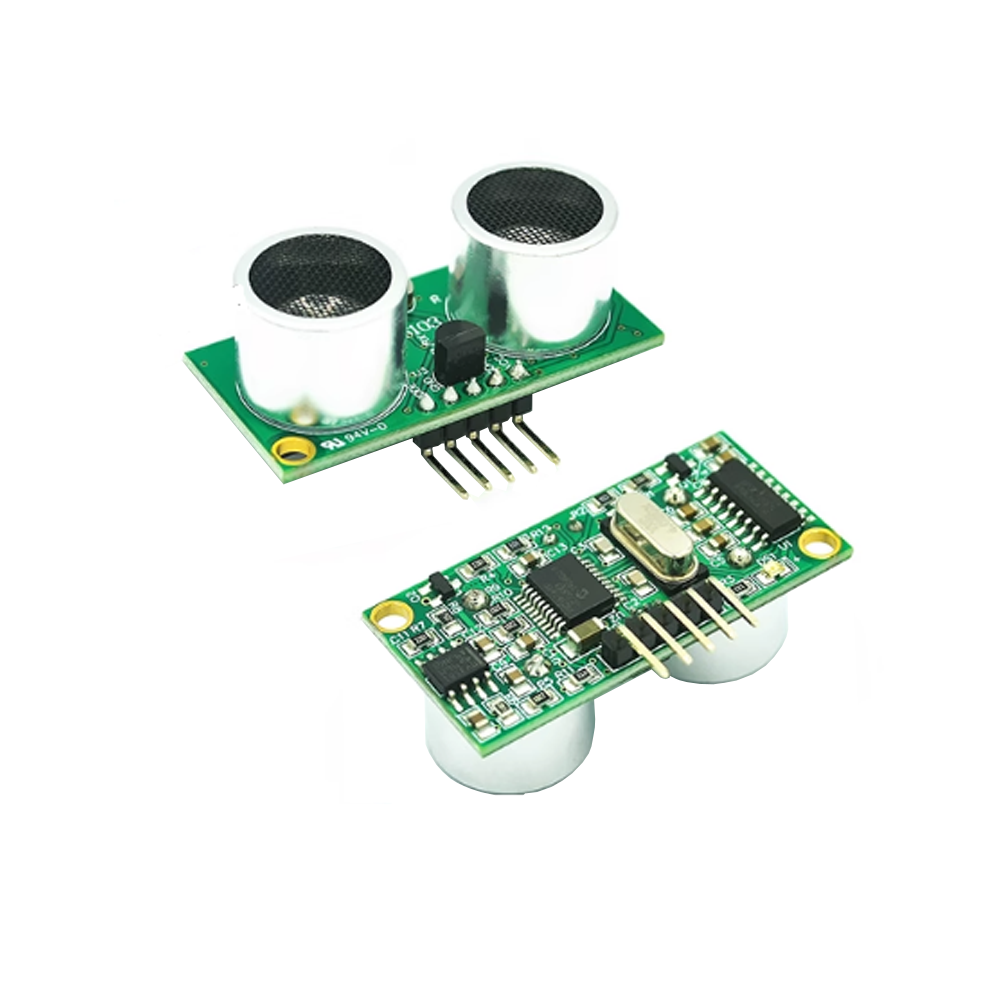
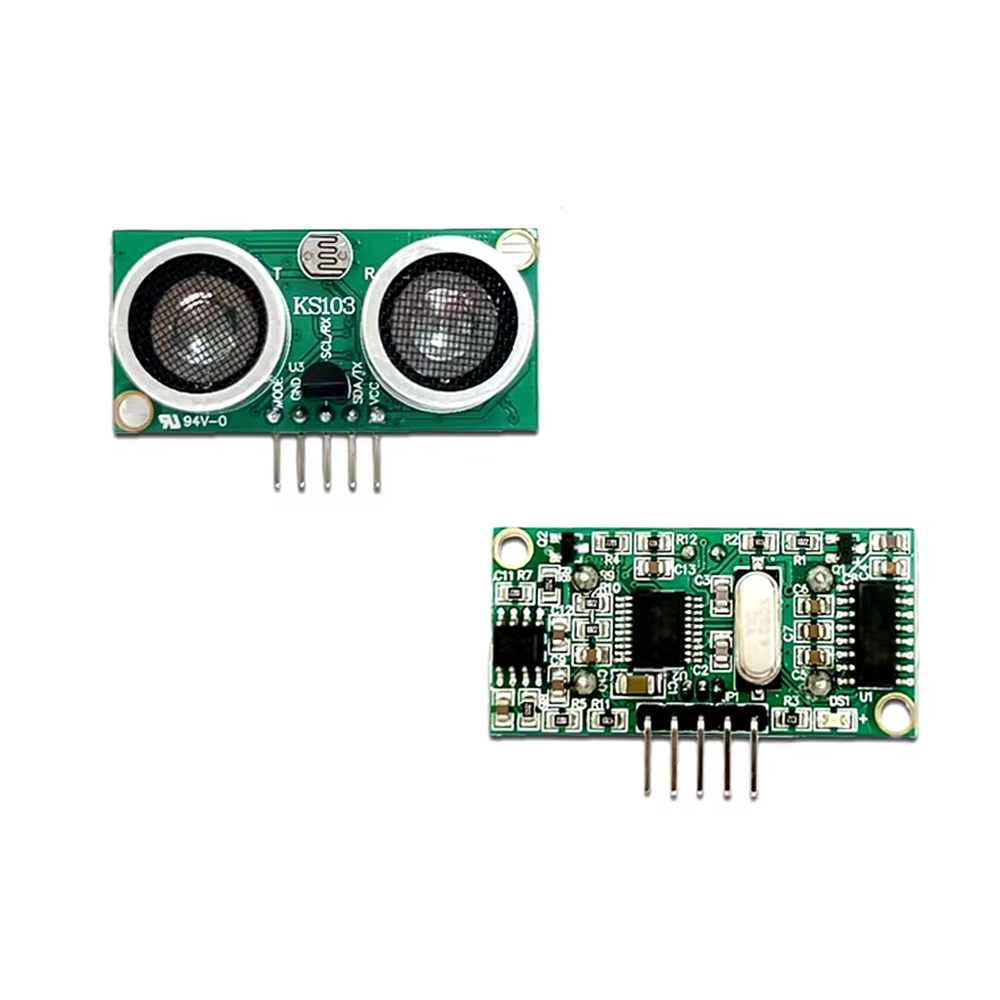
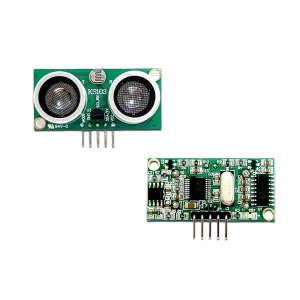
KS103 Ultrasonic Distance Sensor Module – High Precision with Temperature Compensation, I2C Interface for Robotics & Computer Vision

SKU: FA3006-6
Module Model

KS103

Operating Voltage

3.0V – 5.5V DC (5V recommended)

Operating Current

1.6 – 2.7mA typical; 10.6mA peak

Detection Range

1cm – 800cm (up to 1000cm option)

Resolution

1mm

Accuracy

0.152mm at 17cm (with temperature compensation)

Interface

I²C (default, 50–100 kbit/s) or TTL serial

I²C Address

Default 0xE8 (8-bit); 20 selectable addresses

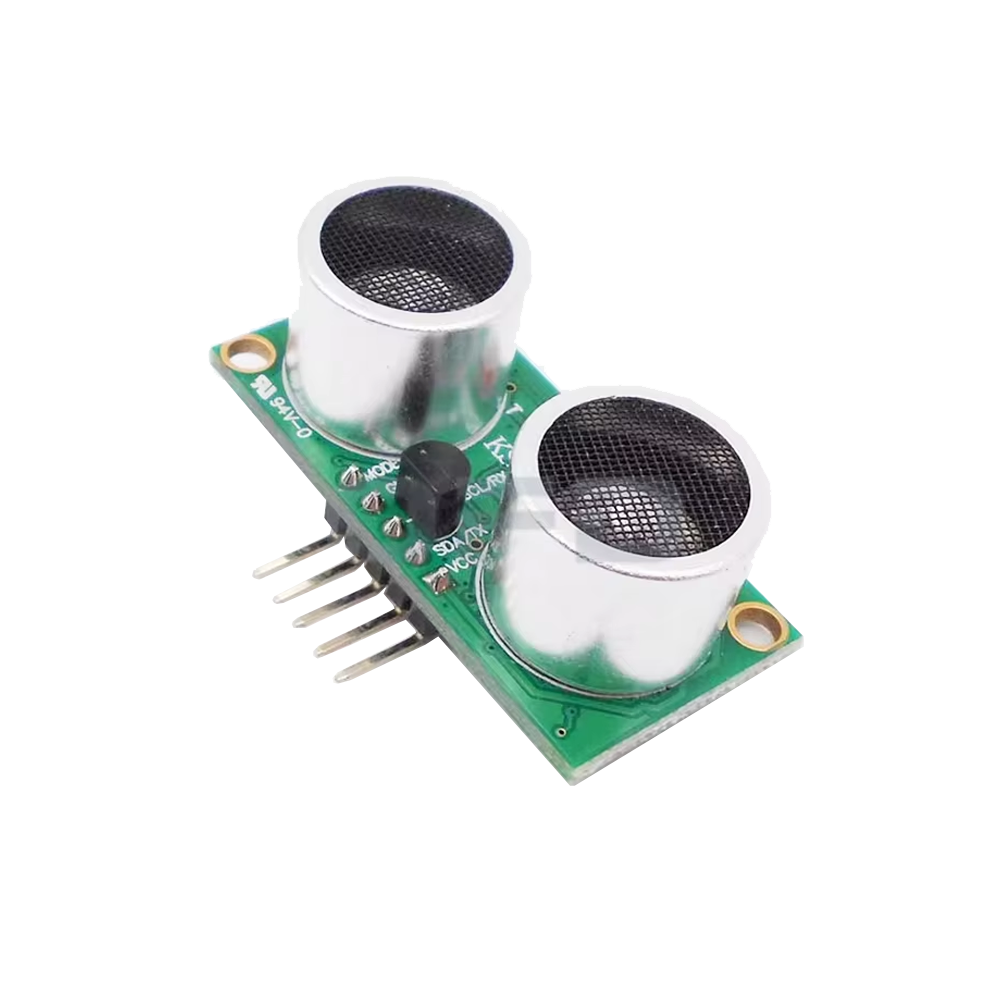
The KS103 Ultrasonic Distance Sensor Module is a professional-grade ranging sensor designed for applications that demand the highest levels of accuracy, speed, and reliability. Unlike basic ultrasonic modules, the KS103 integrates real-time temperature compensation and a fast temperature detection function, making it exceptionally well-suited for robotics, computer vision, and outdoor environments where temperature fluctuations would otherwise degrade measurement precision .

At the heart of the module is an ultrasonic transmitter and receiver pair operating at 40kHz, paired with a dedicated temperature sensor and a powerful onboard processing unit. The KS103 is capable of real-time temperature-compensated distance measurement, achieving a resolution of 1mm and a measurement accuracy of 0.152mm at 17cm in ideal conditions . The detection range spans from 1cm to 800cm (with a 10m option available), and the module supports detection frequencies up to 500Hz, meaning it can perform over 500 measurements per second .

The module offers dual communication interfaces: I²C and TTL serial (selectable via the MODE pin) . In I²C mode (default, MODE pin floating), the module operates as a slave device with a default address of 0xE8 (8-bit), which can be changed to one of 20 selectable addresses (0xD0–0xFE, excluding 0xF0–0xF6) . This allows up to 20 KS103 modules to be connected on the same I²C bus, making it ideal for multi-sensor robotic platforms and distributed obstacle avoidance systems . The I²C communication speed supports 50–100 kbit/s .

The KS103’s standout feature is its integrated temperature compensation. The module can measure ambient temperature in just 83ms with 0.0625°C accuracy . For distance measurement, it offers multiple commands, including 0xB4 (temperature-compensated ranging with the highest precision) and 0xBC (temperature-compensated ranging for up to 11m) . Alternatively, users can combine the transmission time command (0xB2/0xBA) with the temperature reading (0xC9/0xCA/0xCB/0xCC) and apply their own speed-of-sound formula for absolute precision .

The module also includes unique filtering noise reduction technology, allowing it to work reliably even with noisy power supplies (such as when powered from a computer’s USB port) . It features nanoWatt-level power saving, automatically entering a microamp-level sleep mode after 5 seconds without commands, and can be woken up instantly by any I²C command . The operating voltage range is a wide 3.0V to 5.5V (5V recommended for best range), with a working current of 1.6–2.7mA typical and a peak current of 10.6mA . The module operates across an industrial temperature range of -30°C to +85°C .

The compact 5-pin interface (VCC, SDA/TX, SCL/RX, GND, MODE) and standard 2.54mm pin header make it easy to integrate into custom PCBs and robotic platforms . A practical example of its use is in distributed ultrasonic obstacle avoidance systems, where multiple KS103 modules are connected on a single I²C bus for a self-driving food delivery cart . It is also used in smart car navigation, where three KS103S modules on one bus measure front, left, and right distances .

Important Note: The module is not waterproof and should not be submerged. The minimum detection distance is 1cm, and for best results, use a 5V power supply — lower voltages will reduce the effective range . The VCC and GND must not be reversed, as this can permanently damage the module . When modifying the I²C address, do not cut power during the process, or the EEPROM may be corrupted . For distances under 10cm, ensure a delay of more than 1ms between measurements to avoid residual echoes .

Whether you are building a high-precision robotic navigation system, a multi-sensor computer vision platform, or an outdoor distance measurement device, the KS103 Ultrasonic Sensor Module provides a professional-grade solution. It is suitable for individual engineers, robotics researchers, and businesses purchasing in bulk for product development or industrial applications.

Features

  • Real-time temperature compensation — Automatically corrects distance measurements for ambient temperature variations

  • High precision — 1mm resolution with 0.152mm error at 17cm in ideal conditions

  • Fast temperature detection — 83ms measurement time with 0.0625°C accuracy

  • High detection frequency — Up to 500Hz (500 measurements per second)

  • Dual communication interfaces — I²C (default) and TTL serial, selectable via MODE pin

  • 20 selectable I²C addresses — Up to 20 modules on one bus for multi-sensor applications

  • Wide detection range — 1cm to 800cm (10m option available)

  • Noise reduction technology — Works reliably even with noisy power supplies

  • Ultra-low power consumption — 1.6–2.7mA typical, microamp-level sleep mode after 5s

  • Wide operating voltage — 3.0V to 5.5V (5V recommended for best range)

Technical Specifications 

# Parameter Specification
1 Module Model KS103
2 Operating Voltage 3.0V – 5.5V DC (5V recommended)
3 Operating Current 1.6 – 2.7mA typical; 10.6mA peak
4 Detection Range 1cm – 800cm (up to 1000cm option)
5 Resolution 1mm
6 Accuracy 0.152mm at 17cm (with temperature compensation)
7 Interface I²C (default, 50–100 kbit/s) or TTL serial
8 I²C Address Default 0xE8 (8-bit); 20 selectable addresses 

Usage

Getting Started (I²C Mode — Default)

  1. Connect power — Supply 5V DC (or 3.0V–5.5V) to the VCC pin and GND to ground. Do not reverse polarity .

  2. Leave MODE pin floating — The module operates in I²C mode by default when MODE is unconnected .

  3. Connect I²C lines — Connect SDA and SCL to your microcontroller’s I²C bus. Add 4.7K pull-up resistors from SDA and SCL to VCC if not already present on the bus .

  4. Verify address — The default I²C address is 0xE8 (8-bit), which corresponds to 0x74 in 7-bit notation .

  5. Send measurement command — Use the I²C write sequence: Address + Register 2 + Command (e.g., 0xB4). Wait for the specified measurement time (e.g., 80ms for 0xB4) .

  6. Read distance data — Read Register 2 (high byte) and Register 3 (low byte). Combine them: Distance = (Register2 << 8) + Register3 .

Key Measurement Commands

Command Function Range Notes
0xB0 Standard ranging (25°C) Up to 5m No temperature compensation
0xB2 Transmission time (μs) Up to 5m Combine with temp reading for precise calculation
0xB4 Temperature-compensated ranging Up to 5m Recommended for highest precision
0xB8 Standard ranging (25°C) Up to 11m No temperature compensation
0xBA Transmission time (μs) Up to 11m For long-range applications
0xBC Temperature-compensated ranging Up to 11m For long-range, high-precision

Temperature Reading Commands

Command Resolution Time Range
0xC9 9-bit ~83ms -40°C to +125°C
0xCA 10-bit ~168ms -40°C to +125°C
0xCB 11-bit ~315ms -40°C to +125°C
0xCC 12-bit ~610ms -40°C to +125°C

Changing the I²C Address

The KS103 supports 20 selectable addresses (0xD0–0xFE, excluding 0xF0–0xF6). To change the address, follow this sequence: Address + 0x9A + 1ms delay + Address + 0x92 + 1ms delay + Address + 0x9C + 1ms delay + Address + NewAddress + 100ms delay . Do not cut power during this process, or the EEPROM may be corrupted .

Pin Connections

Module Pin Function (I²C Mode)
VCC Power (3.0V–5.5V, 5V recommended)
SDA I²C Data
SCL I²C Clock
GND Ground
MODE Leave floating for I²C mode

Typical Applications

  • Robotics — High-precision obstacle avoidance and navigation

  • Computer vision — Distance sensing for vision systems and SLAM

  • Multi-sensor platforms — Up to 20 modules on one I²C bus

  • Smart car navigation — Front, left, and right distance measurement

  • Outdoor applications — Temperature-compensated readings in varying climates

  • Industrial automation — Reliable ranging in demanding environments

Notes for Business Buyers

  • Professional-grade precision — Temperature compensation and 1mm resolution outperform standard ultrasonic modules

  • Multi-sensor capability — Up to 20 modules on a single I²C bus simplifies distributed sensing

  • Proven in robotics — Used in distributed obstacle avoidance systems and smart car navigation

  • Suitable for bulk purchasing — Ideal for robotics manufacturers, computer vision integrators, and research institutions

Q: What is the KS103 Ultrasonic Sensor Module used for?

It is a high-precision, temperature-compensated ultrasonic ranging module for robotics, computer vision, multi-sensor platforms, and outdoor distance measurement applications .

Q: What is the difference between KS103 and HC-SR04?

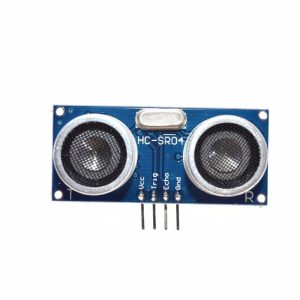
The KS103 offers real-time temperature compensation, 1mm resolution, up to 500Hz detection frequency, I²C interface with 20 selectable addresses, and microamp-level sleep mode. The HC-SR04 is a basic digital trigger/echo module without temperature compensation .

Q: What is the detection range and accuracy?

The detection range is 1cm to 800cm (up to 1000cm option) with 1mm resolution and 0.152mm error at 17cm in ideal conditions .

Q: How does temperature compensation work?

The KS103 includes an integrated temperature sensor that measures ambient temperature in 83ms with 0.0625°C accuracy. The module automatically corrects distance measurements for the current temperature, ensuring accurate readings regardless of environmental conditions .

Q: What is the default I²C address?

The default address is 0xE8 (8-bit), which corresponds to 0x74 in 7-bit notation .

Q: How many KS103 modules can I connect to one I²C bus?

Up to 20 modules can be connected on the same I²C bus, each with a unique address .

Q: What voltage does the module require?

It operates from 3.0V to 5.5V DC, with 5V recommended for best range. Lower voltages will reduce the effective detection range .

Q: Does the module have a sleep mode?

Yes. The KS103 automatically enters a microamp-level sleep mode after 5 seconds without I²C commands, and can be woken up instantly by any I²C command .

Q: Is the module waterproof?

No. The KS103 is not waterproof and should not be submerged in water or operated in wet environments without protection.

Q: Can I purchase in bulk for a product development project?

Yes. This module is suitable for both individual users and business purchasing, including robotics manufacturers, computer vision integrators, and research institutions.