Industrial-Grade KY-013 Analog Temp Sensor for Arduino/Raspberry Pi

SKU: FA3050
Module Model

KY-013

Sensor Type

10kΩ NTC thermistor

Temperature Range

-55°C to +125°C

Accuracy

±0.5°C (with calibration)

Operating Voltage

3.3V – 5V DC

Output Type

Analog voltage (0 – VCC)

PCB Dimensions

35 × 15 mm

Pin Count

3 pins (VCC, GND, S)

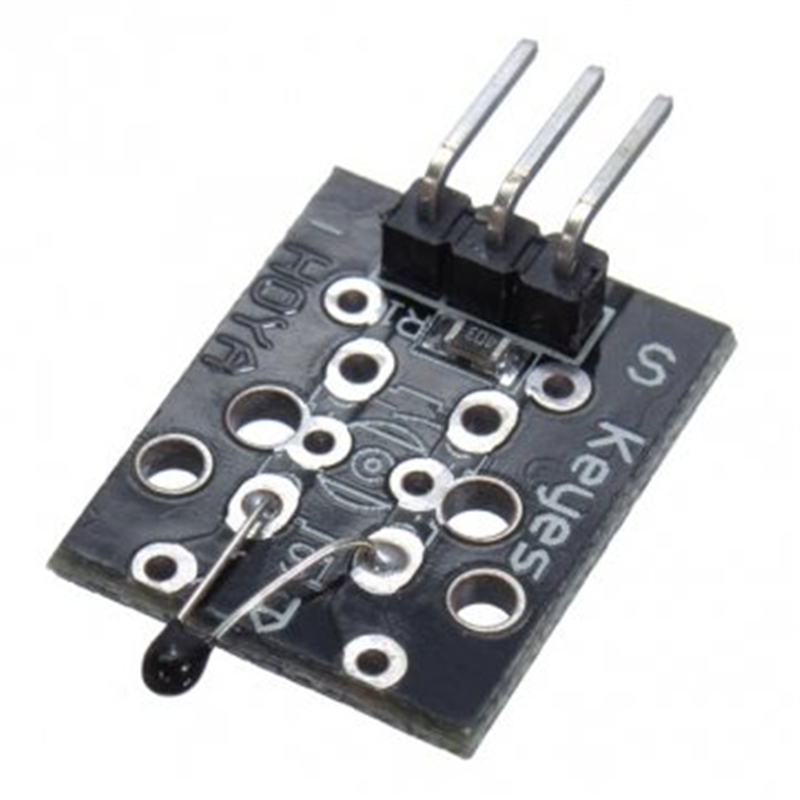
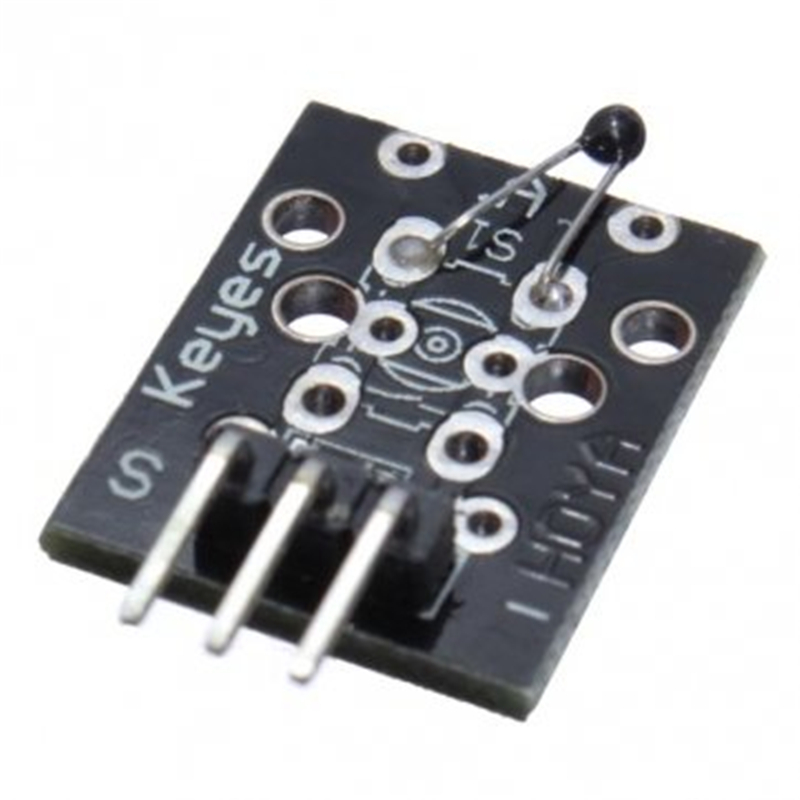
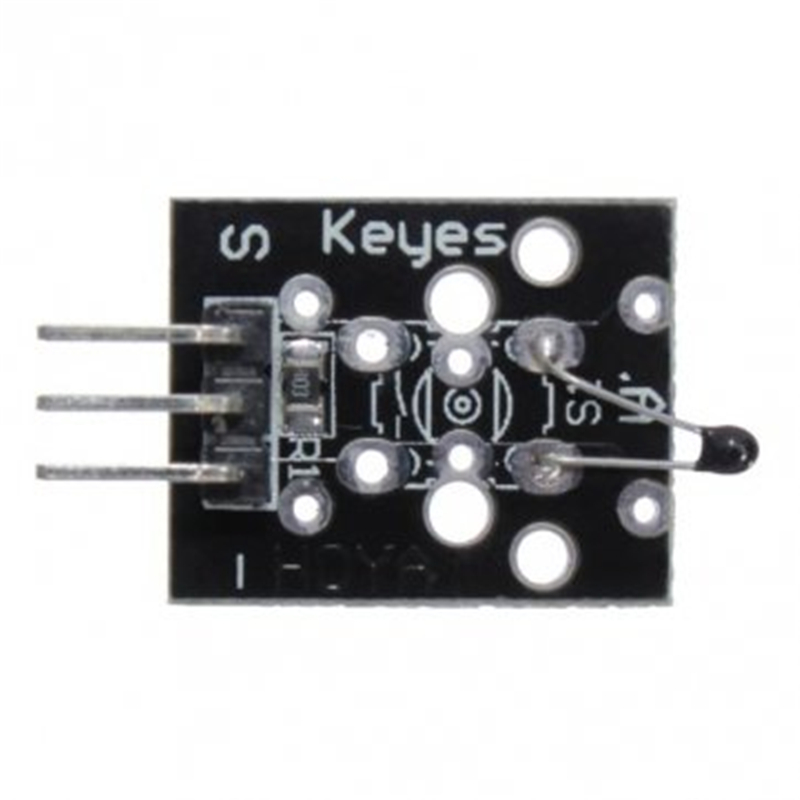
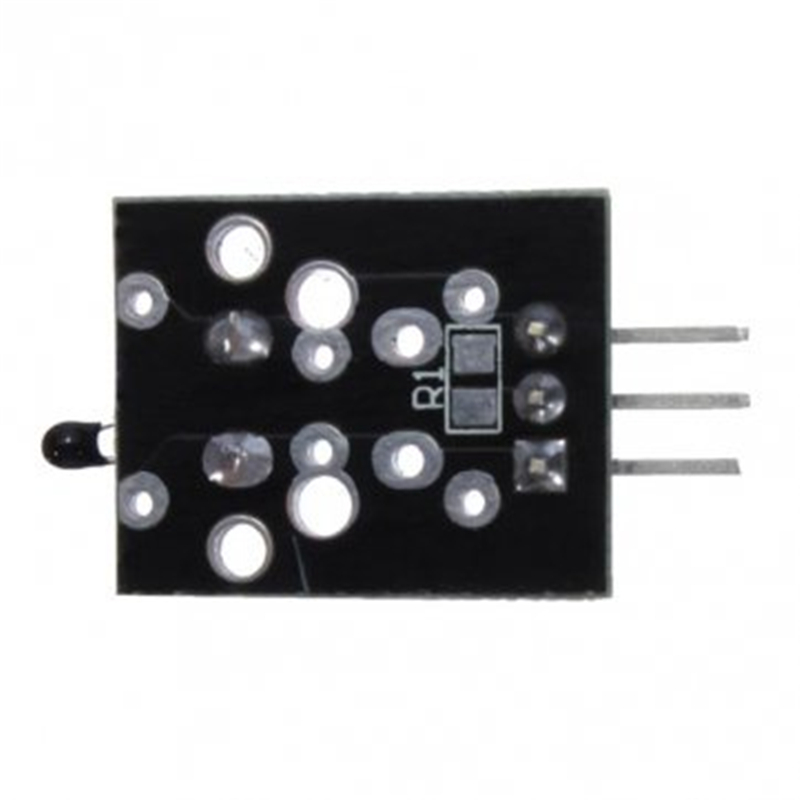
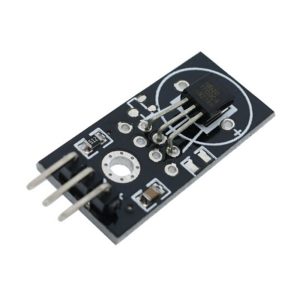
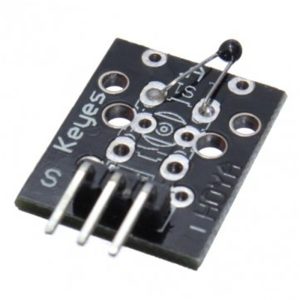
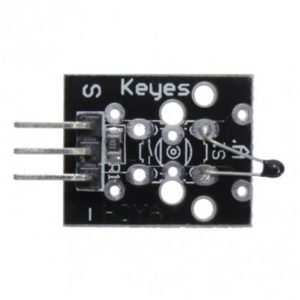
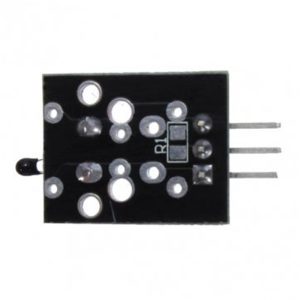
The KY-013 Analog Temperature Sensor Module is a compact, cost-effective solution for ambient temperature measurement in electronics projects, home automation, and industrial monitoring. Built around a 10kΩ NTC (Negative Temperature Coefficient) thermistor and a 10kΩ fixed resistor forming a voltage divider, this module outputs an analog voltage that varies with temperature, allowing any microcontroller with an ADC to calculate the surrounding temperature .

At the heart of the module is the NTC thermistor, whose resistance decreases as temperature rises. The onboard voltage divider converts this resistance change into a measurable analog voltage on the S (Signal) pin, which can be read by an Arduino, Raspberry Pi (with an external ADC like the MCP3008), ESP32, or STM32 . The module also includes a built-in LED indicator and a trimmer potentiometer for threshold detection, though the primary temperature reading is obtained via the analog output .

The KY-013 is designed for a wide measurement range of -55°C to +125°C, with a stated accuracy of ±0.5°C (though practical accuracy depends on calibration and the ADC used) . It operates from 3.3V to 5V DC, making it compatible with both modern low-power microcontrollers and traditional 5V systems . The compact 35 × 15mm PCB with mounting holes allows easy integration into enclosures, 3D printers, battery monitoring systems, and gardening automation projects .

To obtain accurate Celsius readings, the module’s analog output must be converted using the Steinhart-Hart equation or a simplified Beta formula. Common Arduino implementations use the Steinhart-Hart coefficients (A = 0.001129148, B = 0.000234125, C = 0.0000000876741) to calculate temperature from the thermistor resistance . For Raspberry Pi, an external ADC is required, and users should note that the voltage divider configuration may need adjustment (e.g., swapping pull-up/pull-down or using the 1 - RawADC correction) to get correct readings .

Important Note: The KY-013 is an analog sensor — it does not output a direct digital temperature value. You must use an ADC and implement the conversion formula in your code. The stated ±0.5°C accuracy is achievable with proper calibration, but uncalibrated modules may show errors of ±1°C or more . The thermistor is not waterproof and should be kept dry. For high-precision or harsh environment applications, consider a digital sensor like the DS18B20 or a calibrated thermistor.

Whether you are building a temperature logger, a greenhouse controller, or a simple weather station, the KY-013 provides a reliable, low-cost entry point for analog temperature sensing.

Features

  • 10kΩ NTC thermistor — Reliable analog temperature sensing with negative temperature coefficient

  • Wide measurement range — -55°C to +125°C

  • Analog voltage output — Compatible with any microcontroller ADC

  • 3.3V to 5V operation — Works with Arduino, ESP32, STM32, and Raspberry Pi (with external ADC)

  • Onboard voltage divider — 10kΩ fixed resistor simplifies circuit design

  • LED indicator and trimmer — Visual feedback and threshold adjustment (secondary to analog output)

  • Compact 35×15mm PCB — With mounting holes for easy integration

  • Low cost — Affordable solution for temperature monitoring in volume projects

  • Wide application range — Home automation, gardening, 3D printers, battery monitoring

  • Steinhart-Hart compatible — Standard formula for accurate temperature conversion

Technical Specifications 

# Parameter Specification
1 Module Model KY-013
2 Sensor Type 10kΩ NTC thermistor
3 Temperature Range -55°C to +125°C
4 Accuracy ±0.5°C (with calibration)
5 Operating Voltage 3.3V – 5V DC
6 Output Type Analog voltage (0 – VCC)
7 PCB Dimensions 35 × 15 mm
8 Pin Count 3 pins (VCC, GND, S) 

Usage

Getting Started (Arduino)

  1. Connect power — Connect VCC to 5V (or 3.3V) and GND to ground.

  2. Connect signal — Connect the S (Signal) pin to an analog input on your Arduino (e.g., A0).

  3. Upload a conversion sketch — Use the Steinhart-Hart equation with the standard coefficients (A = 0.001129148, B = 0.000234125, C = 0.0000000876741) to convert the raw ADC value to Celsius .

  4. Read temperature — Open the Serial Monitor to view the calculated temperature.

Getting Started (Raspberry Pi)

  1. Connect an external ADC — The Raspberry Pi has no built-in ADC. Use an MCP3008 or ADS1015 to read the analog signal .

  2. Wire the sensor — Connect VCC to 3.3V, GND to GND, and S to the ADC channel.

  3. Implement conversion — Use the Steinhart-Hart formula in Python. Note that the voltage divider may require adjusting the formula (e.g., using 1 - RawADC or swapping the resistor configuration) to match your wiring .

Example Arduino Code (Steinhart-Hart)

cpp
int ntcPin = A0;
float R1 = 10000;
float logR2, R2, T;
float c1 = 0.001129148, c2 = 0.000234125, c3 = 0.0000000876741;

void setup() { Serial.begin(9600); }

void loop() {
  int Vo = analogRead(ntcPin);
  R2 = R1 * (1023.0 / (float)Vo - 1.0);
  logR2 = log(R2);
  T = (1.0 / (c1 + c2*logR2 + c3*logR2*logR2*logR2));
  T = T - 273.15;
  Serial.print("Temperature: "); Serial.print(T); Serial.println(" C");
  delay(500);
}

Typical Applications

  • Home automation — Room temperature monitoring for HVAC control

  • Gardening — Soil or ambient temperature for greenhouse automation

  • 3D printers — Temperature sensing for heated beds or enclosures

  • Battery monitoring — Temperature compensation for rechargeable batteries

  • Weather stations — Ambient temperature logging

  • Educational STEM projects — Teaching analog sensing and thermistor principles

Notes for Business Buyers

  • Analog sensor — Requires ADC and conversion formula; not a plug-and-play digital sensor.

  • Calibration recommended — For accurate readings, calibrate against a known reference thermometer.

  • Not waterproof — Keep dry; for wet environments, use a waterproof DS18B20 instead.

  • Suitable for bulk purchasing — Ideal for educational kits, home automation product developers, and industrial monitoring integrators.

Q: What is the KY-013 used for?

It is an analog temperature sensor for measuring ambient temperature in electronics projects, home automation, gardening, and industrial monitoring.

Q: What is the measurement range and accuracy?

The range is -55°C to +125°C with a stated accuracy of ±0.5°C (achievable with calibration) .

Q: Does the KY-013 output a digital signal?

No. It outputs an analog voltage that varies with temperature. You must use an ADC and a conversion formula to get Celsius values.

Q: How do I convert the analog value to temperature?

Use the Steinhart-Hart equation with the standard coefficients (A = 0.001129148, B = 0.000234125, C = 0.0000000876741) or a simplified Beta formula .

Q: Can I use the KY-013 with a Raspberry Pi?

Yes, but the Pi has no built-in ADC. You need an external ADC like the MCP3008 or ADS1015 to read the analog output .

Q: Why is my temperature reading inaccurate?

Common causes include: uncalibrated thermistor, ADC reference voltage mismatch, incorrect Steinhart-Hart coefficients, or voltage divider wiring (pull-up vs. pull-down) .

Q: What is the operating voltage?

It operates from 3.3V to 5V DC, compatible with Arduino, ESP32, and STM32 .

Q: Is the KY-013 waterproof?

No. The thermistor and PCB are not waterproof. For wet environments, use a waterproof digital sensor like the DS18B20.

Q: What is the difference between KY-013 and KY-028?

Both are NTC thermistor modules. The KY-028 includes a comparator and digital output for threshold detection, while the KY-013 provides only the analog output.

Q: Can I purchase in bulk for a product development project?

Yes. The KY-013 is suitable for bulk purchasing by educational institutions, home automation developers, and industrial monitoring integrators.