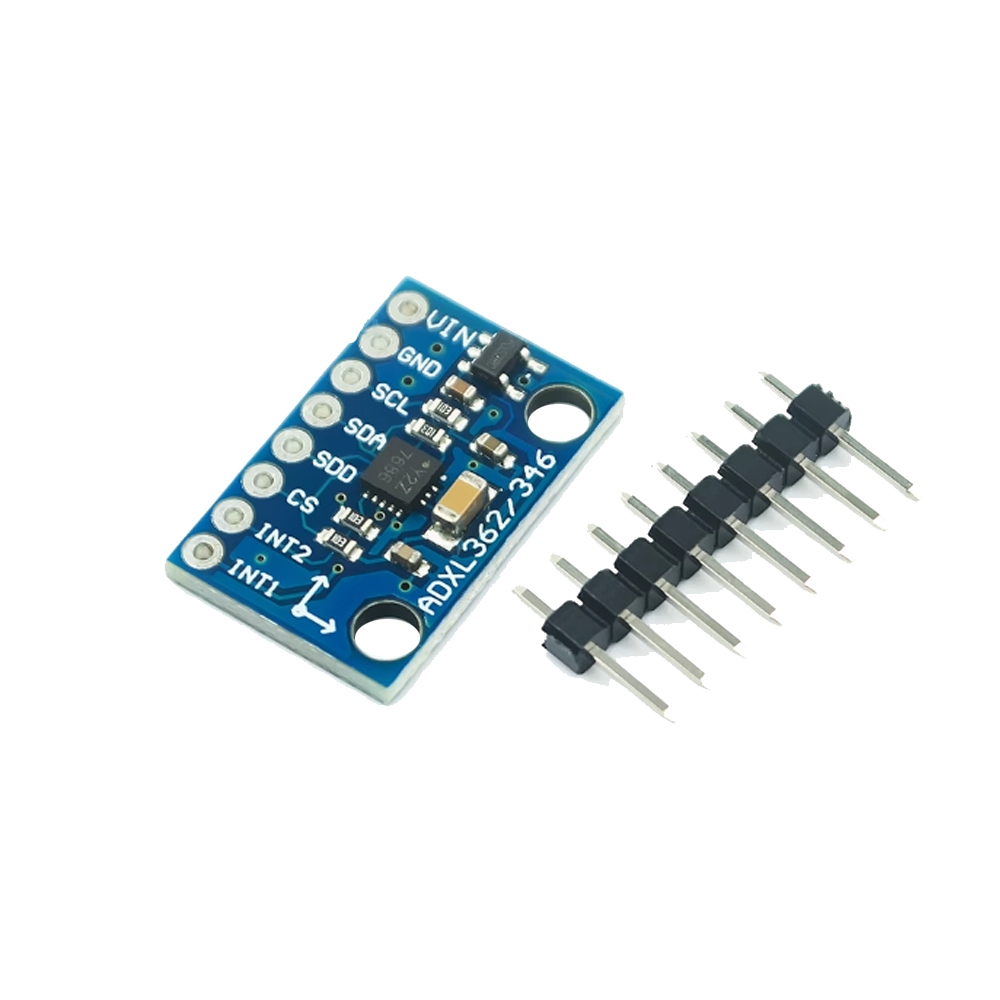
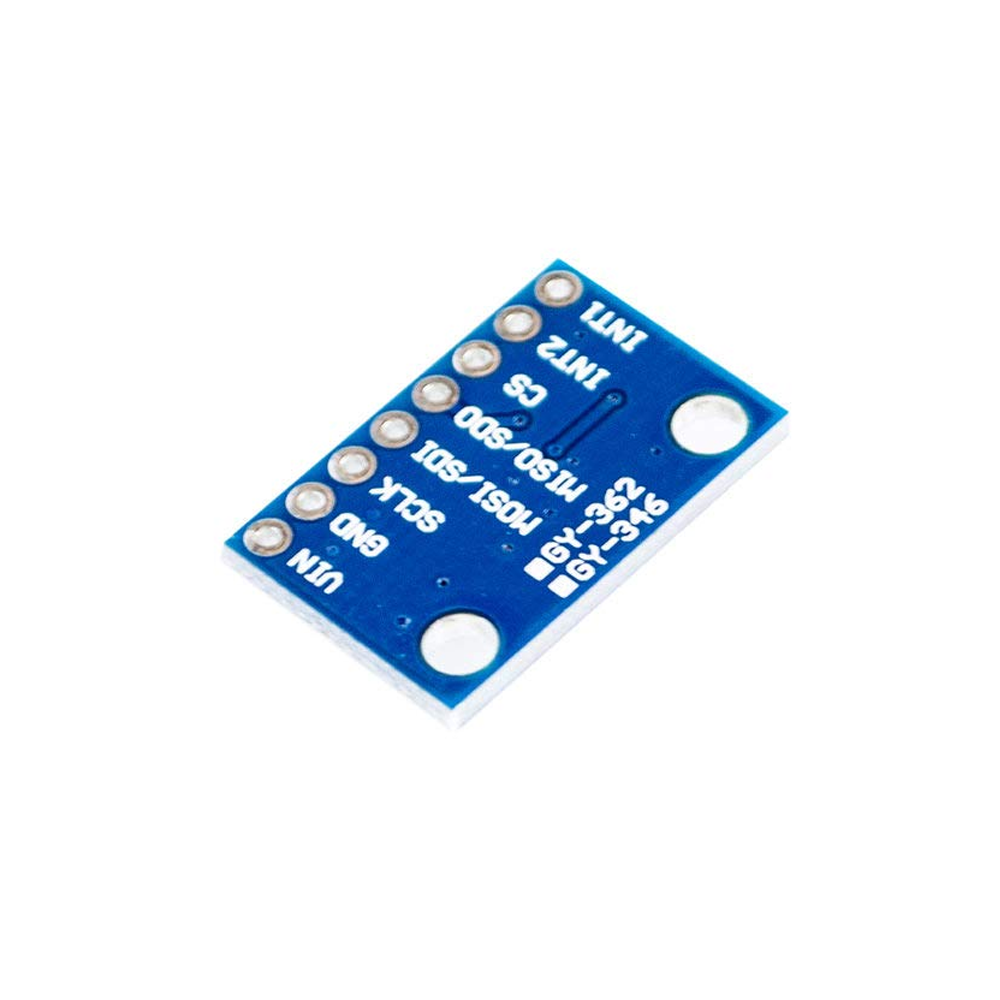
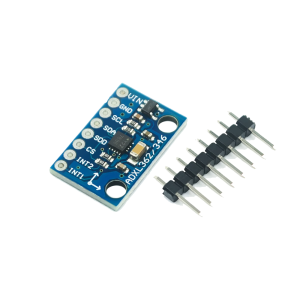
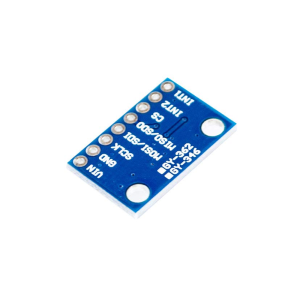
The GY-346 ADXL346 Sensor Module is a compact, high-resolution 3-axis accelerometer breakout board designed for motion sensing, tilt detection, and orientation applications. Built around the Analog Devices ADXL346 chip, this module is a direct replacement for the popular ADXL345 module, offering the same functionality with improved specifications and ultra-low power consumption. It is ideal for mobile devices, gaming peripherals, medical instrumentation, industrial equipment, and DIY electronics projects.
At the heart of the module is the ADXL346, a small, thin, ultralow-power 3-axis accelerometer with high resolution (up to 13-bit) measurement at up to ±16g . The digital output data is formatted as 16-bit twos complement and is accessible through either an SPI (3- or 4-wire) or I2C digital interface . This dual-interface flexibility makes the module compatible with a wide range of microcontrollers including Arduino, ESP32, STM32, and Raspberry Pi.
The ADXL346 is well suited for mobile device applications. It measures static acceleration of gravity in tilt-sensing applications, as well as dynamic acceleration resulting from motion or shock . Its high resolution (4 mg/LSB) enables measurement of inclination changes of less than 1.0° .
Several special sensing functions are built into the chip. Activity and inactivity sensing detect the presence or lack of motion by comparing acceleration on any axis with user-set thresholds . Tap sensing detects single and double taps in any direction. Free-fall sensing detects if the device is falling. Orientation detection is capable of concurrent four- and six-position sensing with user-selectable interrupt on orientation change for 2D or 3D applications . These functions can be mapped individually to either of two interrupt output pins .
The module features an integrated 32-level FIFO buffer that can store data to minimize host processor activity and lower overall system power consumption . The ADXL346 operates at ultralow power — as low as 23 µA in measurement mode and 0.2 µA in standby mode at VS = 2.6V .
The GY-346 module breaks out the ADXL346 chip onto a compact PCB with a 2.54mm pin header for easy connection to breadboards and jumper wires. The board measures approximately 21 × 14 × 2.8 mm . Power and I/O voltage range is 1.7V to 2.75V, though the module is typically used with 3.3V logic systems .
Whether you are building a motion-sensing game controller, a tilt-compensated compass, a vibration monitor, or a wearable device, the GY-346 provides a proven, reliable foundation for acceleration sensing. It is suitable for individual makers, students, and businesses purchasing in bulk for product development or educational programs.
Features
-
ADXL346 3-axis accelerometer — High-resolution (up to 13-bit) measurement at up to ±16g
-
Direct ADXL345 replacement — Same functionality with improved specifications and lower power
-
I2C and SPI interfaces — Flexible digital communication options (3- or 4-wire SPI, I2C)
-
User-selectable g ranges — ±2g / ±4g / ±8g / ±16g
-
Ultra-low power consumption — As low as 23 µA in measurement mode, 0.2 µA in standby
-
Multiple sensing functions — Tap/double-tap, activity/inactivity, free-fall, orientation detection
-
32-level FIFO buffer — Reduces host processor load and system power
-
Flexible interrupt modes — Mappable to either of two interrupt pins
-
Compact module form factor — 21 × 14 × 2.8 mm with standard pin header
-
Wide application range — Mobile devices, medical instruments, gaming, industrial instrumentation
Technical Specifications
| # | Parameter | Specification |
|---|---|---|
| 1 | Sensor Chip | Analog Devices ADXL346 |
| 2 | Axes | 3-axis (X, Y, Z) |
| 3 | Measurement Range | ±2g / ±4g / ±8g / ±16g (user selectable) |
| 4 | Resolution | Up to 13-bit (4 mg/LSB scale factor) |
| 5 | Interface | I2C (address 0x53 or 0x1D) / SPI (3- or 4-wire) |
| 6 | Supply Voltage | 1.7V – 2.75V (I/O: 1.7V – 2.75V) |
| 7 | Supply Current | 23 µA (measurement mode, typical); 0.2 µA (standby) |
| 8 | Module Dimensions | Approx. 21 × 14 × 2.8 mm |