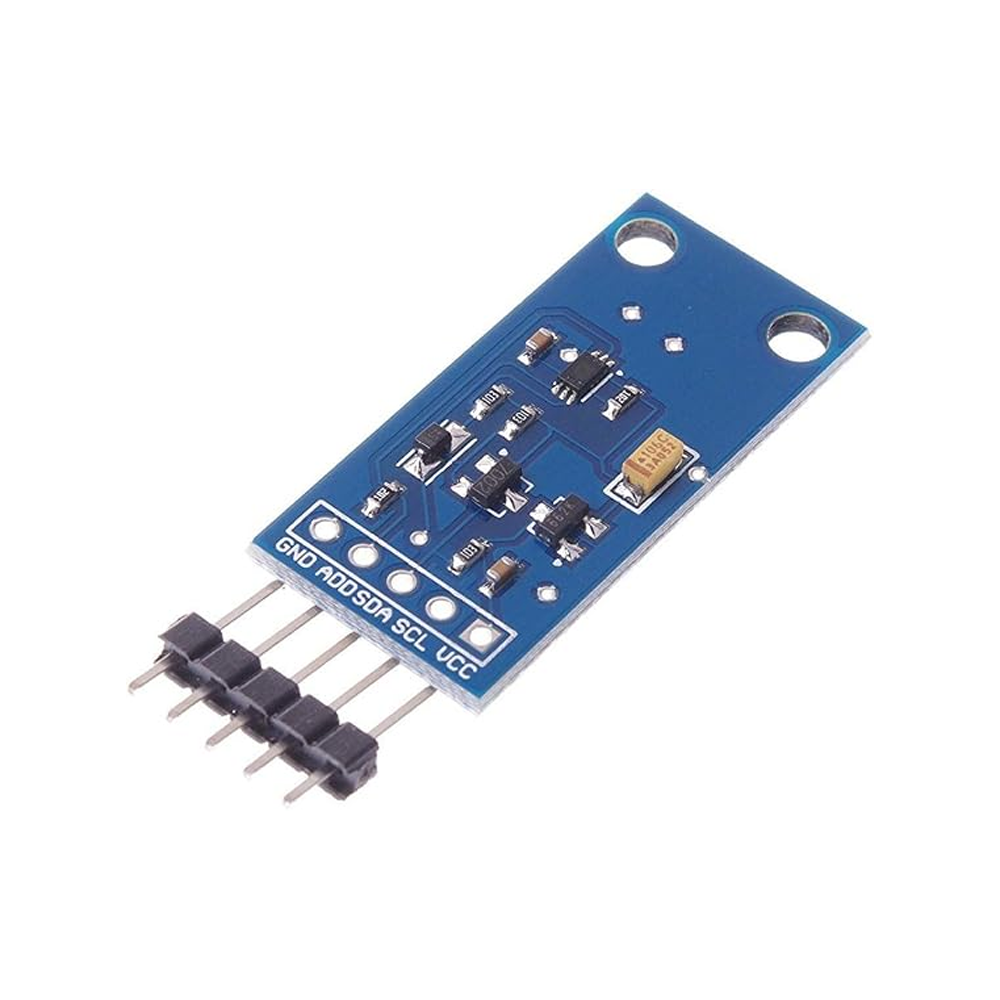
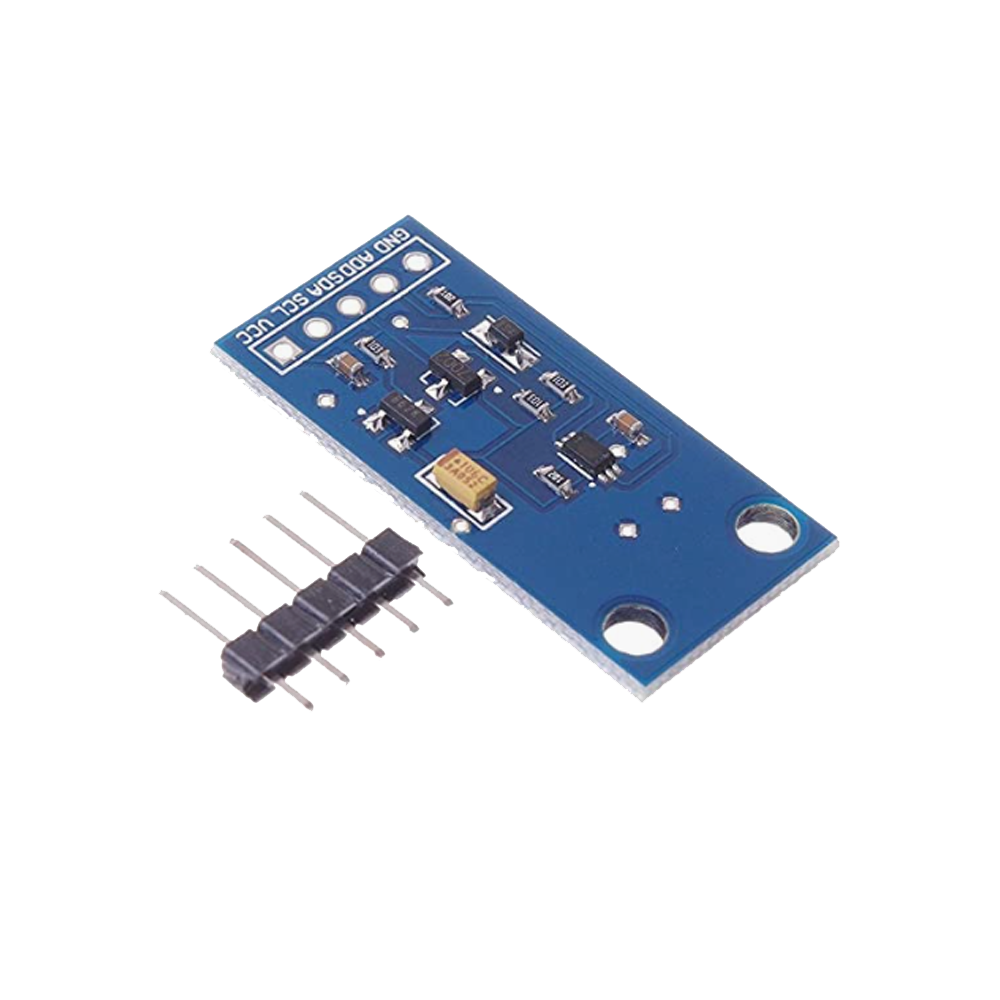
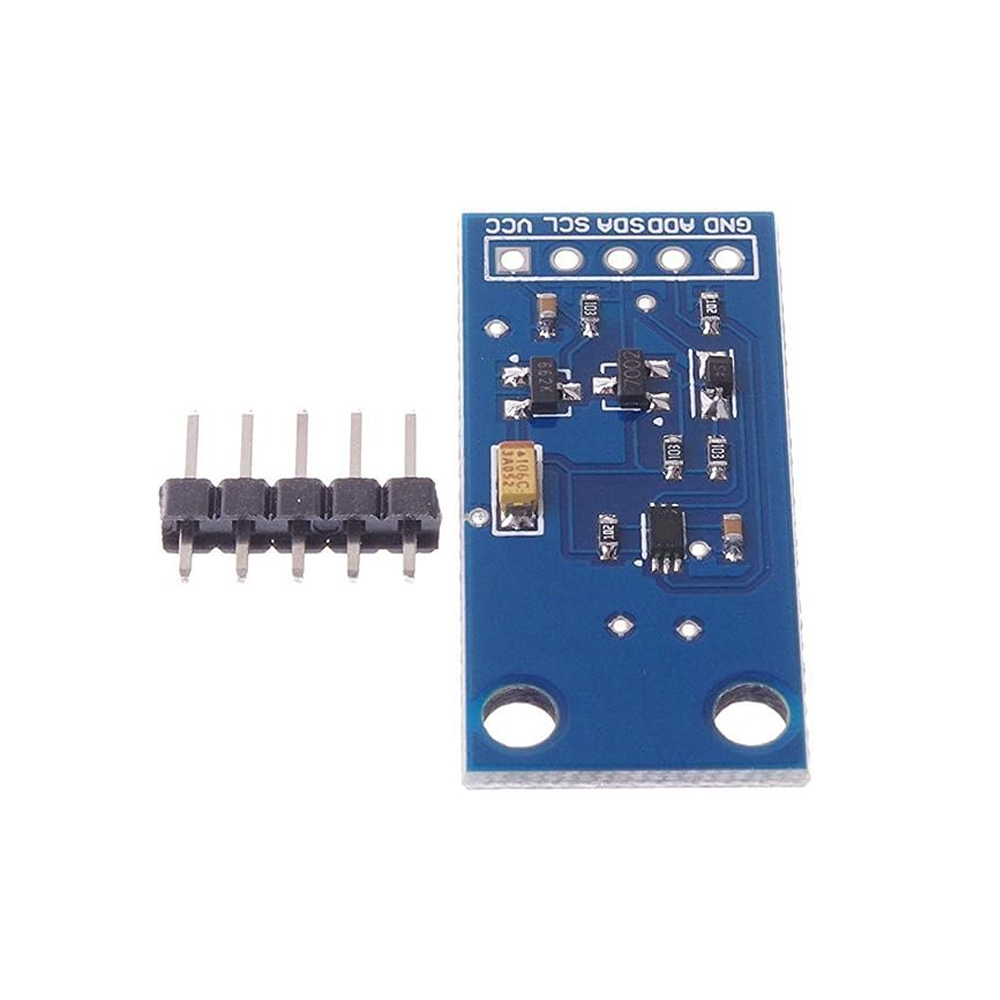
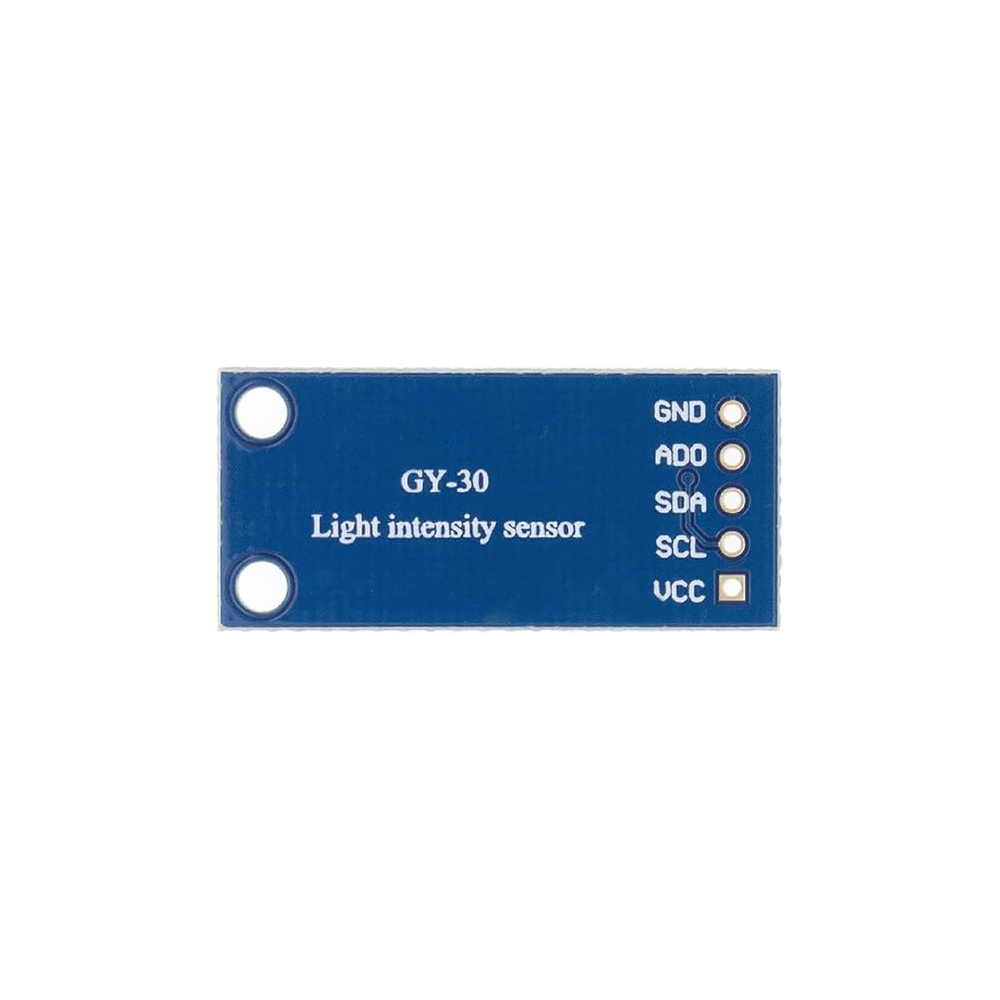
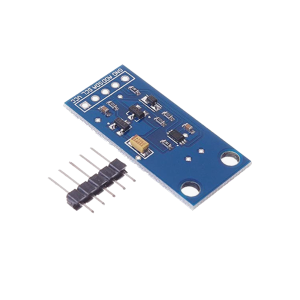
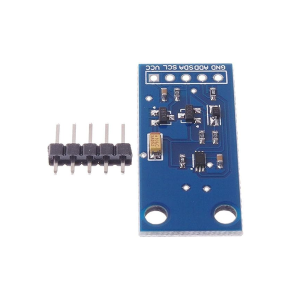
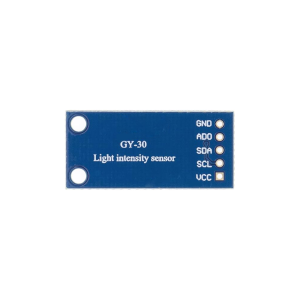
The GY-30 Digital Light Intensity Sensor Module is a high-precision ambient light detection board designed for measuring illumination in lux (lx) with excellent accuracy and a wide dynamic range. Built around the ROHM BH1750FVI digital ambient light sensor IC, this module provides a direct digital output via the I²C interface, eliminating the need for complex analog-to-digital conversion or calibration. It is an ideal solution for automatic lighting control, display backlight adjustment, agriculture monitoring, and IoT projects requiring accurate light measurement.
At the heart of the module is the BH1750FVI, a digital 16-bit ambient light sensor that measures light intensity from 1 lx to 65,535 lx with a spectral response close to the human eye. The sensor uses a photodiode with a miniature light sphere (a small dome-shaped diffuser) on top, which ensures cosine correction — meaning it accurately measures light from different angles, not just directly overhead. This makes it far more reliable than simple photoresistors (LDRs) for precise lux measurements.
The module communicates via the I²C interface, supporting standard mode (100kHz) and fast mode (400kHz). The I²C address is 0x23 (when the ADDR pin is LOW) or 0x5C (when ADDR is HIGH). The module operates from 3.3V to 5V DC, making it compatible with Arduino, ESP32, ESP8266, STM32, and Raspberry Pi. The GY-30 version includes onboard level shifting for direct connection to 5V microcontrollers.
The 16-bit digital output provides high resolution across the entire measurement range. The sensor supports multiple measurement modes:
-
Continuously H-Resolution Mode — 1 lx resolution, 120ms measurement time
-
Continuously H-Resolution Mode2 — 0.5 lx resolution, 120ms measurement time
-
Continuously L-Resolution Mode — 4 lx resolution, 16ms measurement time
-
One-Time H-Resolution Mode — Single measurement, then auto power-down
-
One-Time L-Resolution Mode — Single low-resolution measurement, then auto power-down
The ultra-low power consumption (typically 0.12mA in active mode) makes the module suitable for battery-powered and energy-harvesting applications. The compact form factor with a 5-pin header (VCC, GND, SCL, SDA, ADDR) allows easy integration into custom enclosures and project boxes.
The module is widely used in automatic lighting control, display backlight adjustment, smart home automation, agriculture monitoring, weather stations, IoT devices, and portable electronics. It is also popular in educational projects for teaching light sensing, I²C communication, and digital sensor principles.
Important Note: The BH1750FVI measures visible light with a spectral response close to the human eye. It is not suitable for measuring infrared or ultraviolet light. Ensure the miniature light sphere is not obstructed or covered during operation. The module requires a 3.3V to 5V DC power supply.
Whether you are building an automatic lighting system, a display with adaptive brightness, or a precision light monitoring device, the GY-30 Digital Light Intensity Sensor Module provides a reliable, accurate solution. It is suitable for individual makers, students, and businesses purchasing in bulk for product development or educational programs.
Features
-
ROHM BH1750FVI sensor IC — High-precision digital ambient light sensor
-
16-bit digital output — Direct lux measurement (1–65,535 lx)
-
I²C interface — Standard (100kHz) and fast (400kHz) modes
-
Miniature light sphere — Cosine correction for accurate multi-angle measurement
-
Spectral response close to human eye — Accurate visible light measurement
-
Multiple measurement modes — Continuous and one-time, high and low resolution
-
Wide operating voltage — 3.3V to 5V DC (with level shifting)
-
Ultra-low power consumption — Typically 0.12mA active
-
Compact form factor — With 5-pin header for easy integration
-
Wide application range — Automatic lighting, displays, agriculture, IoT, education
Technical Specifications
| # | Parameter | Specification |
|---|---|---|
| 1 | Sensor IC | ROHM BH1750FVI |
| 2 | Measurement Range | 1 – 65,535 lx |
| 3 | Resolution | 1 lx (H-Res), 0.5 lx (H-Res2), 4 lx (L-Res) |
| 4 | Interface | I²C (address 0x23 or 0x5C) |
| 5 | Operating Voltage | 3.3V – 5V DC |
| 6 | Active Current | Approx. 0.12mA |
| 7 | Measurement Time | 120ms (H-Res), 16ms (L-Res) |
| 8 | Module Dimensions | Compact PCB with miniature light sphere |