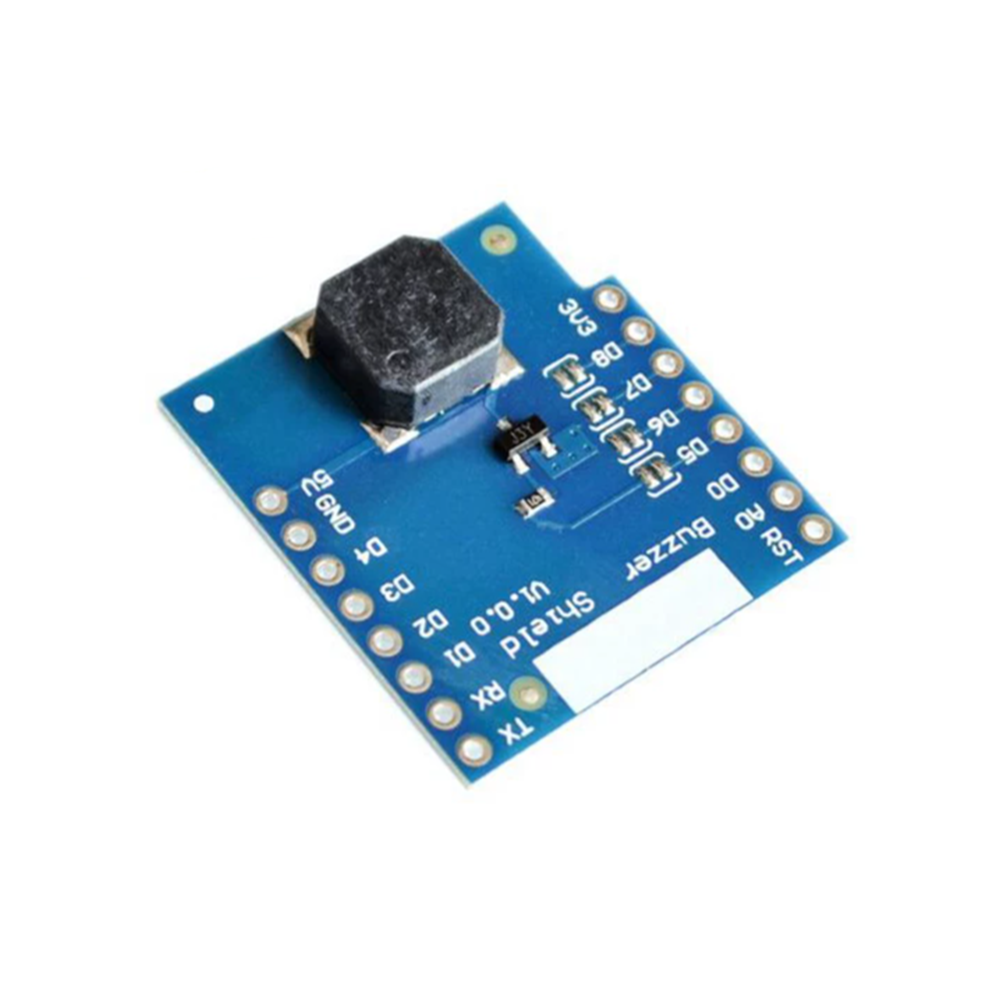
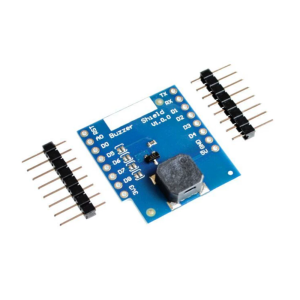
The Buzzer Shield V1.0.0 is a compact, stackable expansion board designed specifically for the WEMOS D1 mini (and compatible ESP8266 boards). It adds a passive piezoelectric buzzer to your D1 mini project, enabling audible alerts, notifications, and simple tone generation without any external wiring or breadboard setup. Simply plug the shield onto the D1 mini’s headers, and you have a ready-to-use sound output solution.
At the heart of the shield is a piezoelectric buzzer with a frequency response range of approximately 1kHz to 3kHz, the optimal range for clear, audible alert tones . Unlike active buzzers that produce a fixed tone, this is a passive buzzer — it requires a PWM (Pulse Width Modulation) signal from the D1 mini’s GPIO pin to generate sound. This gives you full software control over the frequency, allowing you to produce different tones, beeps, and simple melodies .
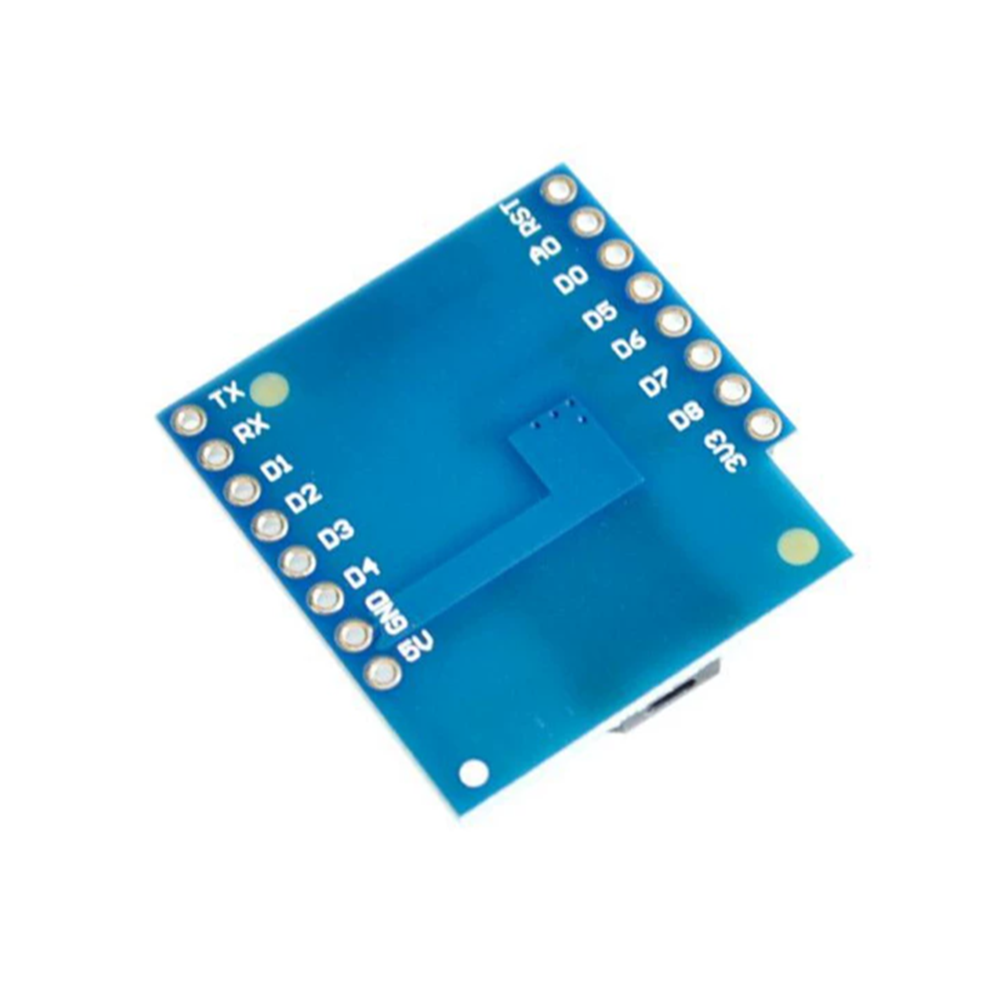
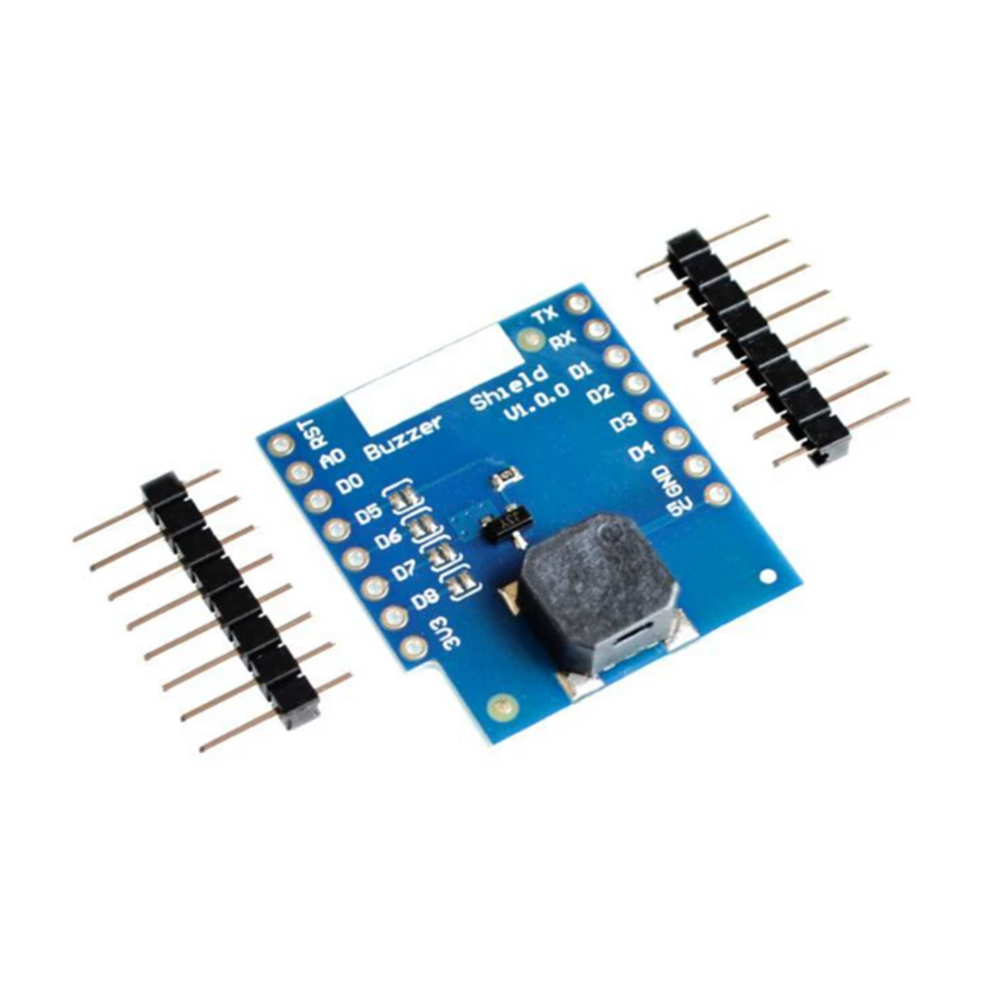
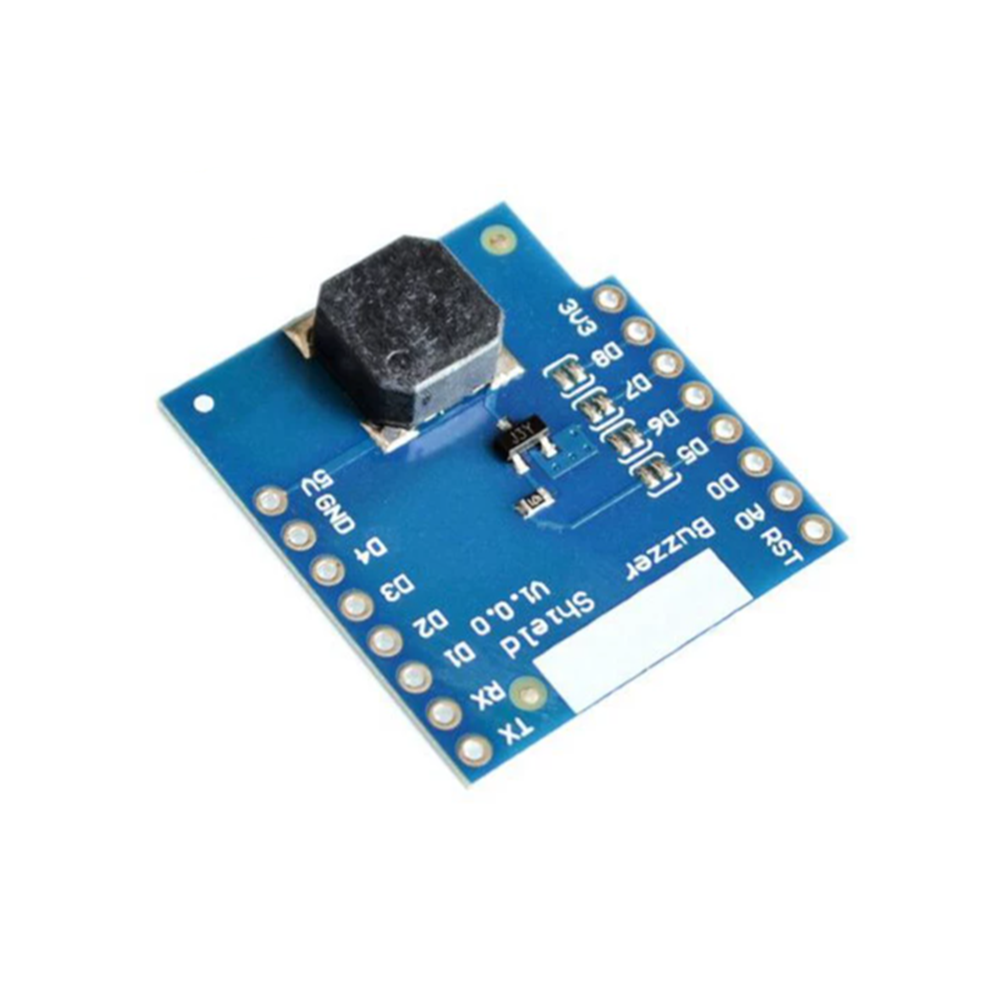
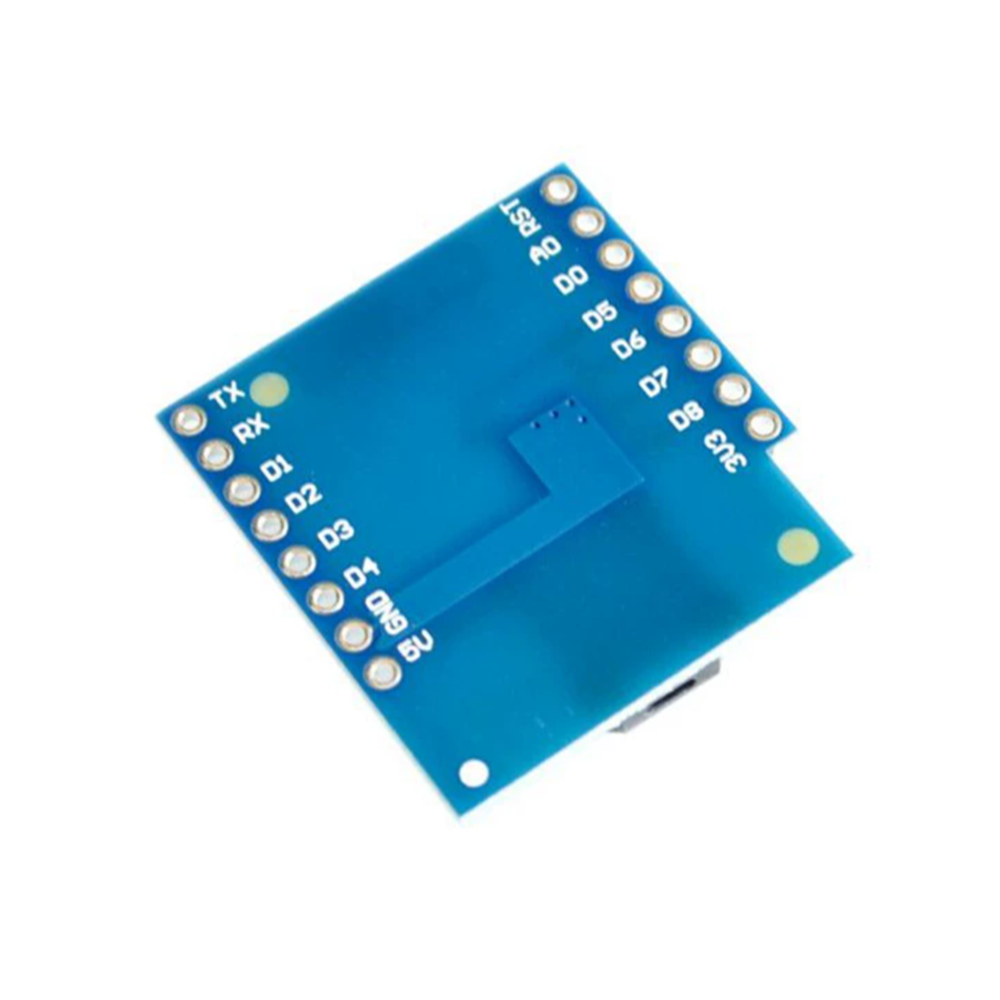
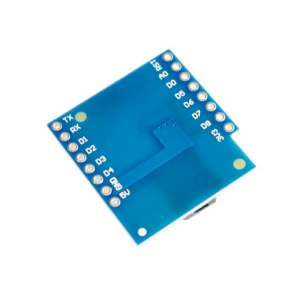
The shield features four selectable control pins (D5, D6, D7, and D8), with D5 (GPIO14) as the default . This flexibility allows you to avoid conflicts with other shields or peripherals that may be using specific GPIO pins. Important: The shield does not come with the control pin pre-connected — you must solder a jumper bridge on the back of the shield to select which pin (D5–D8) you want to use. If no bridge is soldered, the buzzer will not receive a signal and will remain silent .
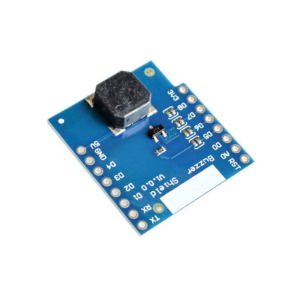
The shield is designed in the standard D1 mini form factor, stacking directly on top of the D1 mini board. It includes two pin headers for installation . The buzzer component is positioned over the USB port area, ensuring a compact and stable assembly . The shield operates from the D1 mini’s 5V supply rail .
The Buzzer Shield is widely used in alarm and notification projects, IoT devices requiring audible feedback, educational STEM projects, home automation alerts, and interactive sound projects. It is an ideal accessory for makers and students working with the WEMOS D1 mini platform who need a simple, integrated sound solution.
Important Note: This is a passive buzzer shield — it will not produce sound when simply powered on. You must provide a PWM signal from the D1 mini’s GPIO pin (D5–D8, as selected by the solder bridge). Use the Arduino tone() function or PWM output to generate sound. The shield is not waterproof and should be kept dry. Do not connect or disconnect the shield while the D1 mini is powered — unplug the USB cable first to avoid damaging the shield or the board .
Features
-
Dedicated D1 mini shield — Stacks directly onto WEMOS D1 mini headers for a compact, integrated solution
-
Passive piezoelectric buzzer — PWM-driven tone generation for flexible sound control
-
1kHz–3kHz frequency range — Optimal range for clear, audible alert tones
-
Four selectable control pins — D5, D6, D7, D8 (default: D5/GPIO14) via solder bridge selection
-
Solder bridge configuration — Must be bridged to enable the buzzer and select the control pin
-
Standard D1 mini form factor — Includes two pin headers for installation
-
5V operation — Powered directly from the D1 mini’s supply rail
-
Stackable design — Can be combined with other D1 mini shields (subject to pin conflicts)
-
Wide application range — Alarms, IoT feedback, STEM projects, home automation, sound effects
-
Ready-to-use — Plug onto D1 mini, solder bridge, and program with Arduino or MicroPython
Technical Specifications
| # | Parameter | Specification |
|---|---|---|
| 1 | Compatible Board | WEMOS D1 mini (ESP8266) |
| 2 | Buzzer Type | Passive piezoelectric buzzer |
| 3 | Frequency Range | Approximately 1kHz – 3kHz |
| 4 | Default Control Pin | D5 (GPIO14) |
| 5 | Selectable Pins | D5, D6, D7, D8 |
| 6 | Control Method | PWM signal (Arduino tone() / MicroPython PWM) |
| 7 | Supply Voltage | 5V (from D1 mini) |
| 8 | Package Contents | 1× Buzzer Shield V1.0.0, 2× pin headers |