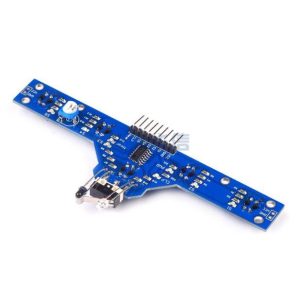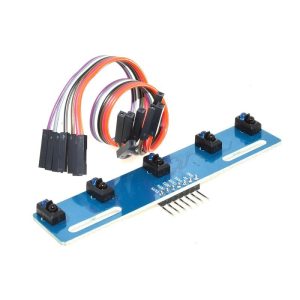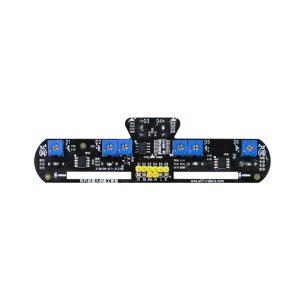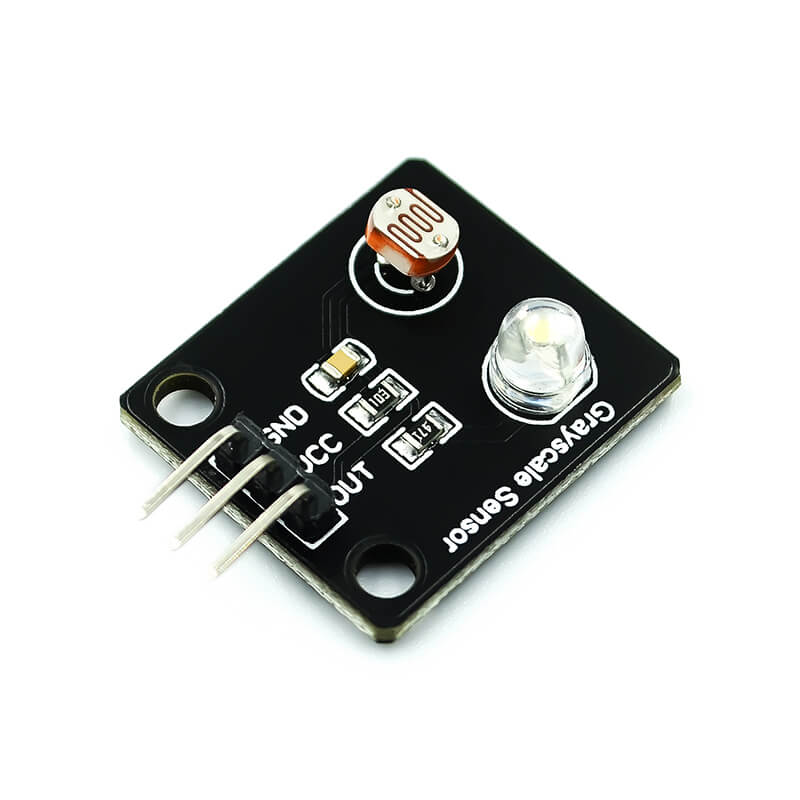
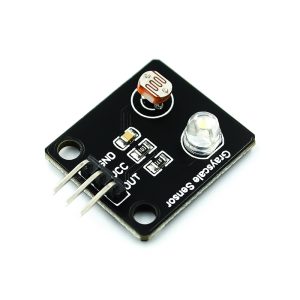
The Analog Line Tracking Sensor Module is a compact, versatile sensor board designed for DIY robotics, line-following competitions, and educational electronics projects. Unlike digital line-tracking modules that provide only a simple HIGH/LOW output, this module delivers an analog voltage output that varies continuously with the reflectivity of the surface beneath it. This analog output enables more precise line detection, allowing robots to make smoother, more intelligent navigation decisions compared to basic on/off sensors.
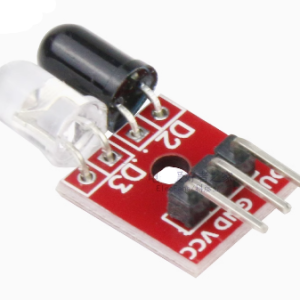
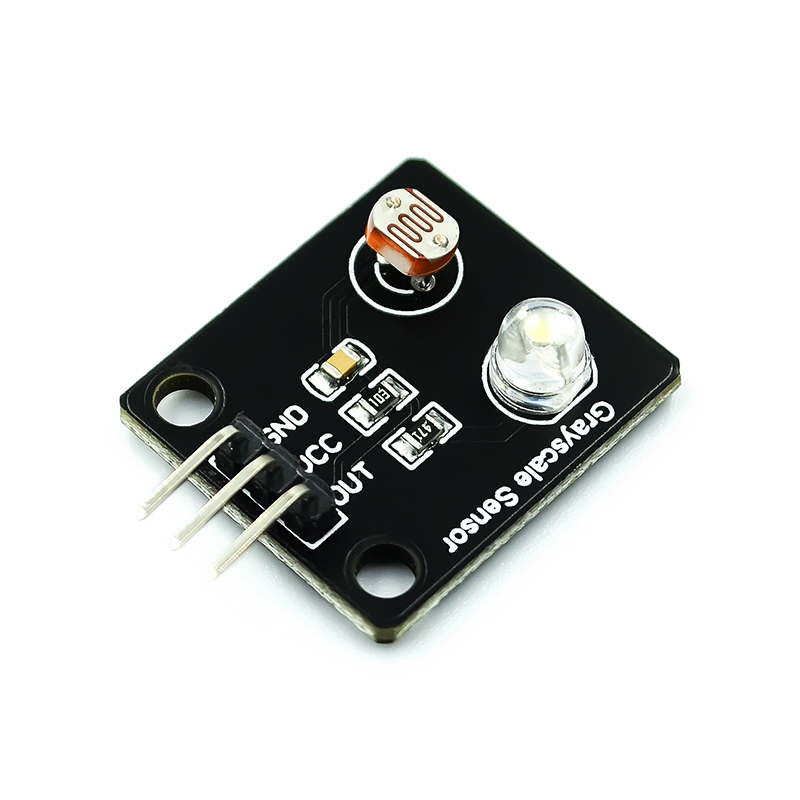
At the heart of the module is an infrared emitter (IR LED) paired with an infrared phototransistor receiver. The emitter projects infrared light downward onto the surface, and the phototransistor measures the intensity of the reflected light. The reflected intensity depends on the surface: white surfaces reflect more IR (higher analog voltage), while black lines absorb more IR (lower analog voltage). The analog output provides a continuous range of values, giving you much more information than a simple threshold-based digital signal.
The analog output connects directly to your microcontroller’s ADC (Analog-to-Digital Converter) input, allowing you to read the exact reflectivity value. This makes it possible to:
-
Detect the line position with sub-millimeter precision using analog interpolation
-
Calibrate thresholds dynamically based on actual surface conditions
-
Implement PID control for smooth, high-speed line following
-
Distinguish between different shades of gray and colored surfaces
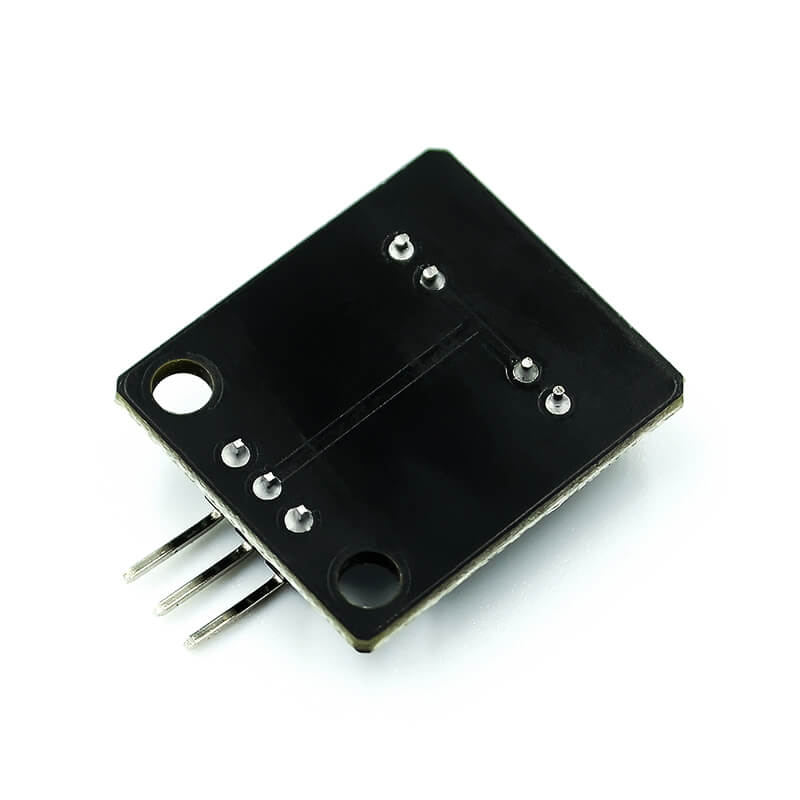
The module includes an onboard potentiometer for adjusting the sensitivity of the analog output, allowing you to optimize the signal range for your specific surface and lighting conditions. LED indicators provide visual feedback, and the compact PCB design with mounting holes makes it easy to integrate into robot chassis and custom enclosures.
The module operates from a 3.3V to 5V DC supply, making it compatible with Arduino, ESP32, STM32, Raspberry Pi, and other microcontrollers. It is widely used in line-following robots, maze-solving robots, sumo robots, line-following competitions, edge detection systems, and educational STEM projects.
Important Note: The module is not waterproof and should be mounted 5–15mm above the surface for optimal detection. Performance can be affected by ambient infrared sources (such as sunlight or incandescent lighting) and highly reflective surfaces. For best results, use the module in controlled lighting conditions and calibrate the potentiometer for your specific surface.
Whether you are building a competition-grade line-following robot, an educational robotics kit, or a custom automation system, the Analog Line Tracking Sensor Module provides the precision and flexibility you need. It is suitable for individual makers, competition teams, students, and businesses purchasing in bulk for product development or educational programs.
Features
-
Analog voltage output — Continuous reflectivity reading for precise line detection
-
High-resolution sensing — Sub-millimeter precision possible with analog interpolation
-
Adjustable sensitivity — Onboard potentiometer for signal range optimization
-
LED indicator — Visual feedback for sensor operation
-
Wide voltage range — 3.3V to 5V DC, compatible with Arduino, ESP32, STM32, Raspberry Pi
-
ADC-compatible output — Direct connection to microcontroller analog input pins
-
Compact PCB design — With mounting holes for easy integration
-
Wide application range — Line-following robots, competitions, maze-solving, edge detection
-
Competition-ready — Enables PID control and high-speed line following
-
Cost-effective — Affordable solution for analog line detection in volume production
Technical Specifications
| # | Parameter | Specification |
|---|---|---|
| 1 | Sensor Type | Infrared reflective (IR LED + phototransistor) |
| 2 | Output Type | Analog voltage (0 – VCC) |
| 3 | Operating Voltage | 3.3V – 5V DC |
| 4 | Detection Height | 5 – 15mm (recommended) |
| 5 | Sensitivity Adjustment | Onboard potentiometer |
| 6 | Indication | LED indicator |
| 7 | Output Interface | ADC-compatible analog output |
| 8 | Module Dimensions | Compact PCB with mounting holes |