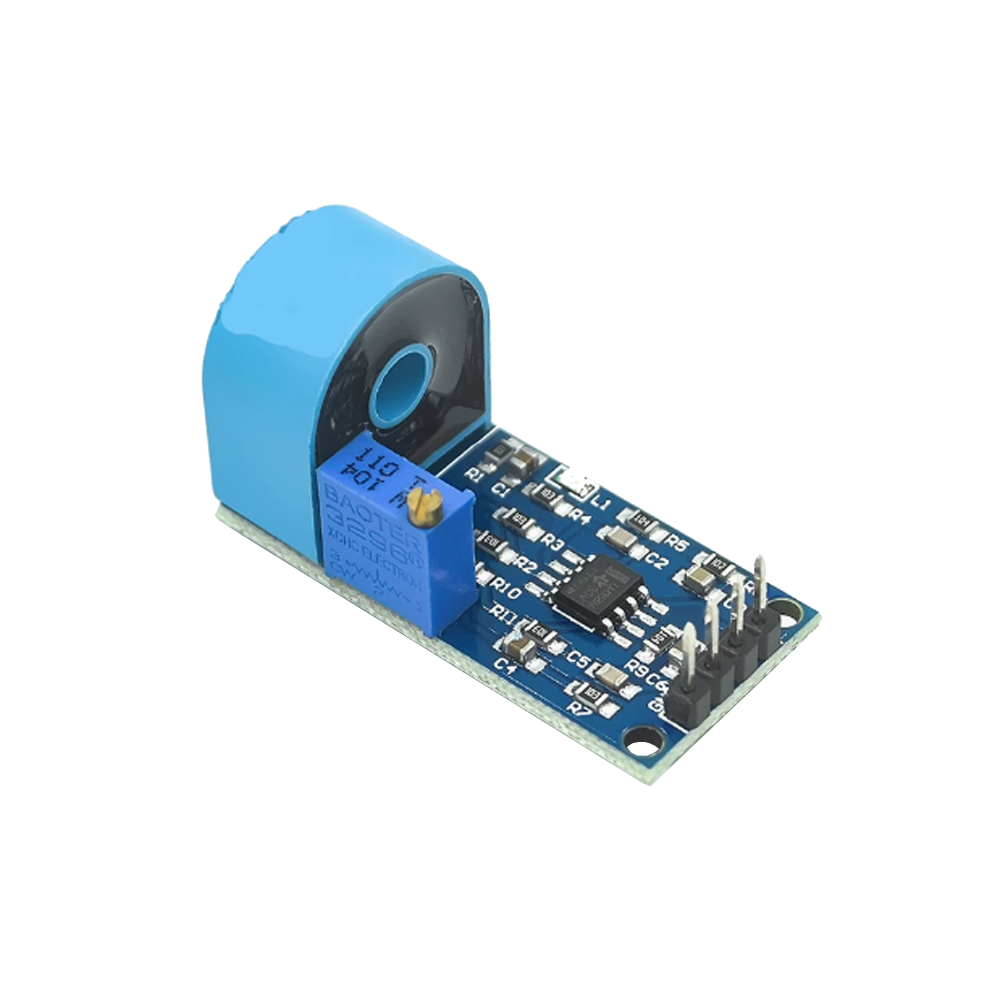
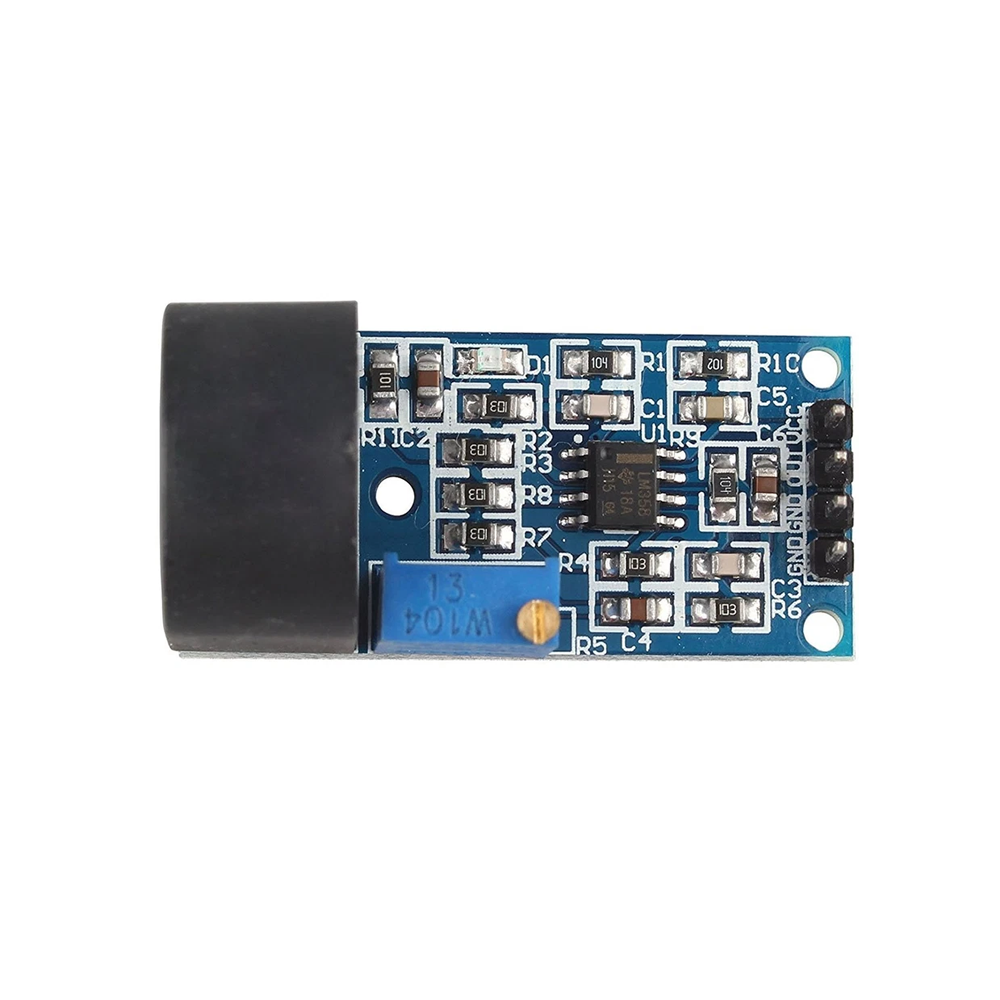
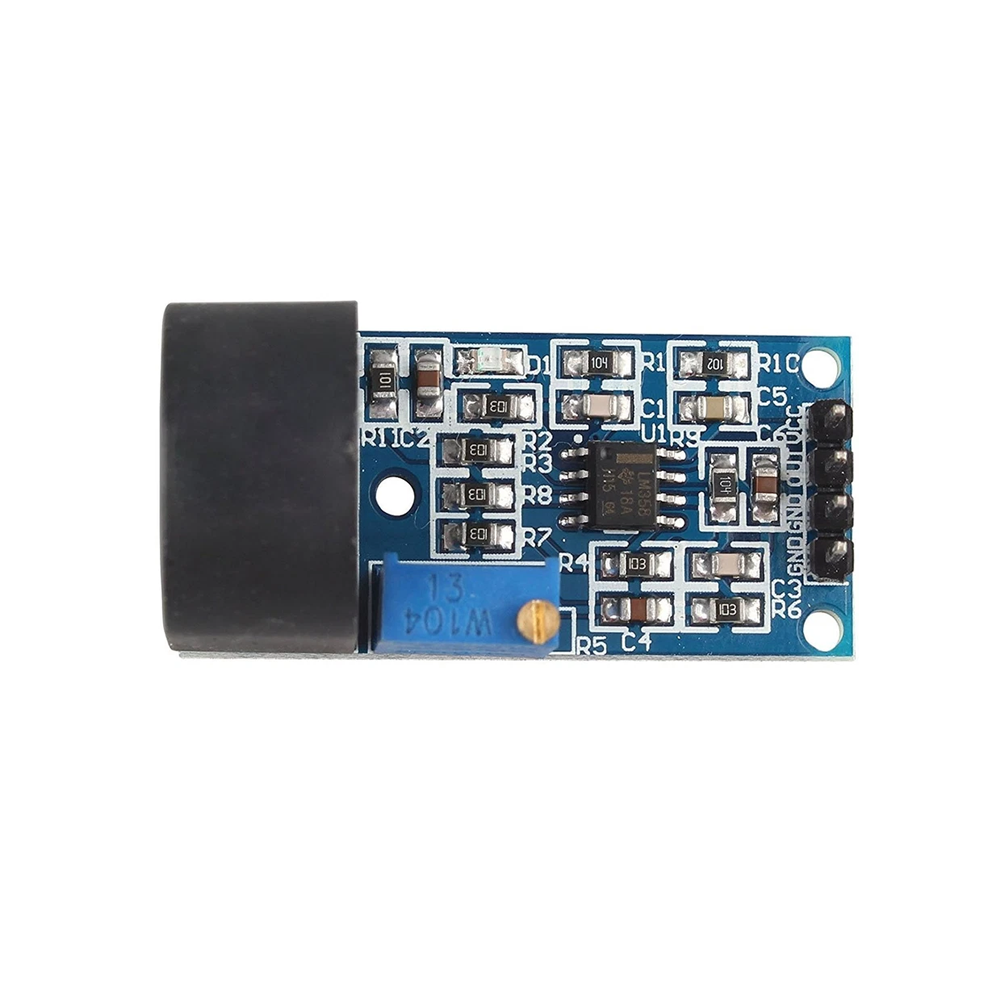
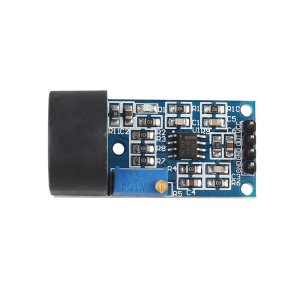
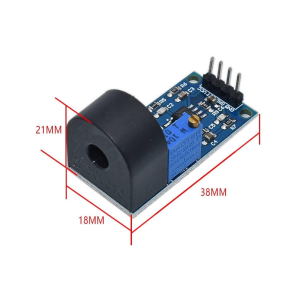
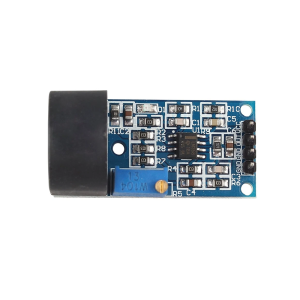
The 5A Range Single-Phase AC Active Output Current Transducer Module is a compact, high-precision current sensing board designed for measuring alternating current (AC) in energy monitoring, load management, and protection applications. Built around the ZMCT103C precision micro current transformer and paired with a high-precision operational amplifier circuit, this module provides an active analog output that is proportional to the primary AC current, making it suitable for direct connection to microcontroller ADC inputs.
At the heart of the module is the ZMCT103C current transformer, a PCB-mount device with a 1000:1 turns ratio. When the primary AC current flows through the conductor passing through the transformer’s center hole, the secondary winding produces a proportional current. At the rated input of 5A, the output is 5mA . The onboard sampling resistor converts this current into a voltage signal, which is then amplified and conditioned by the onboard op-amp circuit for accurate sampling and appropriate compensation .
The module features an adjustable output via an onboard potentiometer. The amplification ratio can be tuned from 0 to 100 times, allowing you to optimize the output voltage range for your specific measurement setup. However, the maximum output voltage (OUT) is capped at 1/2 VCC to ensure compatibility with standard ADC input ranges . The module operates from a wide DC supply voltage of 3V to 35V (some variants specify 5–30V), making it compatible with standard microcontroller power rails .
Important Note: This module outputs an analog AC voltage signal, not a DC voltage. The output waveform corresponds to the primary AC current waveform, with the maximum value not exceeding 1/2 VCC . To read it with a microcontroller ADC, you must either bias the signal to mid-rail (using a voltage divider or op-amp level shifter) or use a bridge rectifier and filter capacitor to convert it to a proportional DC voltage. The transformer provides galvanic isolation (typically rated 3000V–4500V), but proper safety precautions are still required when working with mains AC . The module is not intended for DC current measurement. For precise energy metering applications, calibration against a known reference load is recommended.
Whether you are building a home energy monitor, a solar panel current tracker, or an industrial load monitoring system, the ZMCT103C active output module provides a reliable, isolated solution for AC current sensing with built-in amplification.
Features
-
ZMCT103C precision current transformer — 1000:1 turns ratio for accurate AC current sensing
-
Onboard high-precision op-amp circuit — Amplifies and conditions the signal for direct ADC input
-
Adjustable gain (0–100x) — Potentiometer allows tuning of output voltage range
-
Galvanic isolation — Separates high-voltage AC line from low-voltage measurement circuit for safety
-
Wide supply voltage — 3V to 35V DC operation (variant dependent)
-
Active analog output — Output signal is an AC voltage waveform proportional to primary current
-
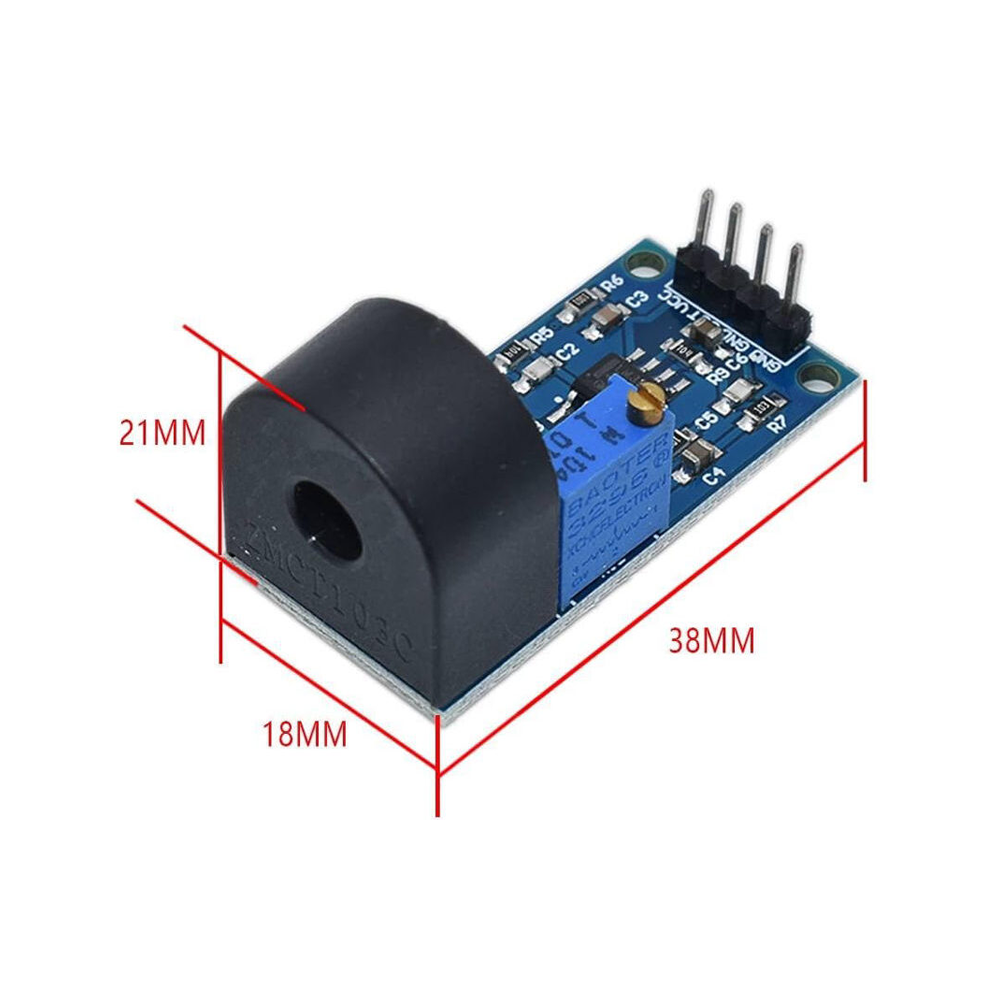
Compact PCB form factor — Approx. 38 × 18.5mm for easy integration
-
High linearity — 0.2% linearity for accurate current-to-voltage conversion
-
Wide linear range — 0–10A (with 100Ω load) for measurement headroom beyond the 5A rating
-
Wide application range — Energy metering, motor monitoring, overcurrent protection, solar systems
Technical Specifications
Usage
Getting Started
-
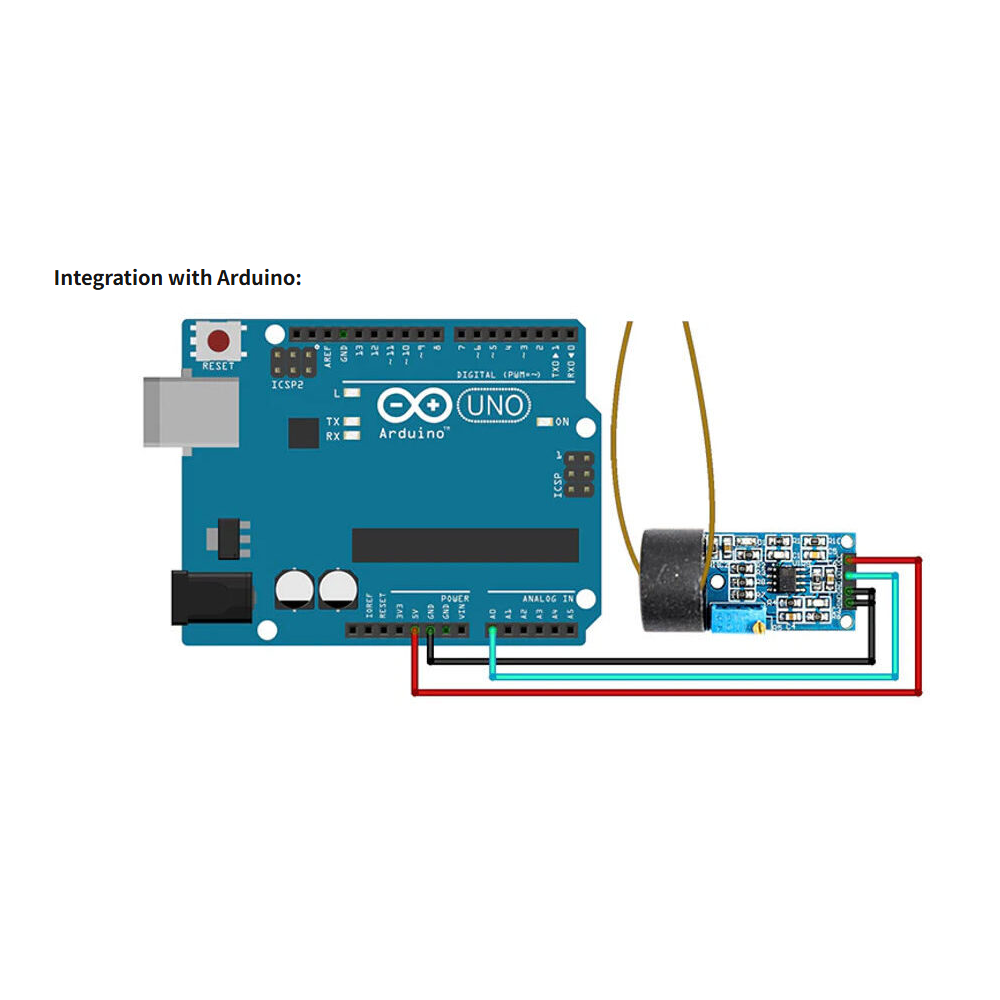
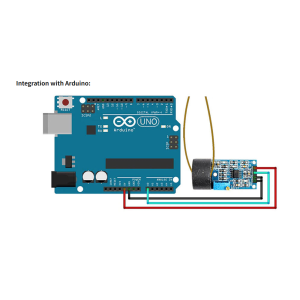
Connect the AC load — Pass the live AC wire through the center hole of the current transformer. Only one conductor should pass through; passing both live and neutral will cancel the magnetic field and produce no output.
-
Connect power — Supply the module’s VCC and GND with the appropriate DC voltage (typically 5V). The onboard op-amp will power up.
-
Connect the output — Connect the OUT pin to an analog input on your microcontroller. Remember: the output is an AC waveform, not a DC level .
-
Adjust gain (optional) — Use the onboard potentiometer to tune the amplification ratio (0–100x) for your desired output range. Do not exceed 1/2 VCC at the output .
-
Bias the signal (if using ADC directly) — To read the AC waveform with a microcontroller ADC, you must add a DC bias (typically VCC/2) so the signal swings positive. Use a resistor divider or an op-amp level shifter.
-
Rectify and filter (alternative method) — For simpler RMS or average readings, add a bridge rectifier and a filter capacitor to convert the AC output to a proportional DC voltage.
-
Calibrate — Apply a known AC load (e.g., a resistive heater) and note the ADC reading. Calculate the scaling factor for your application.
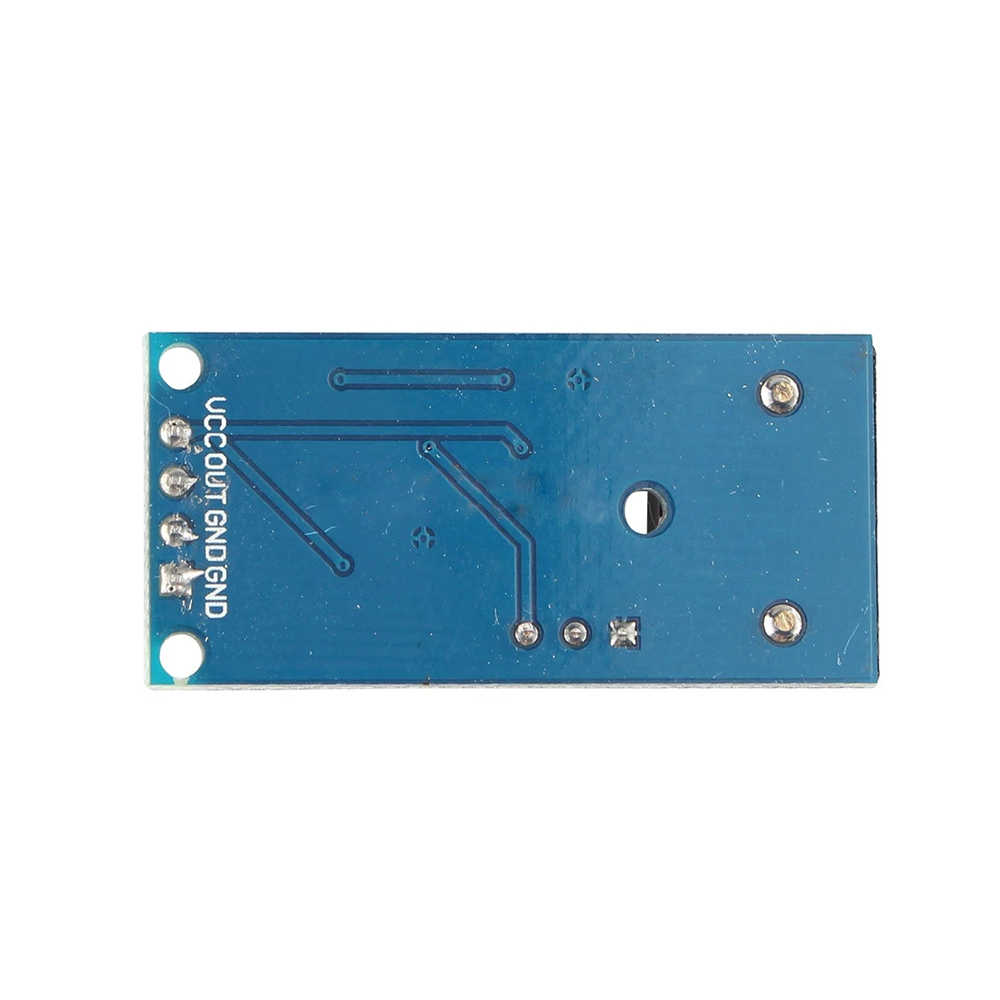
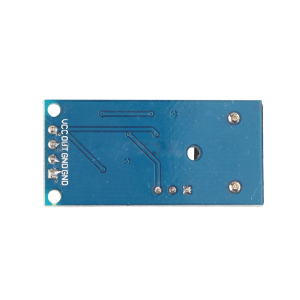
Pin Connections (Typical)
Example Arduino Code (RMS Calculation with Bias)
#define CT_PIN A0
#define VCC 5.0
#define BIAS 2.5
#define SENSITIVITY 0.185
void setup() {
Serial.begin(9600);
}
void loop() {
float sumSquares = 0;
int samples = 2000;
for (int i = 0; i < samples; i++) {
int raw = analogRead(CT_PIN);
float voltage = raw * (VCC / 1023.0);
float centered = voltage - BIAS;
sumSquares += centered * centered;
}
float rmsVoltage = sqrt(sumSquares / samples);
float current = rmsVoltage / SENSITIVITY;
Serial.print("RMS Current: ");
Serial.print(current, 3);
Serial.println(" A");
delay(1000);
}
Note: The SENSITIVITY value must be calibrated for your specific module and load. This example assumes a biased AC signal at the ADC input.
Typical Applications
-
Energy monitoring — Track AC current consumption of appliances and equipment
-
Overcurrent protection — Detect fault conditions and trigger protective relays
-
Motor current monitoring — Track motor load for maintenance and fault detection
-
Solar power systems — Monitor AC output from inverters
-
Load measurement — Measure current drawn by electrical devices for load management
Notes for Business Buyers
-
Active output variant — Includes onboard op-amp and potentiometer for amplified, adjustable output (unlike passive variants that output raw transformer current only)
-
AC signal output — Requires biasing or rectification before ADC reading; factor this into your design
-
Isolation is provided — But proper safety practices for mains voltage are still mandatory
-
Suitable for bulk purchasing — Ideal for energy monitor manufacturers, industrial control integrators, and educational institutions
Q: What is the ZMCT103C active output module used for?
It is an AC current sensor for measuring alternating current up to 5A, used in energy monitoring, overcurrent protection, motor monitoring, and solar power systems .
Q: What is the output signal of this module?
The output is an analog AC voltage waveform proportional to the primary AC current. It is not a DC voltage and must be biased or rectified before reading with a standard ADC .
Q: Can I connect the output directly to an Arduino analog pin?
Not directly for meaningful readings. The AC signal swings negative and positive. You must add a DC bias (typically VCC/2) or use a rectifier and filter to convert it to a DC voltage.
Q: What is the difference between this active output module and a passive current transformer?
This module includes an onboard op-amp circuit and potentiometer for amplified, adjustable output . A passive transformer outputs only the raw secondary current and requires external signal conditioning.
Q: What is the turns ratio of the ZMCT103C?
The ZMCT103C has a 1000:1 turns ratio. At 5A input, the output is 5mA .
Q: Does this module provide galvanic isolation?
Yes. The current transformer provides galvanic isolation between the AC line and the measurement circuit, typically rated 3000V–4500V .
Q: Can I measure DC current with this module?
No. This is a current transformer designed for AC current only. It will not respond to DC current.
Q: How do I adjust the output voltage range?
Use the onboard potentiometer to adjust the amplification ratio (0–100x). The maximum output voltage will not exceed 1/2 VCC .
Q: Is this module safe to use with mains voltage?
The transformer provides isolation, but proper safety precautions are mandatory when working with mains AC. Ensure the module and wiring are properly insulated and enclosed.
Q: Can I purchase in bulk for a product development project?
Yes. This module is suitable for bulk purchasing by energy monitor manufacturers, industrial control integrators, and educational institutions.