360° Rotary Potentiometer Module – Analog Encoder for Arduino/Raspberry Pi

SKU: FA3022-0
Module Type

360° rotary potentiometer module

Rotation Range

360° endless (no mechanical stops)

Output Type

Analog voltage (0 – VCC)

Operating Voltage

3.3V – 5V DC

Potentiometer Resistance

10kΩ (typical)

Center Voltage

Approximately VCC/2

Pin Count

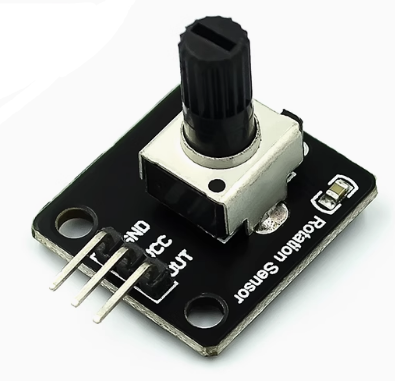
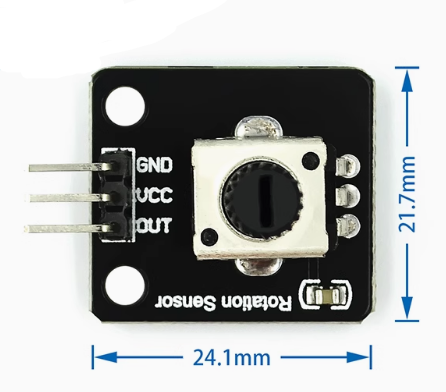
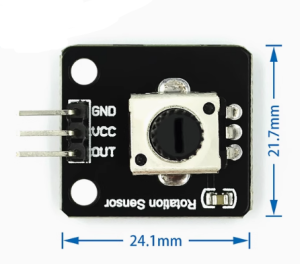
3 pins (VCC, GND, OUT)

Module Dimensions

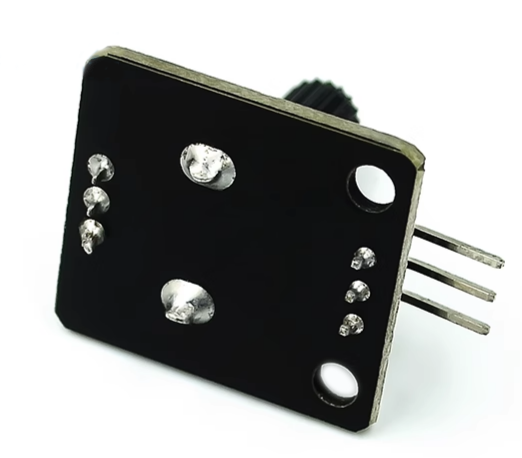
Compact PCB with mounting holes

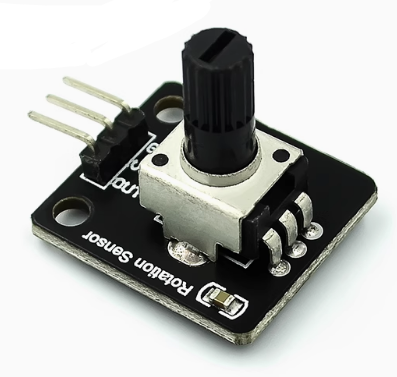
The 360° Rotary Potentiometer Module is a compact, continuous-rotation analog input device designed for Arduino, Raspberry Pi, ESP32, and other microcontroller projects. Unlike standard potentiometers that have a limited rotation range (typically 270°–300°), this module features a 360° endless rotation potentiometer that allows continuous turning without mechanical stops. This makes it an ideal solution for volume controls, menu navigation, servo positioning, dimmer switches, and any application requiring a rotary input that can turn indefinitely in either direction.

At the heart of the module is a 360° rotary potentiometer (also called a endless rotation trimpot or rotary angle sensor). It outputs an analog voltage that varies with the rotational position of the shaft, centered at approximately VCC/2 when the shaft is at the midpoint of its electrical range. However, because the potentiometer has no mechanical stops, the output wraps around from maximum to minimum (or vice versa) as the shaft crosses the zero point. This creates a unique behavior where the output voltage is proportional to the absolute shaft angle, but the shaft can continue rotating indefinitely in either direction.

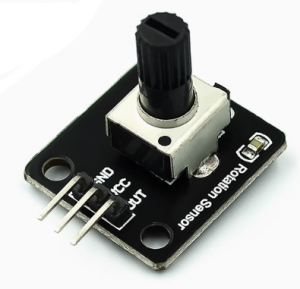
The module features a 3-pin interface (VCC, GND, OUT) for easy connection to microcontrollers. The analog output connects directly to your microcontroller‘s ADC pin, allowing you to read the shaft position in real time. The compact form factor with mounting holes allows easy integration into control panels, audio equipment, and custom enclosures. The ergonomic knob (if included) provides comfortable, precise control for extended use.

The module operates from a 3.3V to 5V DC supply, making it compatible with both modern low-power microcontrollers and traditional 5V systems. The linear taper of the potentiometer provides smooth, predictable output across the rotation range.

Important Note: Because the 360° potentiometer has no mechanical stops, the output voltage will wrap around when the shaft crosses the zero point. For applications requiring absolute position tracking, you must implement wrap-around logic in your code to handle the transition. For applications requiring relative position (such as volume control), you can track the direction of change rather than absolute position. The module is not waterproof and should be kept dry.

The 360° Rotary Potentiometer Module is widely used in volume controls, menu navigation, servo positioning, LED dimming, motor speed control, robotic joint control, audio equipment, and educational STEM projects. It is also popular in DIY electronics and maker projects where continuous rotary input is required.

Whether you are building a custom audio controller, a robot arm interface, or a menu-driven device, the 360° Rotary Potentiometer Module provides a reliable, affordable solution for continuous rotary input. It is suitable for individual makers, students, and businesses purchasing in bulk for product development or educational programs.

Features

  • 360° endless rotation — Continuous turning without mechanical stops

  • Analog voltage output — Proportional to shaft position, centered at VCC/2

  • 3-pin interface — VCC, GND, OUT for simple connection

  • Wide voltage range — 3.3V to 5V DC, compatible with Arduino, ESP32, Raspberry Pi

  • Linear taper — Smooth, predictable output across the rotation range

  • Compact form factor — With mounting holes for easy integration

  • Ergonomic knob (optional) — Comfortable, precise control for extended use

  • Wide application range — Volume controls, menu navigation, servo positioning, dimming

  • ADC-compatible output — Direct connection to microcontroller analog input pins

  • Cost-effective — Affordable solution for rotary input in volume production

Technical Specifications 

# Parameter Specification
1 Module Type 360° rotary potentiometer module
2 Rotation Range 360° endless (no mechanical stops)
3 Output Type Analog voltage (0 – VCC)
4 Operating Voltage 3.3V – 5V DC
5 Potentiometer Resistance 10kΩ (typical)
6 Center Voltage Approximately VCC/2
7 Pin Count 3 pins (VCC, GND, OUT)
8 Module Dimensions Compact PCB with mounting holes

Usage

Getting Started

  1. Connect power — Supply 3.3V or 5V DC to the VCC pin and GND to ground.

  2. Connect the output — Connect the OUT pin to an analog input pin on your microcontroller (e.g., A0 on Arduino).

  3. Upload a test sketch — Read the analog value from the OUT pin and observe the values change as you rotate the shaft.

  4. Implement wrap-around logic — Because the potentiometer has no mechanical stops, the output will wrap around when crossing the zero point. Detect this transition in your code and handle it appropriately.

  5. Implement control logic — Use the analog value for volume control, menu navigation, servo positioning, or other applications.

Pin Connections

Module Pin Function
VCC Power (3.3V–5V)
GND Ground
OUT Analog output (voltage proportional to shaft position)

Output Behavior

Shaft Position Output Voltage
Minimum (0°) Near 0V
Midpoint (180°) Near VCC/2
Maximum (360°) Near VCC
Wrap-around Output jumps from VCC to 0V (or vice versa)

Example Arduino Code

cpp
#define POT_PIN A0

int lastValue = 0;

void setup() {
  Serial.begin(9600);
}

void loop() {
  int sensorValue = analogRead(POT_PIN);
  Serial.print("Potentiometer Value: ");
  Serial.println(sensorValue);

  // Detect wrap-around (transition from high to low or low to high)
  if (abs(sensorValue - lastValue) > 500) {
    Serial.println("Wrap-around detected!");
  }

  lastValue = sensorValue;
  delay(50);
}

Typical Applications

  • Volume controls — Continuous rotary input for audio equipment

  • Menu navigation — Scroll through menus and settings

  • Servo positioning — Manual control of servo motors

  • LED dimming — Continuous brightness adjustment

  • Motor speed control — Variable speed control for DC motors

  • Robotic joint control — Manual positioning of robot arms

  • Audio equipment — Tone, balance, and volume controls

  • Educational STEM projects — Teaching analog input and rotary sensing

Notes for Business Buyers

  • Continuous rotation — No mechanical stops for endless turning.

  • Simple interface — Single analog output connects directly to any microcontroller ADC.

  • Wrap-around behavior — Requires wrap-around logic in code for absolute position tracking.

  • Suitable for bulk purchasing — Ideal for audio equipment manufacturers, control panel makers, and educational institutions.

Q: What is the 360° Rotary Potentiometer Module used for?

It is a continuous-rotation analog input device for volume controls, menu navigation, servo positioning, LED dimming, and educational STEM projects.

Q: What is the difference between this module and a standard potentiometer?

A standard potentiometer has a limited rotation range (typically 270°–300°) with mechanical stops. This 360° potentiometer has no mechanical stops, allowing continuous rotation in either direction.

Q: What voltage does the module require?

It operates from 3.3V to 5V DC, making it compatible with Arduino, ESP32, Raspberry Pi, and other microcontrollers.

Q: What is the output signal?

The module outputs an analog voltage (0 to VCC) that is proportional to the shaft position, centered at approximately VCC/2.

Q: Why does the output value jump when I rotate the shaft?

Because the potentiometer has no mechanical stops, the output voltage wraps around when the shaft crosses the zero point. This is normal behavior for a 360° potentiometer.

Q: How do I handle the wrap-around in my code?

Detect when the analog value changes by a large amount (e.g., >500) between readings, which indicates the shaft has crossed the zero point. Then adjust your position tracking accordingly.

Q: Can I use this module for absolute position tracking?

Yes, but you must implement wrap-around logic in your code to handle the transition. For applications requiring absolute position without wrap-around, a multi-turn potentiometer or absolute encoder is recommended.

Q: What is the potentiometer resistance?

The module typically uses a 10kΩ potentiometer, which is suitable for most microcontroller ADC inputs.

Q: Is the module waterproof?

No. The module is not waterproof and should be kept dry.

Q: Can I purchase in bulk for a product development project?

Yes. This module is suitable for both individual users and business purchasing, including audio equipment manufacturers, control panel makers, and educational institutions.