2262/2272 Quad / M4 Unlocked Receiver Board / 4 Channel Wireless Remote Control

Decoder Chip

PT2272 (M4 mode)

Encoding Compatibility

PT2262 / EV1527 / fixed-code remotes

Channels

4 independent relay outputs

Relay Rated Load

10A 250VAC / 10A 30VDC per channel

Operating Frequency

315MHz or 433MHz (version dependent)

Modulation

ASK / OOK

Operating Voltage

DC 5V (receiver board)

Remote Distance

Approx. 20–50 meters in open area

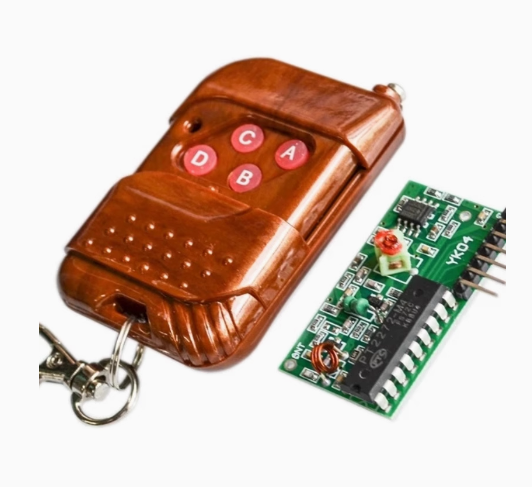
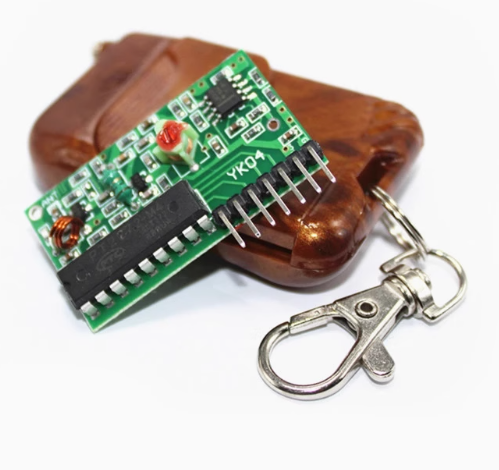
The 2262/2272 Quad M4 Unlocked Receiver Board is a classic 4-channel wireless remote control module designed for simple, reliable switching of multiple devices from a single remote. Based on the industry-standard PT2272 decoding chip and compatible with PT2262 encoding remotes, this module provides four independent relay outputs that can be controlled wirelessly with minimal setup.

The “M4” designation refers to the momentary (jog) operating mode of the decoder. In this mode, the relay for each channel closes only while the corresponding button on the remote is held down, and opens when the button is released. This behavior is ideal for applications requiring continuous activation, such as motor jogging, doorbell buttons, or any scenario where the output should only be active during the button press.

The “Unlocked” designation means the board ships without a fixed pairing code. Instead, it uses solderable address pins on both the transmitter and receiver that must be matched to establish communication. This provides flexibility for custom coding schemes and multi-device setups, though it requires a one-time hardware configuration step during installation.

The receiver board features four independent relay outputs, each capable of switching loads up to 10A at 250VAC or 30VDC. This makes it suitable for controlling lamps, small motors, fans, solenoid valves, and other household or industrial devices. Each channel has a corresponding LED indicator that lights up when the relay is activated, providing clear visual feedback of the current state.

The module operates at 315MHz or 433MHz (depending on the version selected) and uses ASK/OOK modulation for signal transmission. The superheterodyne or super-regenerative receiving circuit provides reliable reception with good anti-interference characteristics in typical indoor environments. Effective remote distance is approximately 20–50 meters in open areas, depending on the specific transmitter and environmental conditions.

The board is compatible with a wide range of PT2262/PT2272 encoding remotes and clone chips, including EV1527 and other fixed-code variants. This makes it easy to integrate into existing remote control systems or replace lost or damaged remotes.

Whether you are building a home automation system, a remote-controlled robot, a wireless lighting setup, or an industrial control panel, the 2262/2272 Quad M4 Unlocked Receiver Board provides a proven, cost-effective foundation. It is suitable for individual makers, students, and businesses purchasing in bulk for education, prototyping, or product development.


Features

  • 4 independent relay outputs — Control up to four devices separately from a single remote.

  • Momentary (jog) mode operation — Each relay is active only while the corresponding remote button is held, ideal for motor jogging and doorbell applications.

  • 10A relay capacity — Each channel handles up to 250VAC / 30VDC at 10A, sufficient for most household and industrial loads.

  • Unlocked address design — Solderable address pins on transmitter and receiver allow custom coding for multi-device setups.

  • PT2262/PT2272 compatible — Works with standard encoding/decoding chipsets and common fixed-code remotes.

  • LED status indicators — Each channel has an LED that lights up when the relay is activated.

  • Wide frequency options — Available in 315MHz and 433MHz versions to suit different regional requirements.

  • Reliable reception — Superheterodyne or super-regenerative architecture for stable performance in typical indoor environments.


Technical Specifications

# Parameter Specification
1 Decoder Chip PT2272 (M4 mode)
2 Encoding Compatibility PT2262 / EV1527 / fixed-code remotes
3 Channels 4 independent relay outputs
4 Relay Rated Load 10A 250VAC / 10A 30VDC per channel
5 Operating Frequency 315MHz or 433MHz (version dependent)
6 Modulation ASK / OOK
7 Operating Voltage DC 5V (receiver board)
8 Remote Distance Approx. 20–50 meters in open area

Usage

Getting Started

  1. Set the address codes — Both the transmitter and receiver have solderable address pins (A0–A7). Solder the same pattern on both boards to establish a matching code. For example, if you solder A0, A1, and A2 on the transmitter, you must also solder A0, A1, and A2 on the receiver.

  2. Power the receiver — Connect DC 5V to the receiver’s VCC and GND pins. The power indicator LED should light up.

  3. Connect your loads — Wire the devices you want to control to the relay outputs. Each channel has normally-open (NO), normally-closed (NC), and common (COM) terminals.

  4. Install the transmitter battery — Insert a 12V battery (23A or 27A type) into the remote control, noting the correct polarity.

  5. Test the system — Press each button on the remote. The corresponding relay should click, and the channel LED should light up. The relay will remain active only while the button is held.

Address Code Configuration

Address Pin Transmitter Receiver Result
A0–A7 Solder selected pins Solder same pins Matching code — works
A0–A7 Solder selected pins Different pins No match — does not work
A0–A7 Leave all open Leave all open Default code — works

Typical Applications

  • Home automation — Control lamps, fans, and small appliances from a single remote.

  • Motor jogging — Momentary control of motors for positioning and testing.

  • Doorbell and intercom systems — Wireless button press activates a relay for chime or lock release.

  • Remote-controlled robots — Four-channel control for forward, backward, left, and right movement.

  • Industrial control panels — Remote activation of valves, pumps, and actuators.

  • Security systems — Wireless arming and triggering of alarm devices.

  • Educational projects — Learning wireless communication and relay control principles.

Notes for Business Buyers

  • Proven technology — PT2262/PT2272 is one of the most widely used and documented wireless encoding schemes.

  • Flexible address coding — Unlocked design allows custom code assignment for multi-device installations.

  • High-current relay outputs — 10A per channel supports a wide range of loads without external drivers.

  • Suitable for bulk purchasing — Ideal for education, prototyping, and product development.

Q: What does "M4" mean in the product name?

M4 refers to the momentary (jog) mode of the PT2272 decoder. In this mode, each relay closes only while the corresponding remote button is held down and opens when released.

Q: What does "Unlocked" mean?

“Unlocked” means the board ships without a preset pairing code. You must solder matching address pins on both the transmitter and receiver to establish communication.

Q: How do I set the address code?

Both the transmitter and receiver have address pins labeled A0 through A7. Solder the same pins on both boards (e.g., A0, A1, A2 on both) to create a matching code. If the codes do not match, the receiver will not respond.

Q: Can I use multiple remotes with one receiver?

Yes, as long as all remotes have the same address code as the receiver. You can also use multiple receivers with the same remote by setting matching codes on all devices.

Q: What is the difference between M4 and L4 modes?

M4 (momentary) : relay is active only while the button is held. L4 (latching) : relay toggles on and off with each button press. This board uses M4 mode.

Q: What frequency does this module use?

It is available in 315MHz and 433MHz versions. The frequency must match between the transmitter and receiver for communication to work.

Q: Can I control AC devices with this module?

Yes. The relay outputs can switch AC loads up to 250VAC at 10A. However, the receiver board itself requires DC 5V for power. Do not connect AC power to the receiver’s VCC or GND terminals.

Q: What is the maximum load per channel?

Each relay channel is rated for 10A at 250VAC or 30VDC. For inductive loads like motors, keep the load current below 60–70% of the rated value for reliable operation.

Q: How far can the remote control transmit?

Effective distance is approximately 20–50 meters in open areas. Indoor range may be reduced by walls, metal structures, and electromagnetic interference.

Q: Can I purchase in bulk for a school or company?

Yes. This module is suitable for both individual users and business purchasing, including classroom kits, prototyping labs, and product development.