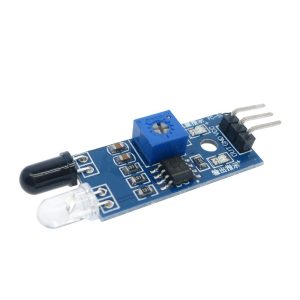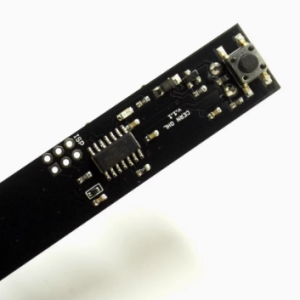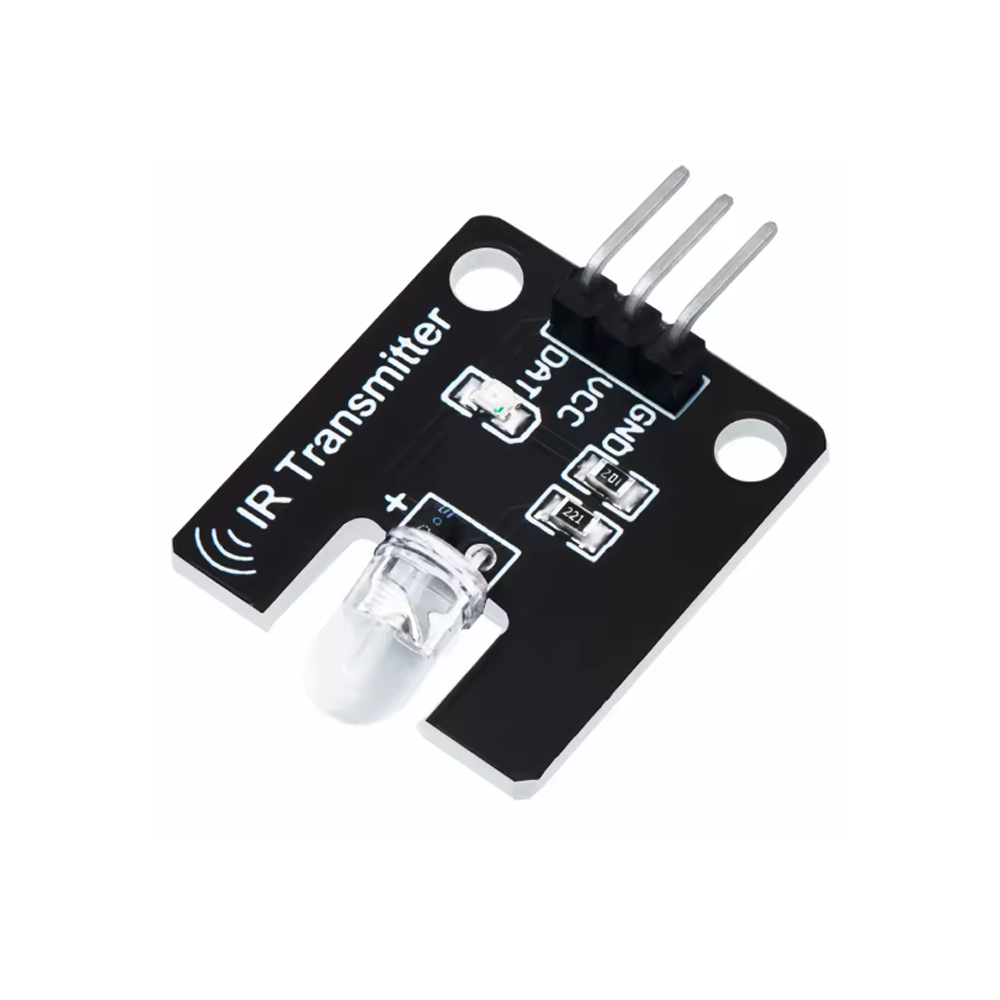
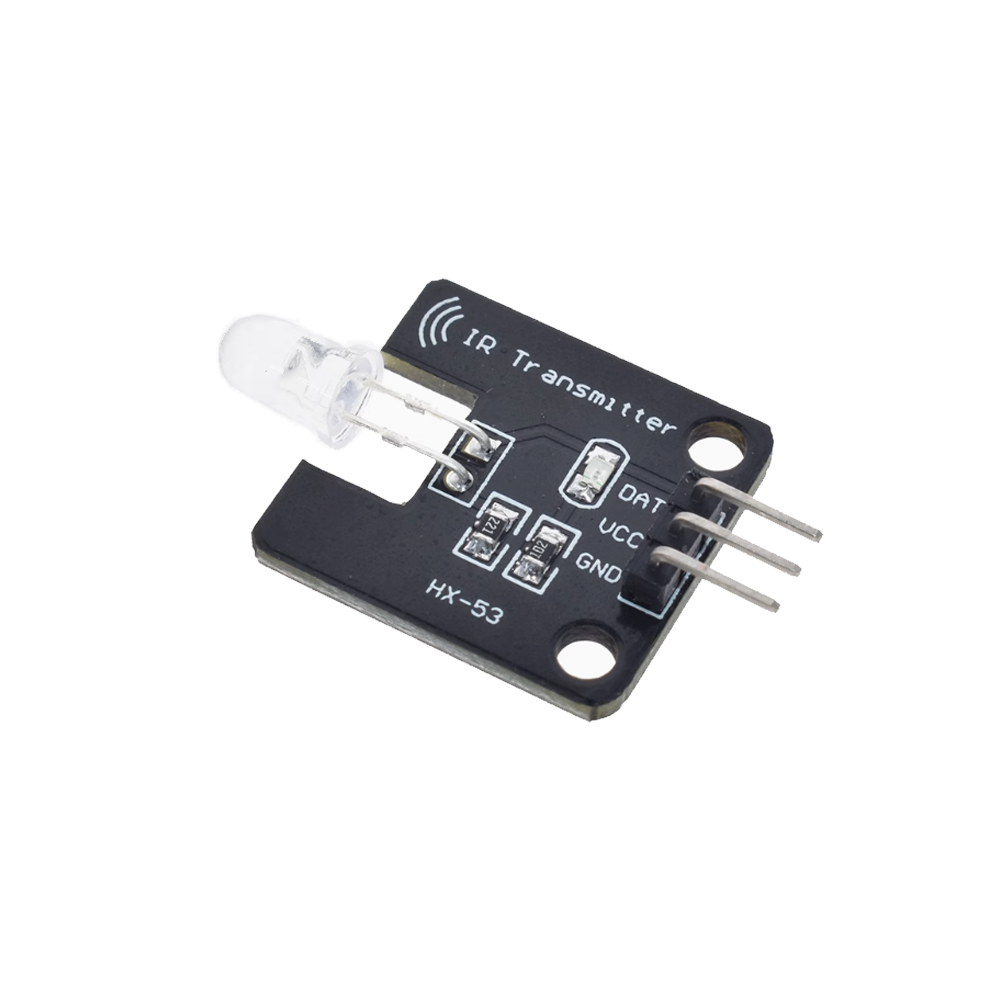
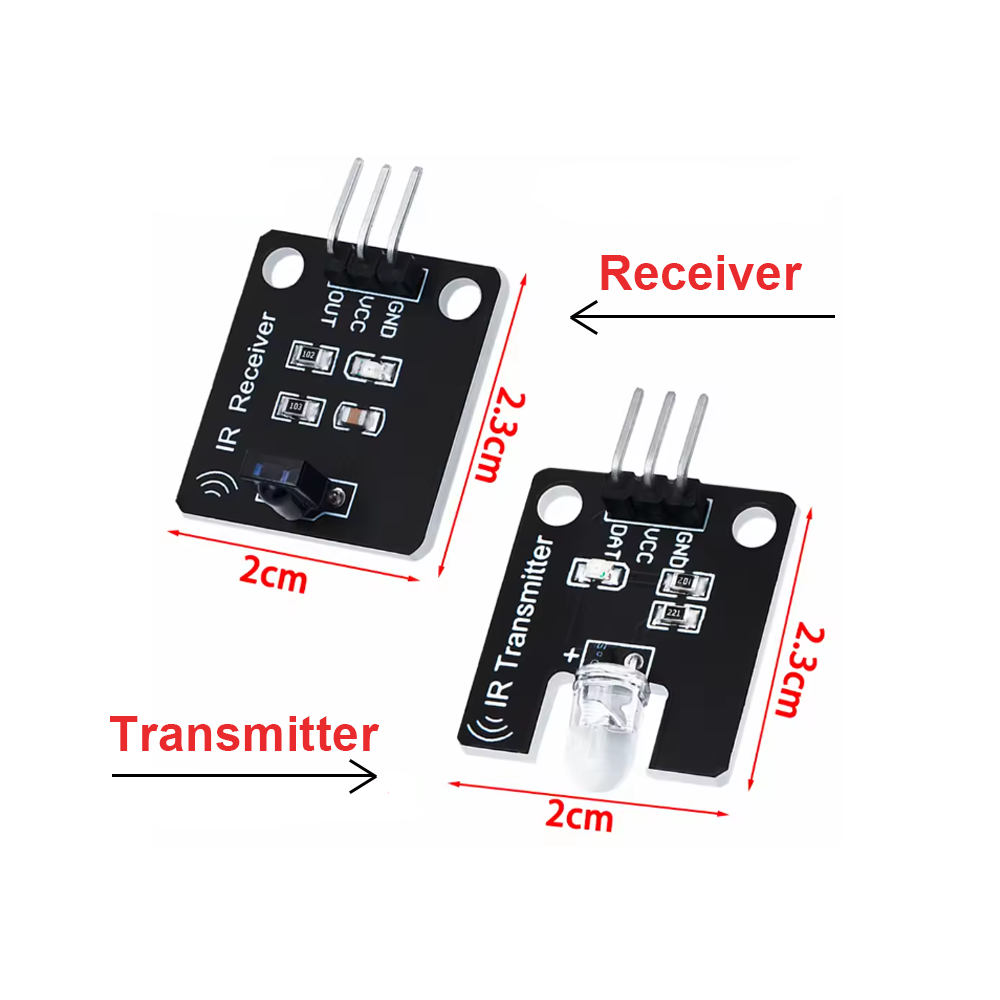
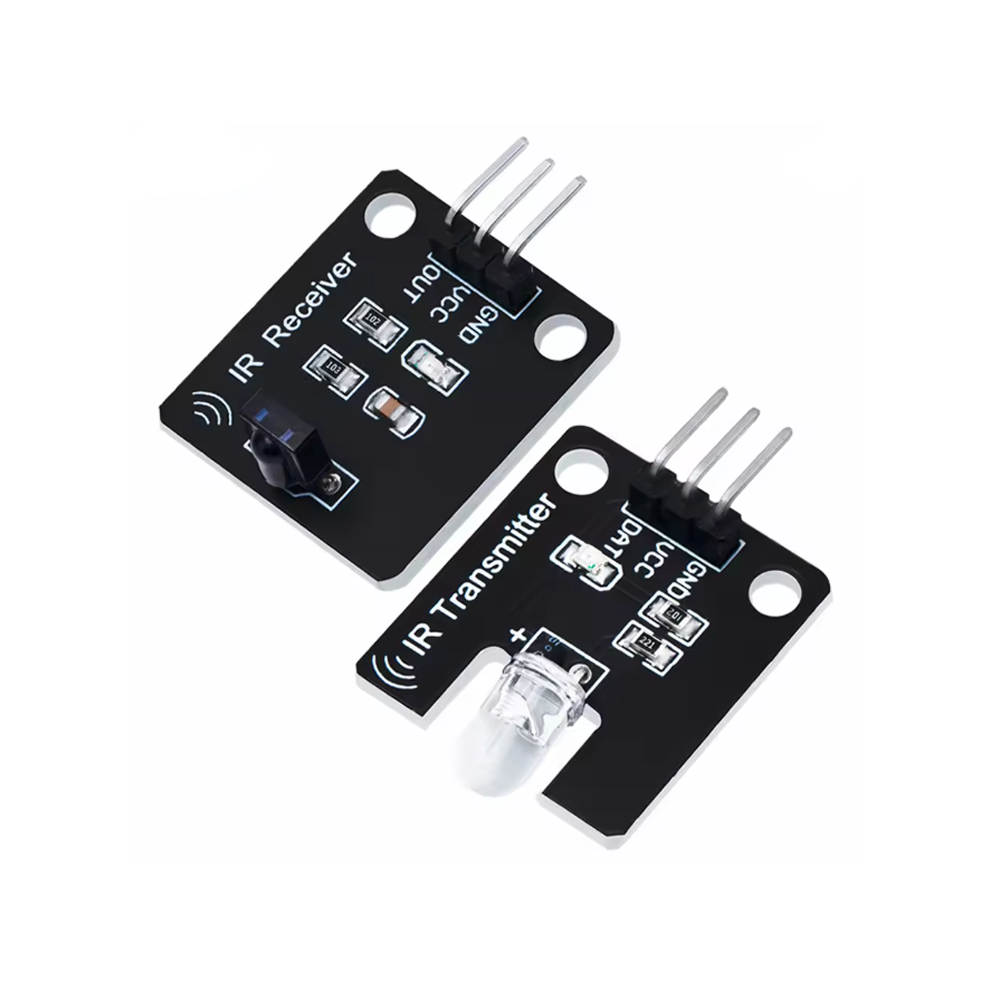
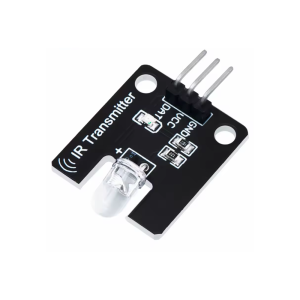
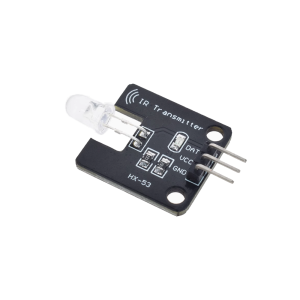
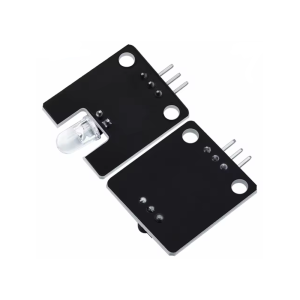
The Digital IR 38kHz Infrared Transmitter Module is a compact, ready-to-use infrared emitter board designed for Arduino, ESP32, Raspberry Pi, STM32, and other microcontroller projects. Unlike bare IR LED modules that require external driver circuitry, this module includes an onboard transistor driver and current-limiting resistor, allowing it to be controlled directly from a microcontroller’s digital pin. It transmits infrared signals at the standard 38kHz carrier frequency, making it compatible with the vast ecosystem of consumer IR remote protocols (NEC, RC5, RC6, Sony SIRC, etc.).
At the heart of the module is a high-output infrared LED that emits light at approximately 940nm — invisible to the human eye but easily detected by IR receivers. The onboard driver circuit amplifies the microcontroller’s signal to drive the IR LED at the required current, ensuring reliable transmission without overloading the MCU’s output pin. The 38kHz modulation is generated by the microcontroller’s PWM output or by the IRremote library, which handles the carrier frequency and protocol encoding automatically.
The module features a 3-pin interface (VCC, GND, DAT) for simple connection to microcontrollers. The DAT pin accepts a digital or PWM signal, switching the IR LED on and off at the desired frequency. The compact form factor with mounting holes allows easy integration into custom remote controls, IR blasters, and communication devices. An LED indicator (on some variants) provides visual feedback when the module is transmitting.
The module operates from a 3.3V to 5V DC supply, making it compatible with both modern low-power microcontrollers and traditional 5V systems. The onboard driver ensures consistent IR output power regardless of the microcontroller’s drive strength. The low power consumption makes it suitable for battery-powered IR remote projects.
The Digital IR 38kHz Infrared Transmitter Module is widely used in IR remote control emulators, universal remote projects, IR communication links, object detection (with IR receiver), proximity sensing, obstacle avoidance robots, home automation, and educational STEM projects. It is also popular in DIY electronics and maker projects where infrared transmission is required.
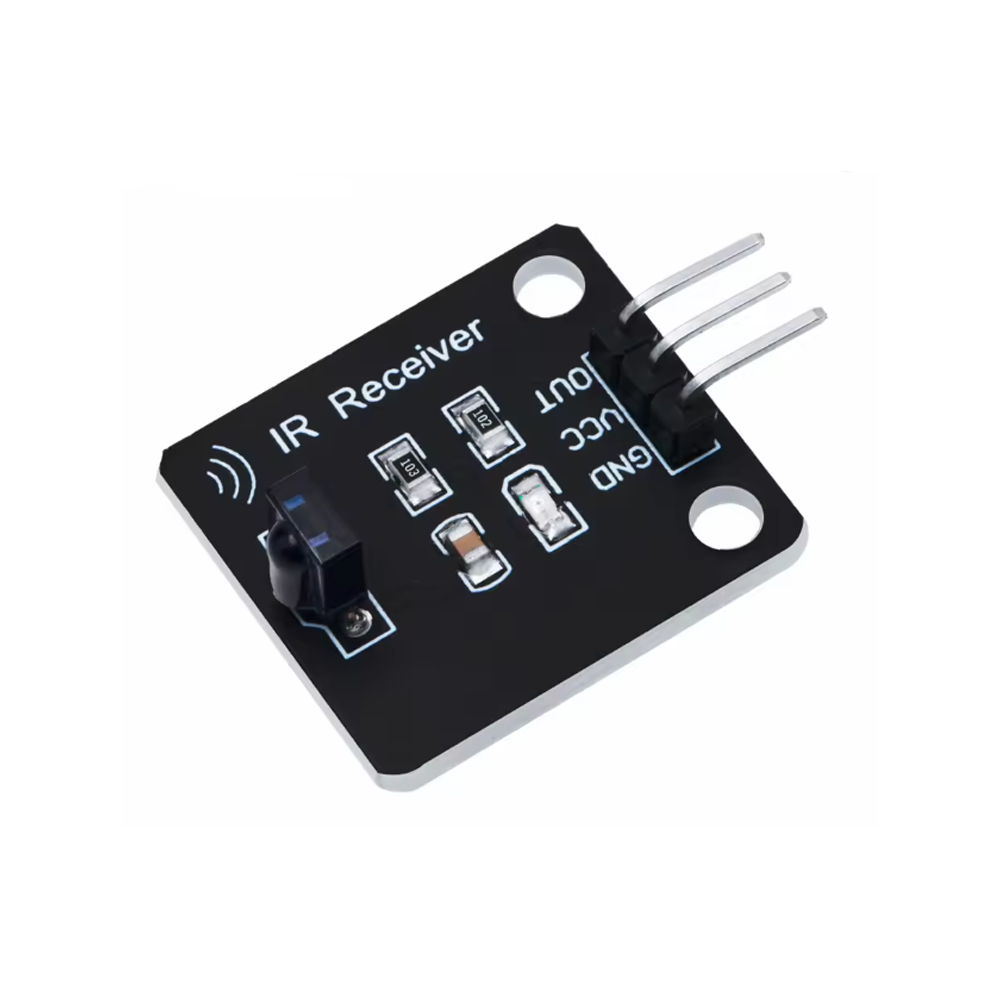
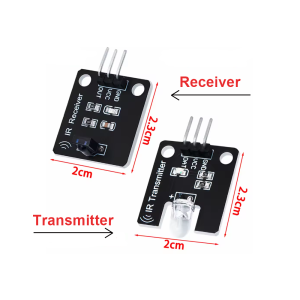
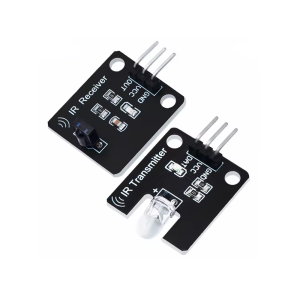
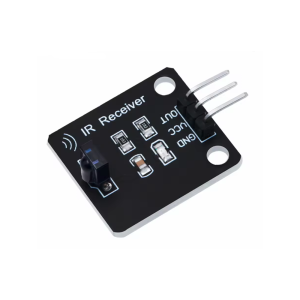
Important Note: This module is an IR transmitter only — it does not include a receiver. To detect IR signals, you need a separate IR receiver module (such as the KY-022 or TSOP38238). The IR LED is invisible to the human eye — you cannot see the light it emits, but it can be viewed through a digital camera or phone camera. The module is not waterproof and should be kept dry. For reliable IR communication, align the transmitter and receiver with a clear line of sight and avoid strong ambient light sources.
Whether you are building a custom remote control, an IR communication system, or an object detection project, the Digital IR 38kHz Infrared Transmitter Module provides a reliable, affordable solution for infrared transmission with built-in driver circuitry. It is suitable for individual makers, students, and businesses purchasing in bulk for product development or educational programs.
Features
-
Onboard transistor driver — Direct connection to microcontroller without external components
-
38kHz carrier frequency — Compatible with standard consumer IR remote protocols
-
940nm infrared LED — Invisible IR emission for remote control and communication
-
3-pin interface — VCC, GND, DAT for simple connection
-
Wide voltage range — 3.3V to 5V DC, compatible with Arduino, ESP32, Raspberry Pi
-
PWM compatible — Accepts 38kHz modulation from microcontroller
-
Current-limiting resistor onboard — Protects the IR LED from overcurrent
-
Compact form factor — With mounting holes for easy integration
-
Wide application range — IR remote emulation, communication, object detection, home automation
-
Cost-effective — Affordable solution for IR transmission in volume production
Technical Specifications
| # | Parameter | Specification |
|---|---|---|
| 1 | Emitter Type | Infrared LED with onboard driver |
| 2 | Peak Wavelength | 940nm |
| 3 | Carrier Frequency | 38kHz (optimized) |
| 4 | Operating Voltage | 3.3V – 5V DC |
| 5 | Forward Current | ~20mA (typical) |
| 6 | Pin Count | 3 pins (VCC, GND, DAT) |
| 7 | Driver Type | Onboard transistor |
| 8 | Module Dimensions | Compact PCB with mounting holes |