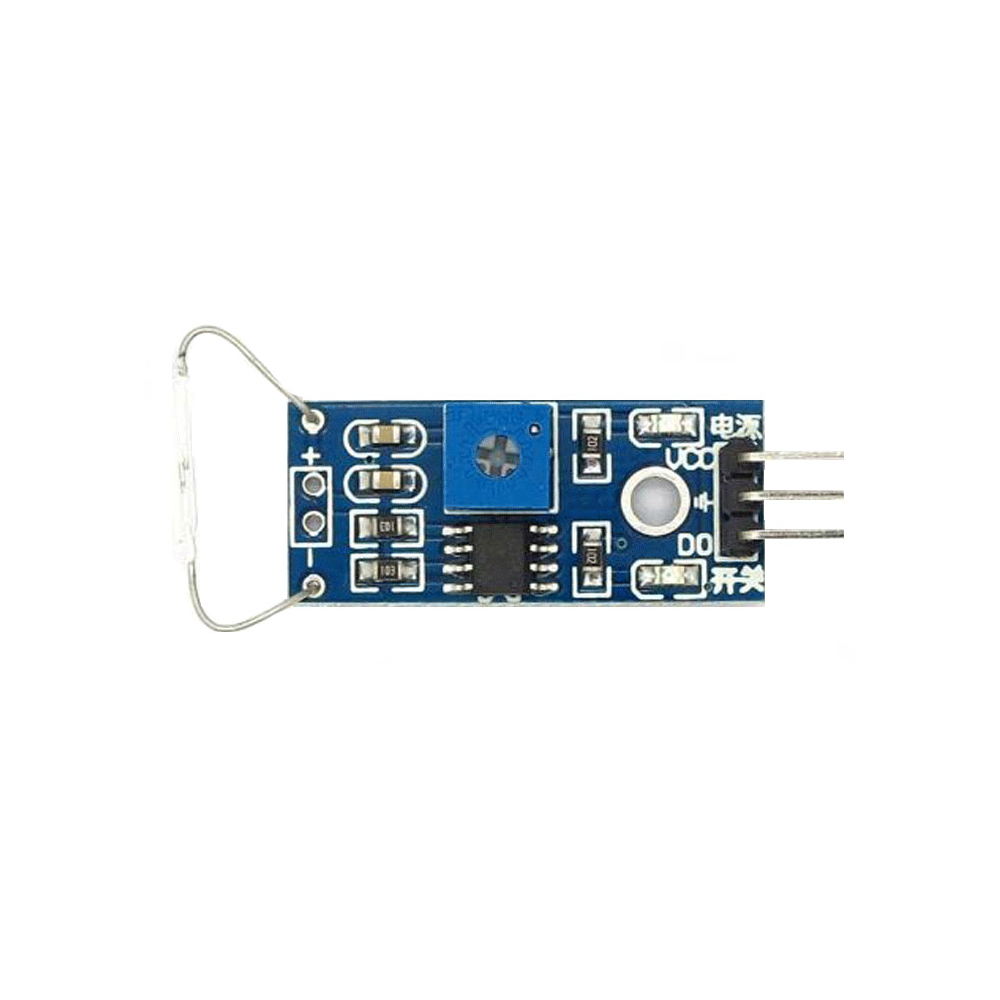
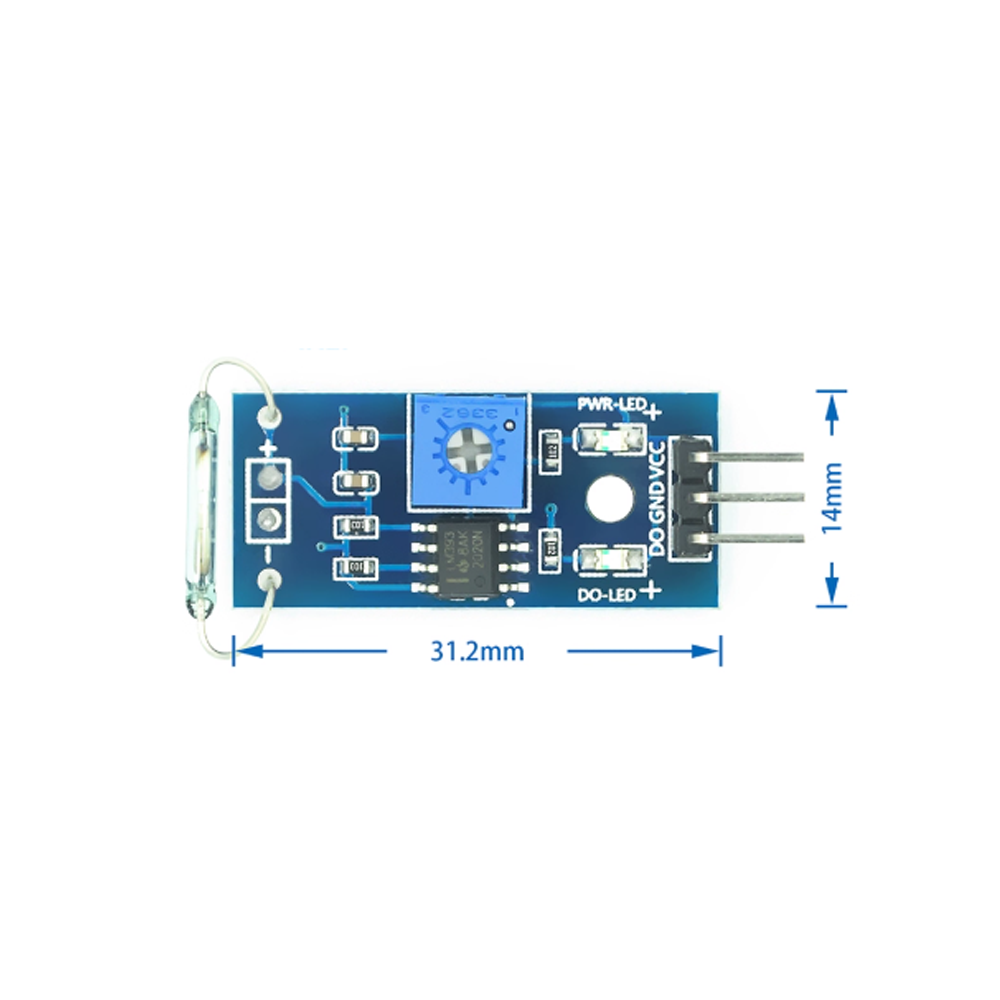
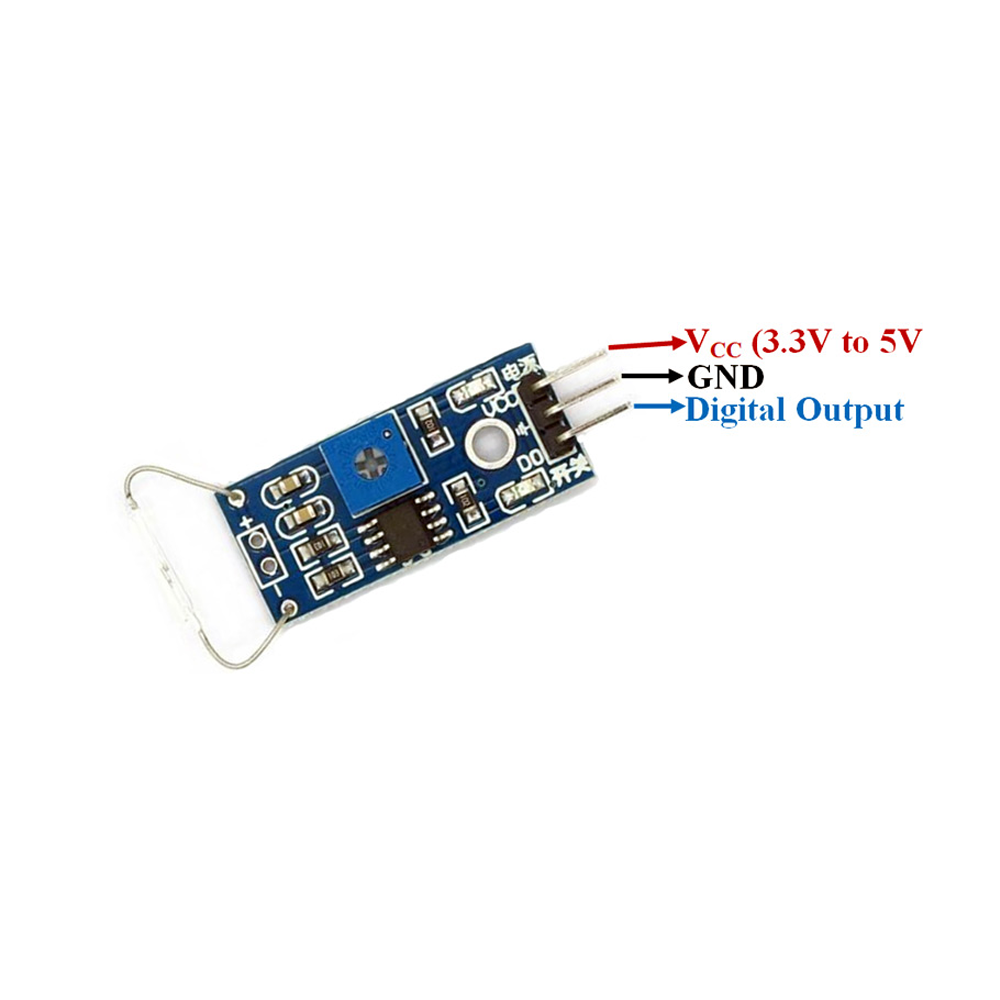
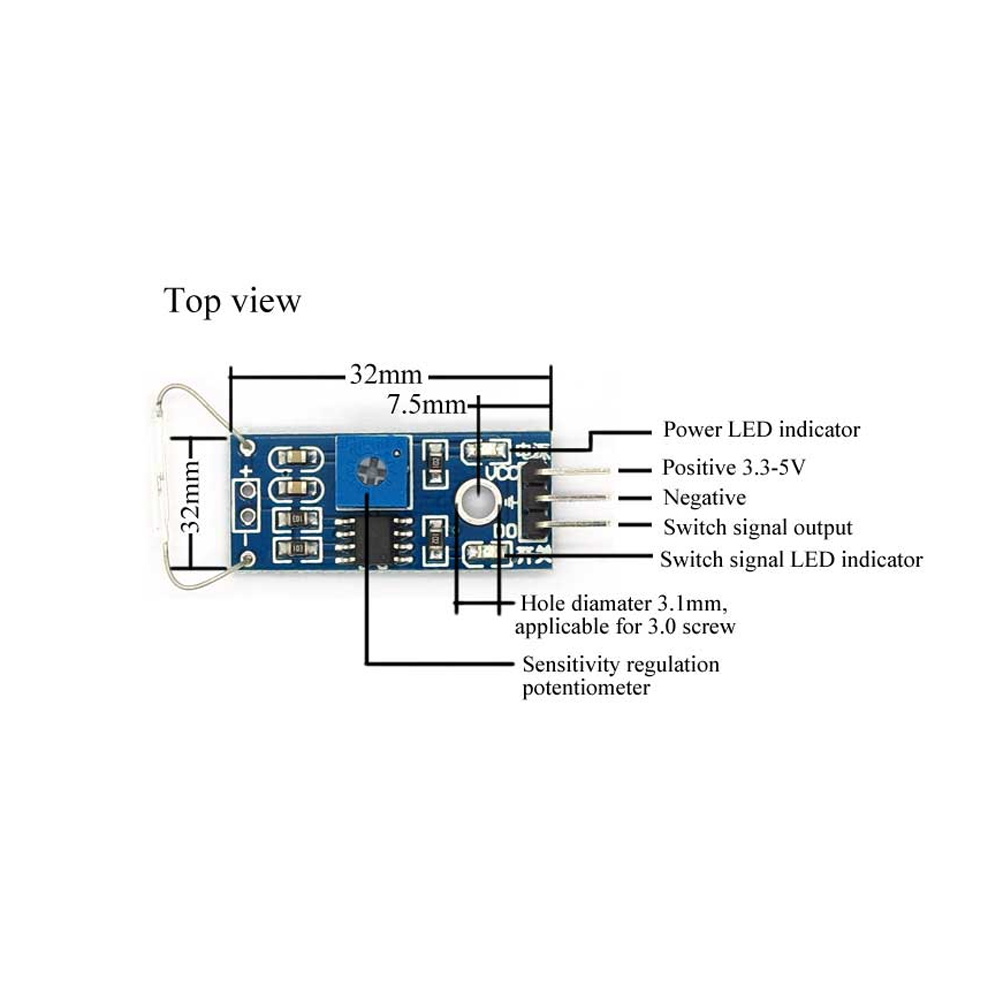
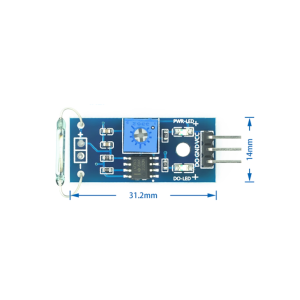
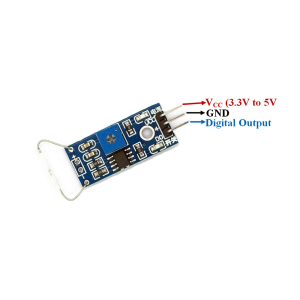
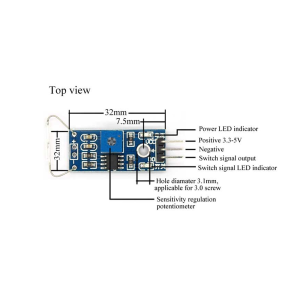
The Reed Switch Sensor Module is a compact, reliable magnetic proximity sensing board designed for Arduino, ESP32, Raspberry Pi, STM32, and other microcontroller projects. Built around a hermetically sealed reed switch, this module detects the presence of a magnetic field and provides a clean digital output for counting, position sensing, door/window detection, and proximity applications. It is one of the simplest and most durable magnetic sensing solutions available for makers, students, and industrial applications.
At the heart of the module is a reed switch — a small, sealed glass tube containing two ferromagnetic contacts. In the presence of a magnetic field (such as from a permanent magnet), the contacts are pulled together, closing the circuit. When the magnetic field is removed, the contacts spring apart, opening the circuit. This mechanical switching action requires no power to maintain state, making the reed switch an extremely low-power and reliable sensing element with a lifespan of millions of operations.
The module includes signal conditioning circuitry that converts the reed switch’s open/close state into a clean digital output compatible with microcontroller logic levels. The output is typically LOW when a magnet is detected and HIGH when no magnet is present (depending on the module variant), and it can be connected directly to a digital input pin. An LED indicator provides visual feedback when the magnetic field is detected, making it easy to verify operation during setup and troubleshooting.
The module operates from a 3.3V to 5V DC supply, making it compatible with both modern low-power microcontrollers and traditional 5V systems. The compact form factor with mounting holes allows easy integration into door frames, window sashes, equipment enclosures, and custom projects. The screw terminals or pin headers provide secure connections for power and signal wiring.
The Reed Switch Sensor Module is widely used in door and window security systems, position detection, revolution counting, flow meters, speed measurement, proximity sensing, robotic limit switches, and tamper detection. It is also popular in educational projects for teaching magnetic sensing and switch principles.
Important Note: The reed switch is a mechanical device with glass contacts, so it should be handled carefully to avoid breakage. The sensitivity depends on the strength of the magnet and the distance between the magnet and the switch — keep the gap as small as practical for reliable detection. Unlike Hall Effect sensors, reed switches have no polarity and can be triggered by either pole of a magnet. The module is not waterproof and should be kept dry. For high-vibration applications, consider a Hall Effect sensor as an alternative.
Whether you are building a door alarm, a revolution counter, or a proximity detection system, the Reed Switch Sensor Module provides a reliable, low-cost solution for magnetic sensing. It is suitable for individual makers, students, and businesses purchasing in bulk for product development or educational programs.
Features
-
Hermetically sealed reed switch — Reliable magnetic detection with millions of operations
-
Digital output — Clean HIGH/LOW signal for easy MCU integration
-
Zero power consumption — Switch requires no power to maintain state
-
LED indicator — Visual feedback when magnetic field is detected
-
Wide voltage range — 3.3V to 5V DC, compatible with Arduino, ESP32, Raspberry Pi
-
No polarity sensitivity — Triggers with either pole of a magnet
-
Compact form factor — With mounting holes for easy integration
-
Screw terminals or pin headers — Secure connections for power and signal
-
Wide application range — Door/window security, position detection, counting, proximity sensing
-
Cost-effective — Affordable solution for magnetic sensing in volume production
Technical Specifications
| # | Parameter | Specification |
|---|---|---|
| 1 | Sensor Type | Hermetically sealed reed switch |
| 2 | Output Type | Digital (HIGH/LOW) |
| 3 | Operating Voltage | 3.3V – 5V DC |
| 4 | Contact Type | Normally Open (NO) or Normally Closed (NC) depending on variant |
| 5 | Trigger Method | Magnetic field proximity |
| 6 | Indication | LED indicator |
| 7 | Pin Count | 3 pins (VCC, GND, DO) |
| 8 | Module Dimensions | Compact PCB with mounting holes |