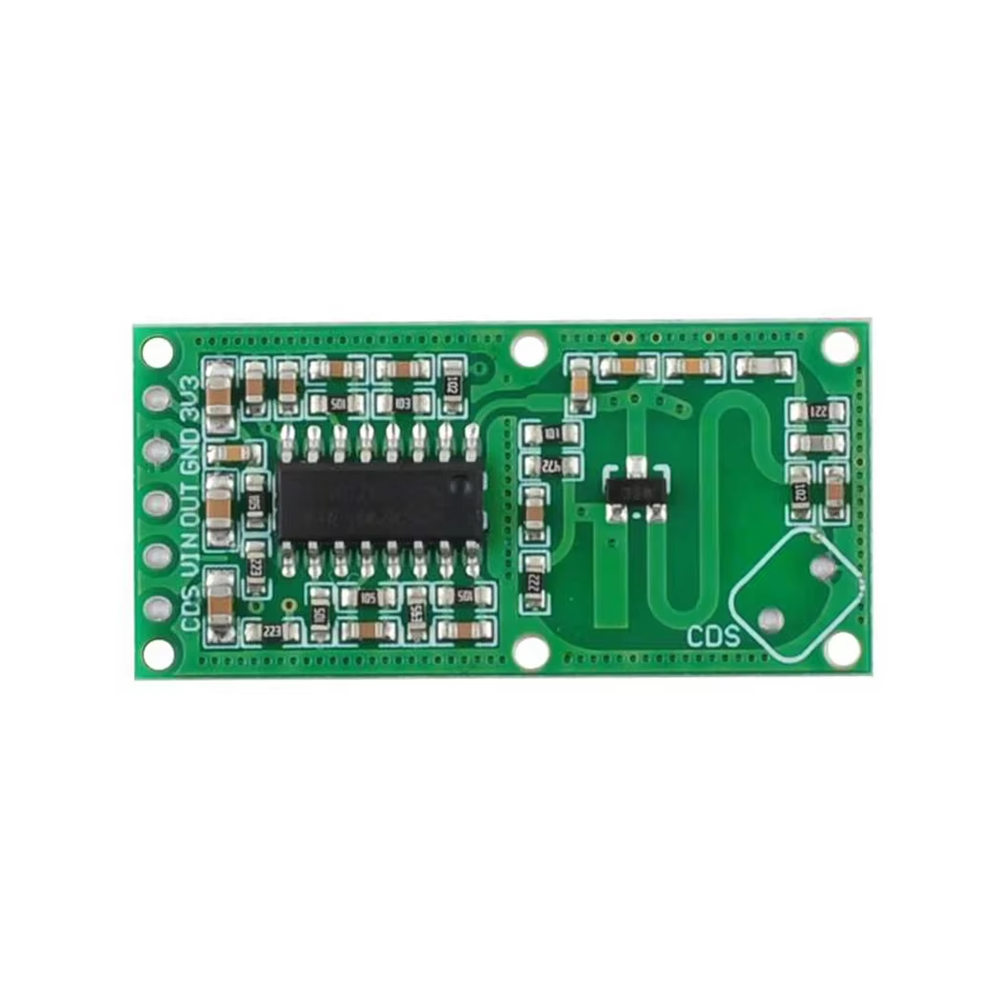
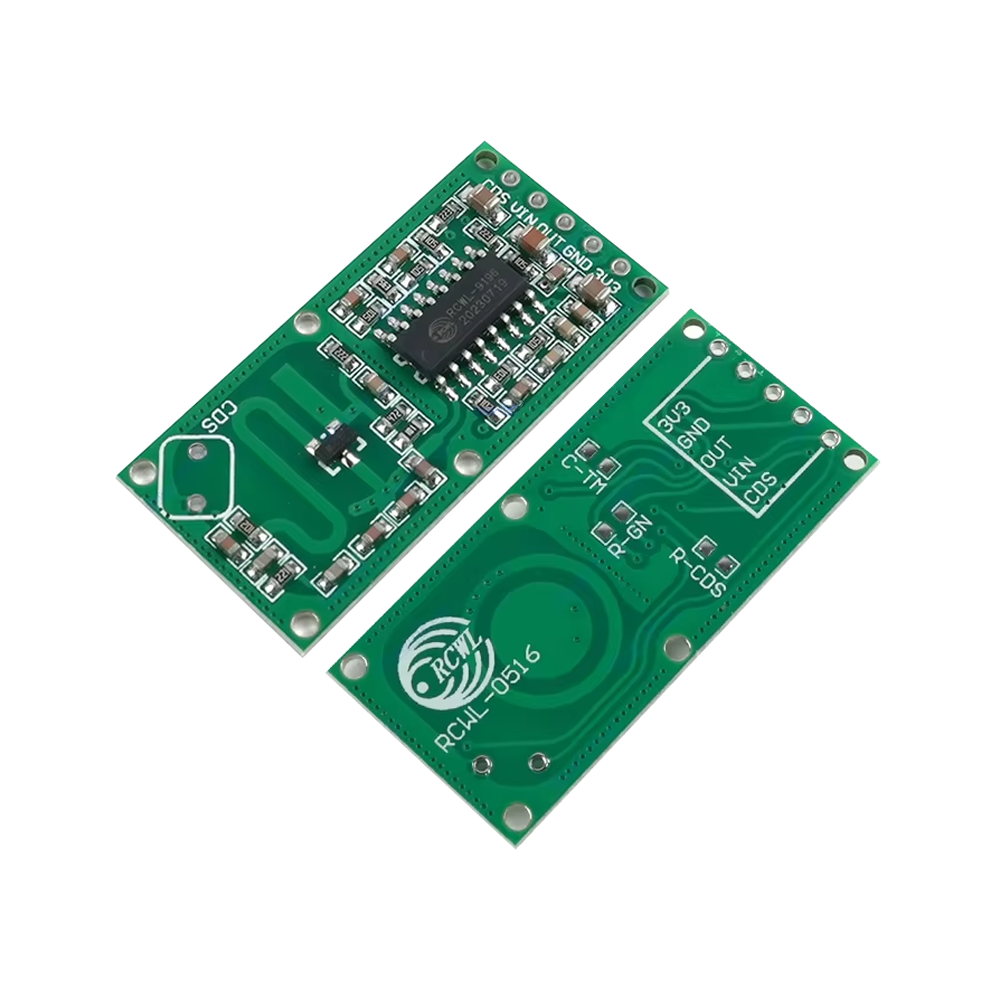
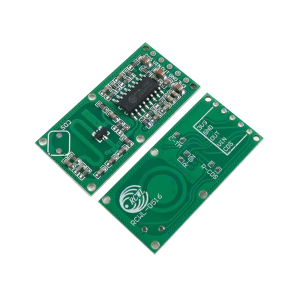
The RCWL-0516 Microwave Radar Motion Sensor Module is a compact human motion detection sensor based on Doppler radar technology, designed as an ideal alternative to traditional PIR (Passive Infrared) sensors. Unlike PIR sensors that rely on detecting human infrared radiation, the RCWL-0516 transmits a microwave signal at approximately 3.2GHz and receives reflected waves to detect moving objects. This gives it a unique penetration detection capability — it can detect motion through glass, drywall, thin walls, ceilings, and even floors.
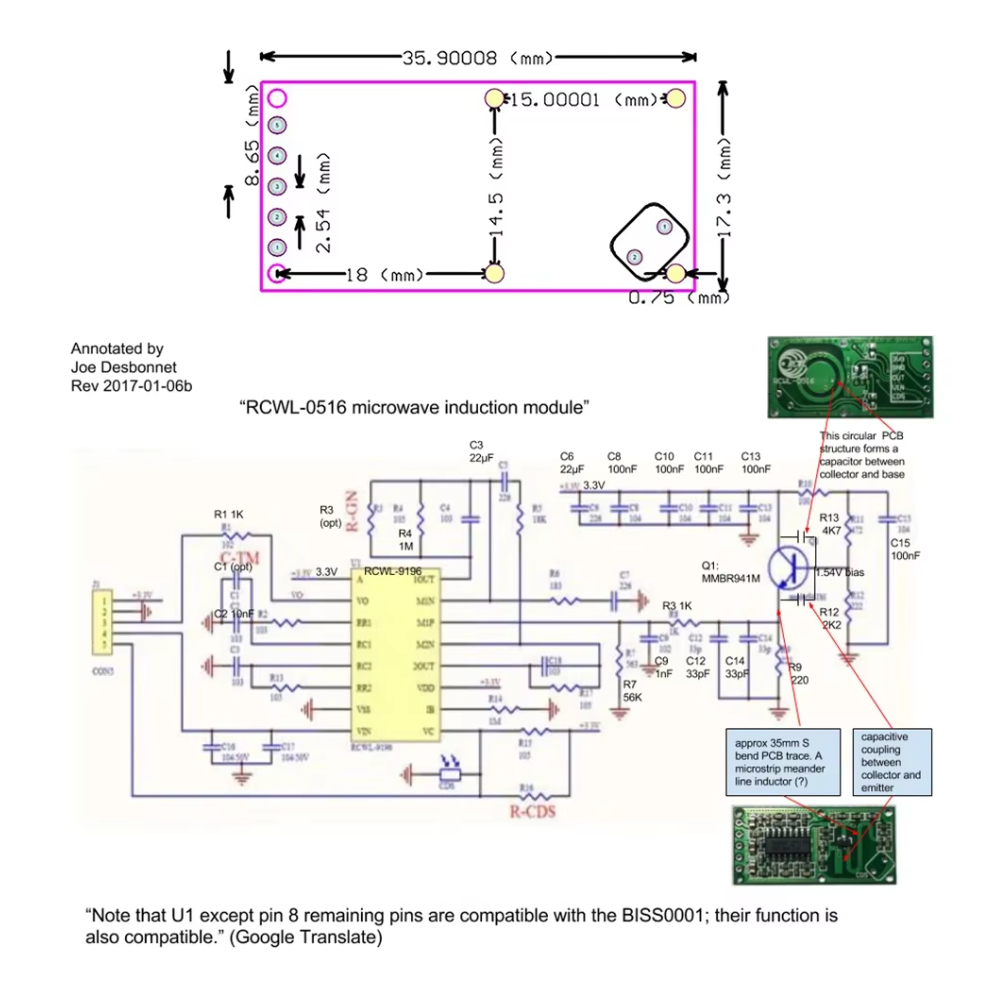
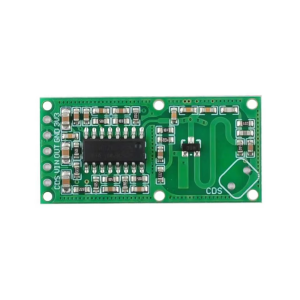
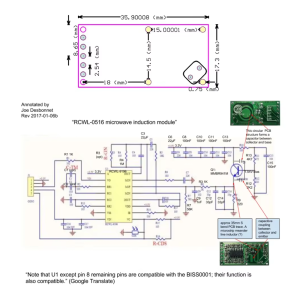
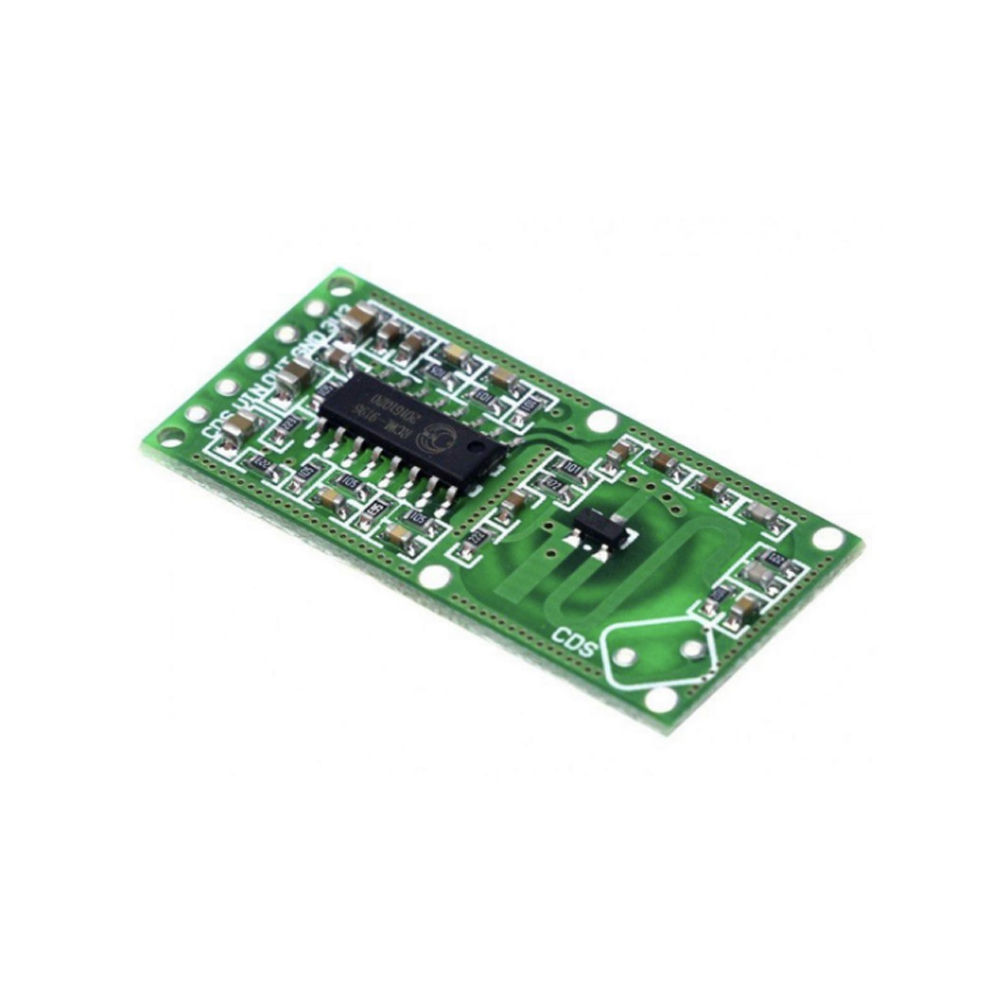
The module uses a dedicated signal processing control chip, the RCWL-9196, which functions similarly to the BISS0001 chip commonly used in PIR sensors. It processes the Doppler shift signal and outputs a digital trigger signal. The microwave section consists of a high-frequency NPN transistor and a clever PCB antenna design, forming a Colpitts oscillator that simultaneously transmits, receives, and mixes signals.
The module offers a wide operating voltage range of 4V to 28V DC, along with an onboard 3.3V regulated output capable of supplying up to 100mA, which can directly power low-power MCUs or sensors. When motion is detected, the OUT pin transitions from LOW (0V) to HIGH (3.3V) and remains HIGH for approximately 2 to 3 seconds before automatically returning to idle.
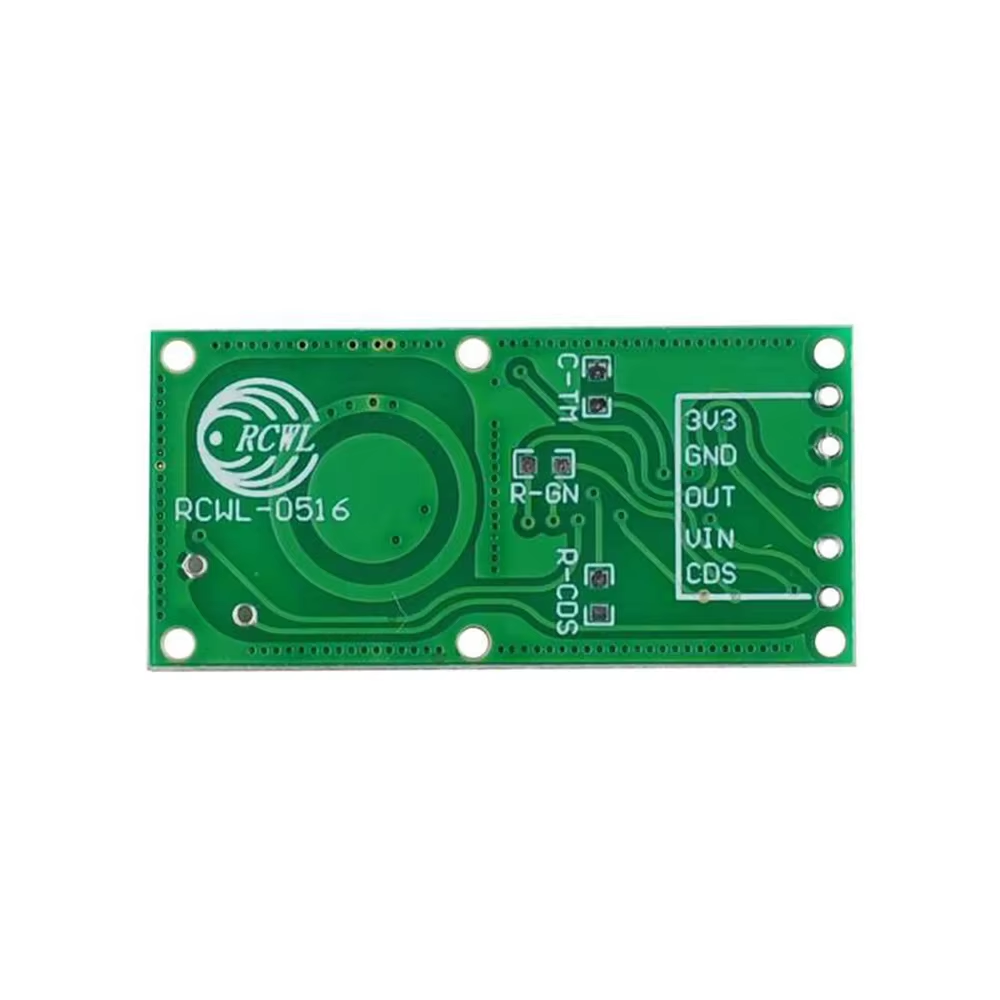
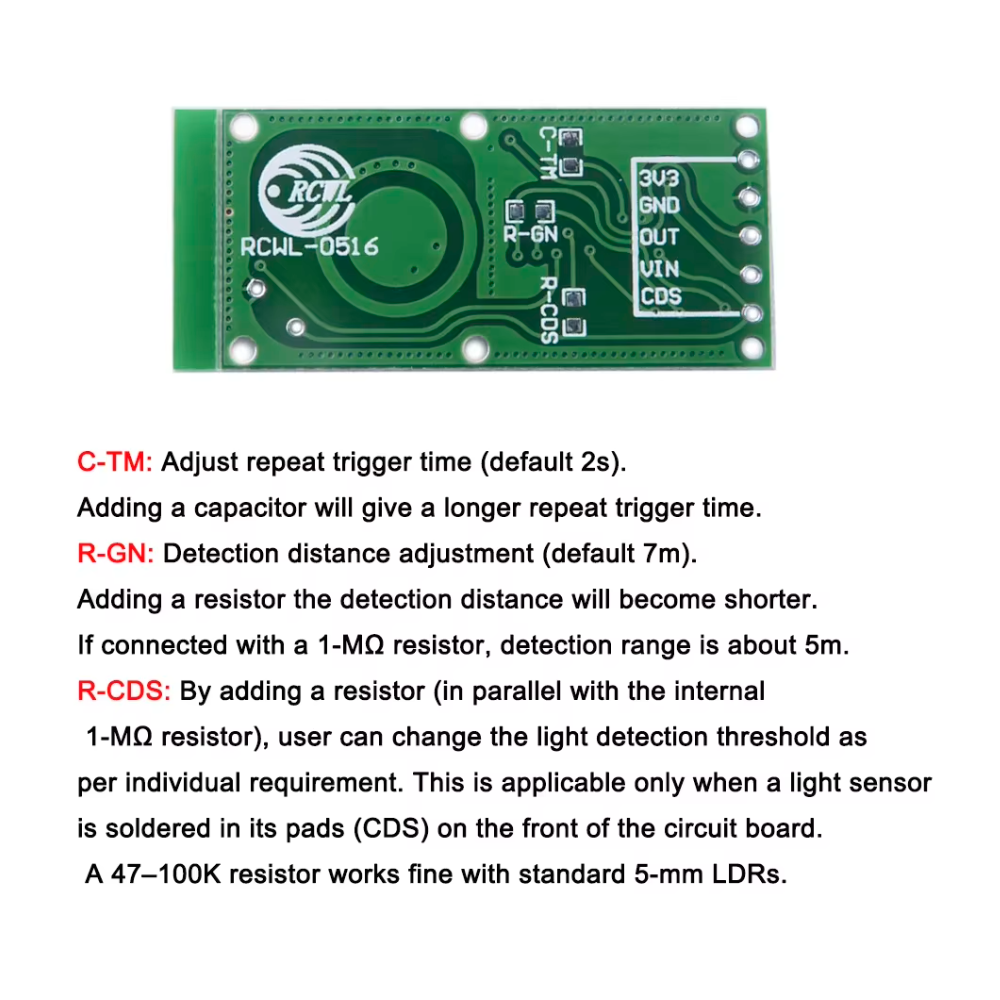
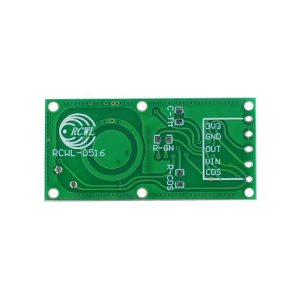
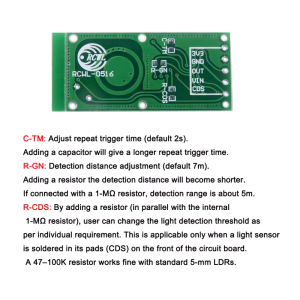
The module features multiple configurable function pins: the CDS pin can connect to an external photoresistor to automatically disable detection during daylight for energy saving; the R-CN resistor pad allows users to adjust detection distance (default approximately 7 meters, reducible to about 5 meters by soldering a resistor); the C-TM capacitor pad allows adjustment of the repeat trigger time.
The module is widely used in automatic lighting control, security alarm systems, smart home devices, industrial automation, proximity sensing, and energy-saving control applications. Its high sensitivity, wide detection angle, and strong penetration capability give it significant advantages in applications requiring non-line-of-sight detection.
Important Note: The module is not waterproof and requires a waterproof enclosure for outdoor use. During installation, ensure the component side faces the detection area, and avoid metal obstructions in front and behind (maintain at least 1cm clearance behind). To reduce false triggering, keep it away from Wi-Fi routers and other RF devices.
Features
-
Doppler radar technology — Transmits ~3.2GHz microwaves to detect moving objects
-
Penetration detection capability — Can detect through glass, thin walls, ceilings, and other non-metallic materials
-
Wide operating voltage — 4V to 28V DC, with onboard 3.3V/100mA regulated output
-
Digital output — Outputs 3.3V HIGH when motion is detected, lasting approximately 2–3 seconds
-
CDS light control function — Can connect external photoresistor for automatic daytime disable
-
Adjustable detection distance — Via R-CN resistor pad
-
Adjustable trigger time — Via C-TM capacitor pad
-
Low power consumption — Typical operating current only 2.8mA
-
3.3V logic compatible — Output can directly connect to ESP32, Arduino, and other MCUs
-
Compact design — Small size suitable for embedded integration
Technical Specifications
Usage
Getting Started
-
Power supply — Connect the VIN pin to a 4V–28V DC power source and the GND pin to ground. The module has an onboard 3.3V regulated output (3V3 pin) capable of supplying up to 100mA.
-
Connect output — Connect the OUT pin to a digital input on your MCU (e.g., D2 on Arduino, any GPIO on ESP32). When motion is detected, OUT outputs 3.3V HIGH.
-
Light control (optional) — To disable detection during daylight, connect a photoresistor and voltage divider to the CDS pin. When CDS voltage drops below 0.7V, OUT will remain LOW.
-
Distance adjustment (optional) — Solder a resistor to the R-CN pad to shorten detection distance (e.g., approximately 5 meters with 1MΩ).
-
Trigger time adjustment (optional) — Solder a capacitor to the C-TM pad to extend the repeat trigger hold time.
-
Test — After power-up, the module begins operating immediately. Move your hand within the detection range and observe the OUT pin level changes and MCU serial output.
Pin Definitions
Arduino Example Code
#define SENSOR_PIN 2
void setup() {
pinMode(SENSOR_PIN, INPUT);
Serial.begin(9600);
}
void loop() {
int sensorValue = digitalRead(SENSOR_PIN);
if (sensorValue == HIGH) {
Serial.println("Motion Detected!");
}
delay(100);
}
Typical Applications
-
Automatic lighting control — Automatically turn on lights when human motion is detected
-
Security alarm systems — Act as an intrusion detection sensor
-
Smart home devices — Trigger scene linkage and automation
-
Industrial automation — Non-contact proximity sensing
-
Energy-saving control — Activate devices only when people are present
Installation Notes
-
Component side faces detection area — The side with components should face the object being detected
-
Avoid metal obstructions — Avoid metal objects in front and behind; maintain at least 1cm clearance behind
-
Stay away from RF interference sources — Avoid proximity to Wi-Fi routers and other devices to prevent false triggering
-
Not waterproof — Requires a waterproof enclosure for outdoor use
Notes for Business Buyers
-
PIR alternative — Penetration detection capability suitable for scenarios where PIR cannot work
-
Wide voltage compatibility — 4V–28V supply range adapts to various systems
-
Low power design — 2.8mA operating current suitable for battery-powered applications
-
Suitable for bulk purchasing — Ideal for security product manufacturers, smart lighting integrators, and educational institutions
Q: What is the difference between RCWL-0516 and PIR sensors (such as HC-SR501)?
RCWL-0516 uses microwave Doppler radar to detect any moving object and can penetrate glass, thin walls, and other non-metallic materials. PIR sensors detect human infrared radiation, can only detect within line of sight, and cannot penetrate obstacles.
Q: What is the detection distance? Can it be adjusted?
The default detection distance is approximately 7 meters (range 5–9 meters). It can be shortened by soldering a resistor to the R-CN pad (e.g., approximately 5 meters with 1MΩ), but cannot be extended.
Q: What form does the output signal take?
When motion is detected, the OUT pin outputs 3.3V HIGH, remaining HIGH for approximately 2–3 seconds before automatically returning to LOW (0V).
Q: Can the module detect through walls?
Yes. The RCWL-0516 can penetrate glass, drywall, thin walls, ceilings, and floors to detect motion. However, penetration will reduce detection distance — the thicker the obstacle, the shorter the effective range.
Q: How do I implement automatic daytime disable?
Connect a photoresistor and voltage divider to the CDS pin. When CDS voltage drops below 0.7V, OUT remains LOW and the module stops detecting.
Q: What is the module's power supply range?
4V to 28V DC. The module also provides a 3.3V regulated output (100mA max) that can power low-power MCUs.
Q: Why does the module false trigger?
Common causes include: proximity to Wi-Fi routers and other RF devices, power supply noise, and metal objects moving within the detection range. Try changing the installation location or filtering the power supply.
Q: Is the module waterproof?
No. Outdoor use requires a waterproof enclosure, otherwise moisture will cause malfunction.
Q: How do I adjust the trigger hold time?
Solder a capacitor to the C-TM pad. The larger the capacitor, the longer the repeat trigger hold time.
Q: Can I purchase in bulk for product development?
Yes. This module is suitable for bulk purchasing by security product manufacturers, smart lighting integrators, automation equipment manufacturers, and educational institutions.