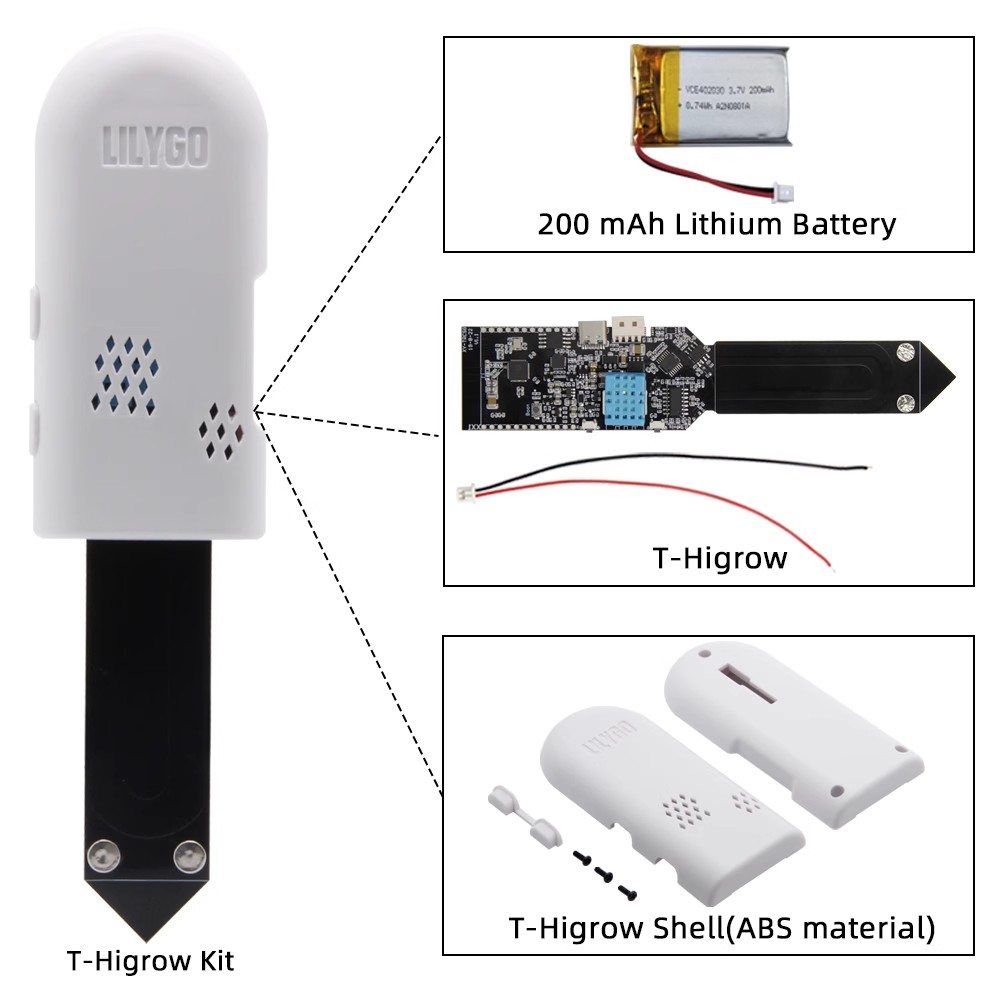
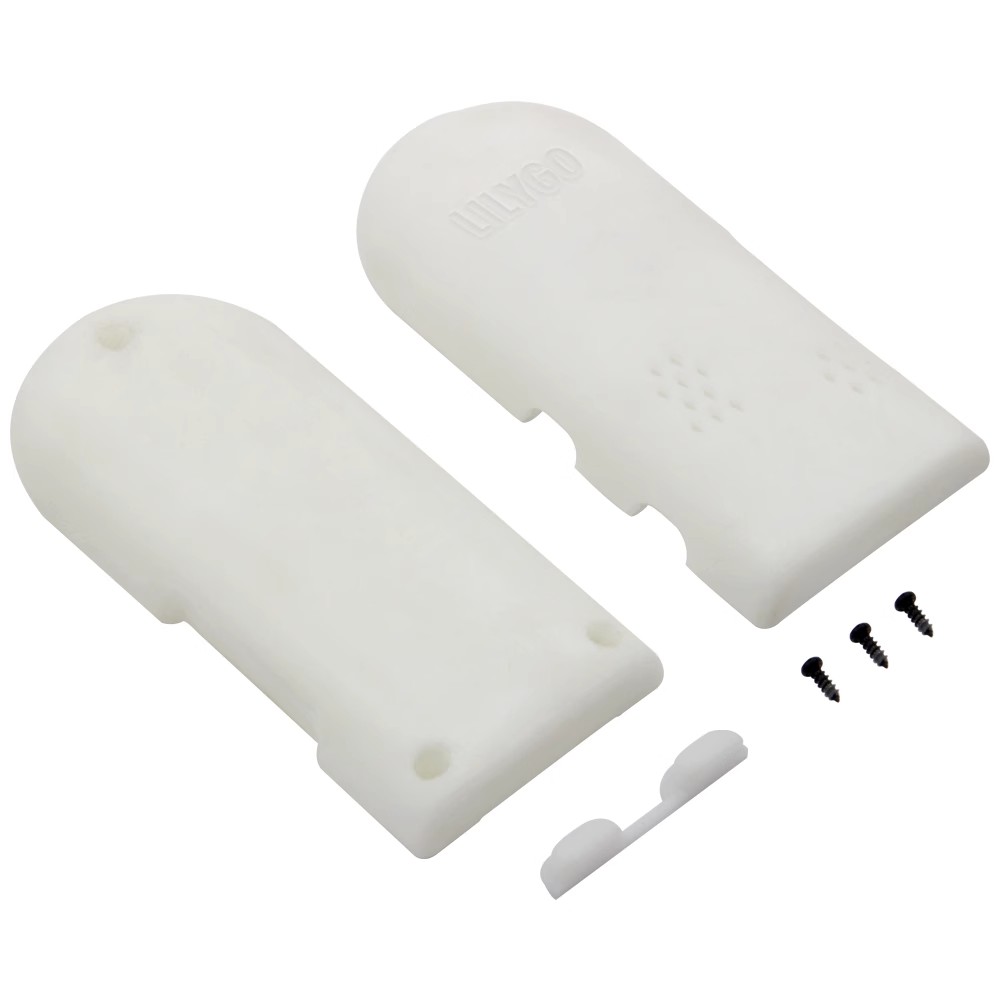
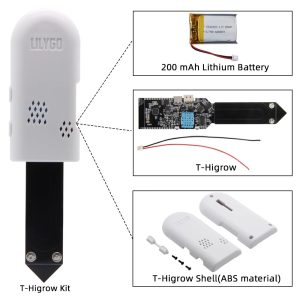
The T-Higrow ESP32 Development Board (Q129) is a compact, multi-functional plant monitoring platform that combines the power of the ESP32 dual-core microcontroller with a suite of onboard environmental sensors and a 3D-printed protective shell, making it an ideal turnkey solution for smart agriculture, IoT plant monitoring, and environmental data logging projects. The Q129 variant features the CH9102F USB-to-serial chip and DHT11 temperature/humidity sensor, along with a capacitive soil moisture sensor and soil electrolyte (fertility) sensor, all housed in a custom 3D shell for protection and easy installation.
At the heart of the board is the ESP32 chip, featuring a dual-core 32-bit Xtensa LX6 processor running at up to 240MHz, with 520KB SRAM and 4MB flash memory for program storage. The ESP32 provides WiFi 802.11 b/g/n and Bluetooth 4.2 (BR/EDR and BLE) connectivity, enabling wireless data transmission, remote monitoring, and integration with cloud platforms and home automation systems.
The board features a capacitive soil moisture sensor that uses the principle of capacitive sensing to detect soil moisture. Unlike resistive sensors that corrode over time, the capacitive design is corrosion-resistant and provides stable, long-term readings, significantly extending the sensor’s service life. The soil electrolyte (fertility) sensor measures the electrical conductivity of the soil, providing an indication of nutrient levels and soil salinity for optimal fertilization.
The DHT11 sensor provides temperature and humidity readings for ambient environmental monitoring, while the BH1750FVI ambient light sensor measures light intensity in lux, giving a complete picture of the plant’s growing conditions.
The board is equipped with a Type-C USB interface for programming and power supply, along with the CH9102F USB-to-serial chip that ensures stable data communication and easy programming via the Arduino IDE. The built-in lithium battery charging circuit (TP4054) supports 3.7V LiPo batteries with up to 500mA charging current, making it suitable for portable and battery-powered applications.
The included 3D shell provides protection for the board and sensors, making it suitable for direct insertion into soil or mounting in plant pots and garden enclosures. The shell is designed with openings for the soil sensors, USB port, and ventilation for the DHT11 sensor, ensuring accurate readings while protecting the electronics.
Additional features include 10 configurable GPIO pins for external sensor and actuator connections, reserved I²C expansion ports (GPIO 21/22), and a sleep button (IO35) for power-saving wake-up functionality. The board measures approximately 50mm × 25mm, making it compact enough for embedding into plant pots, garden enclosures, and custom housings.
The T-Higrow board is widely used in smart agriculture, soil monitoring, environmental data logging, IoT-based weather stations, home automation, and educational projects. It is also popular for plant health monitoring applications, with community firmware available for Home Assistant integration via MQTT, ESPHome, and web-based dashboards.
Important Note: The soil sensors should be inserted into the soil up to the marked line, avoiding direct contact with water or metal objects. The DHT11 sensor has limited accuracy compared to DHT22 or BME280 variants. For outdoor use, the 3D shell provides basic protection, but additional waterproofing may be required for extended exposure to rain. Ensure the battery is connected with correct polarity when using the charging circuit.
Whether you are building a smart garden monitoring system, a plant health tracker, or an IoT environmental sensor node, the T-Higrow ESP32 Development Board (Q129) with 3D Shell provides a complete, integrated solution. It is suitable for individual makers, students, and businesses purchasing in bulk for product development or educational programs.
Features
-
ESP32 dual-core MCU — 240MHz, 520KB SRAM, 4MB flash
-
WiFi & Bluetooth connectivity — 802.11 b/g/n and BT 4.2 for wireless IoT applications
-
Capacitive soil moisture sensor — Corrosion-resistant, stable long-term readings
-
Soil electrolyte (fertility) sensor — Measures soil conductivity for nutrient monitoring
-
DHT11 temperature & humidity sensor — Ambient environmental monitoring
-
BH1750FVI ambient light sensor — Light intensity measurement in lux
-
CH9102F USB-to-serial chip — Stable communication and easy programming
-
Type-C USB interface — Modern connector for programming and power
-
Built-in battery charging — TP4054 charging IC for 3.7V LiPo batteries (500mA)
-
3D protective shell included — Protects the board and sensors for direct soil insertion
Technical Specifications
| # | Parameter | Specification |
|---|---|---|
| 1 | Microcontroller | ESP32 (dual-core Xtensa 32-bit LX6, up to 240MHz) |
| 2 | Memory | 520KB SRAM, 4MB Flash |
| 3 | Wireless | WiFi 802.11 b/g/n, Bluetooth 4.2 (BR/EDR + BLE) |
| 4 | Onboard Sensors | Capacitive soil moisture, soil electrolyte, DHT11 (temp/humidity), BH1750FVI (light) |
| 5 | USB Interface | Type-C with CH9102F USB-to-serial chip |
| 6 | Battery Management | TP4054 charging IC, 3.7V LiPo, 500mA max charge current |
| 7 | GPIO Pins | 10 configurable GPIOs, reserved I²C expansion (21/22) |
| 8 | Included Accessory | 3D protective shell |