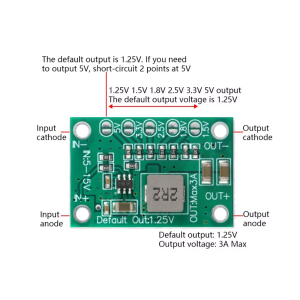
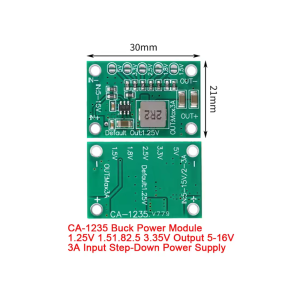
CA-1235 Adjustable DC-DC Buck Converter Module – 5V-16V Input, 1.25V/1.5V/1.8V/2.5V/3.3V/5V Selectable Output Voltage

SKU: FA2210
Module Type

Step-down (buck) converter

Model

CA-1235

Output Voltage

1.25V / 1.5V / 1.8V / 2.5V / 3.3V / 5V (selectable)

Input Voltage Range

5V – 16V DC

Maximum Output Current

Variant dependent (typically 2A–3A)

Conversion Efficiency

Up to 92%

Protection

Overcurrent, thermal shutdown, short-circuit

Module Dimensions

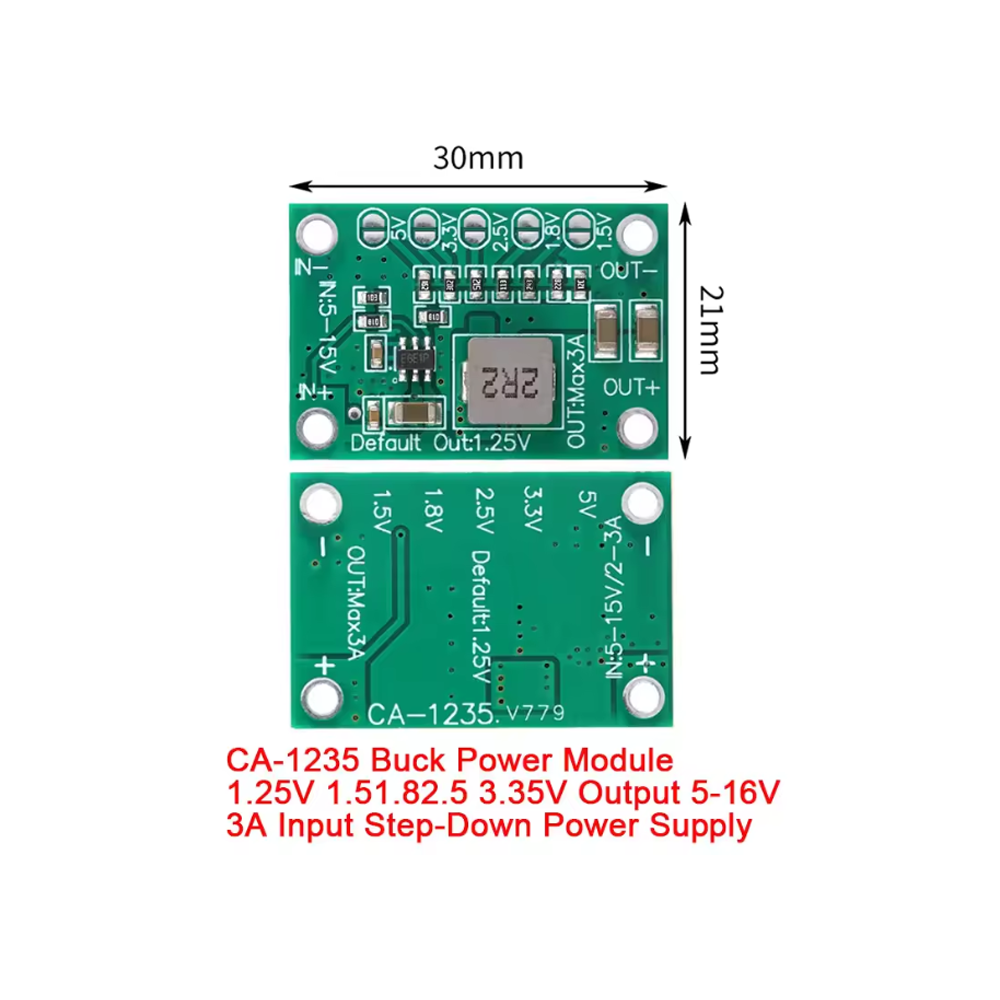
Compact PCB with mounting holes

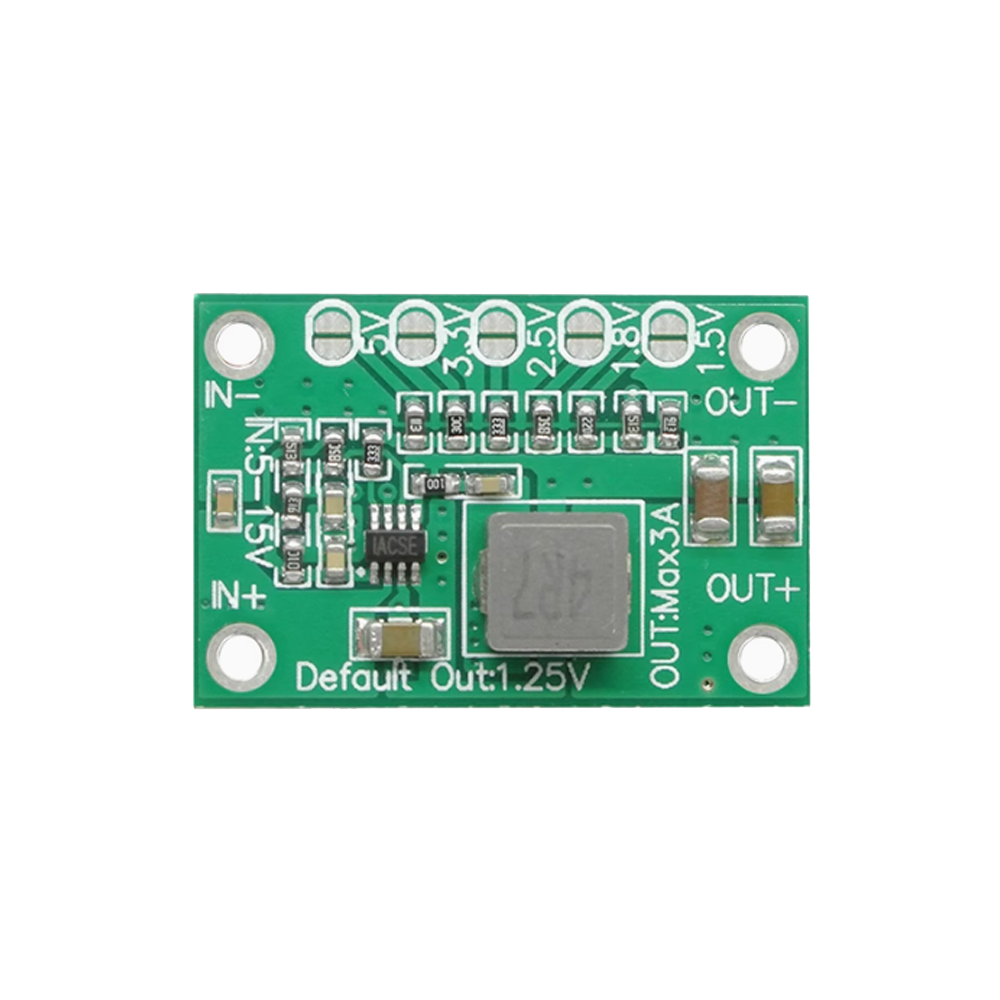
The CA-1235 Adjustable DC-DC Buck Converter Module is a compact, versatile step-down voltage regulator designed to provide a selectable fixed output voltage from a higher DC input. With six preset output voltages — 1.25V, 1.5V, 1.8V, 2.5V, 3.3V, and 5V — this module eliminates the need for external adjustment potentiometers, making it an ideal solution for powering a wide range of electronic devices, sensors, and microcontroller projects.

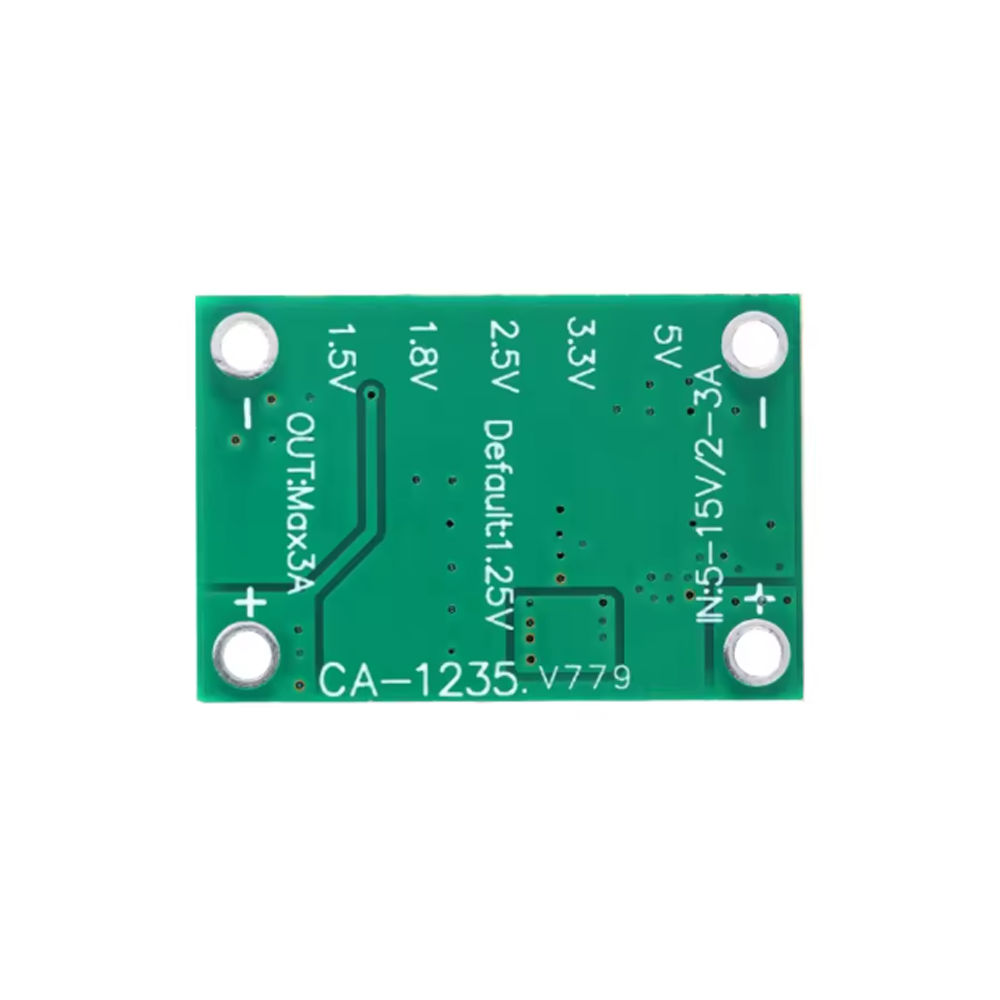
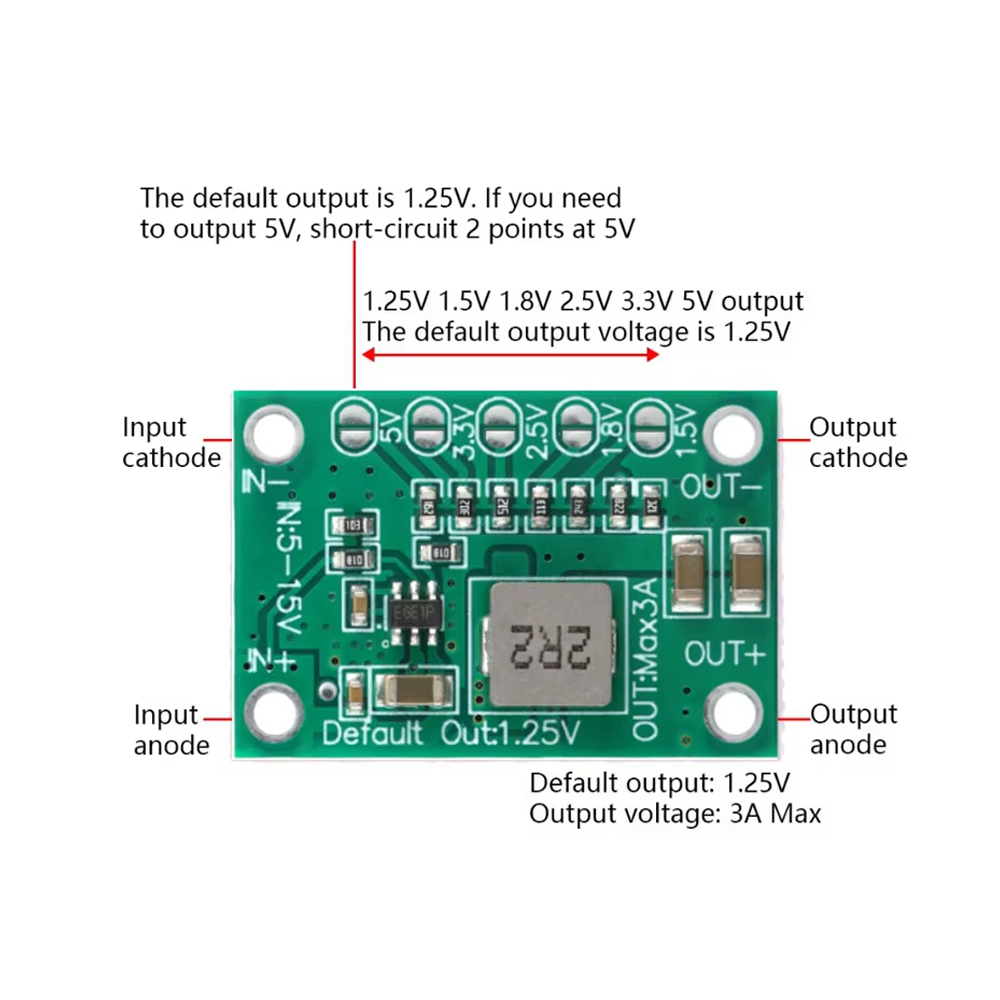
At the heart of the module is a high-efficiency synchronous buck converter that steps down input voltages from 5V to 16V DC to the selected output voltage. The conversion efficiency reaches up to 92%, minimizing power loss and heat generation compared to linear regulators. The output voltage is selected via onboard solder jumpers or a selector switch, allowing quick configuration without the need for a multimeter or screwdriver.

The wide input voltage range of 5V to 16V DC makes the module compatible with a broad range of power sources including:

  • 5V USB power (for 3.3V, 2.5V, 1.8V, 1.5V, 1.25V outputs)

  • 12V car and marine systems

  • 9V and 12V battery packs

  • 2S–3S lithium batteries (7.4V–11.1V)

The selectable output voltages make this module particularly versatile:

  • 1.25V — For low-voltage digital cores and specialized ICs

  • 1.5V — For DDR memory and low-power logic

  • 1.8V — For FPGA cores, CPLDs, and low-voltage peripherals

  • 2.5V — For interface logic and analog circuits

  • 3.3V — For ESP32, ESP8266, STM32, and modern microcontrollers

  • 5V — For Arduino, sensors, and standard logic circuits

The module features screw terminals or pin headers for secure input and output connections, with clearly labeled terminals for easy wiring. LED indicators provide visual feedback for power status. The compact PCB design with mounting holes allows easy integration into equipment enclosures, project boxes, and control panels.

The module includes built-in protection circuits including overcurrent protection, thermal shutdown, and short-circuit protection, ensuring safe and reliable operation even under fault conditions.

The module is widely used in microcontroller projects, FPGA/CPLD development, IoT devices, sensor networks, embedded systems, industrial control, portable electronics, and any application requiring a stable, selectable low-voltage supply from a higher input voltage.

Important Note: The module requires the input voltage to be higher than the selected output voltage by at least 1.5V for proper regulation. For example, a 5V input is suitable for 3.3V output, but a 12V input is ideal for 5V output. Always verify the input voltage and current ratings match your application.

Whether you are powering an FPGA core, adding a 1.8V rail to a mixed-voltage system, or building a custom embedded device, the CA-1235 Adjustable DC-DC Buck Converter Module provides a reliable, versatile solution. It is suitable for individual makers, engineers, and businesses purchasing in bulk for product development or industrial applications.

Features

  • Six selectable output voltages — 1.25V, 1.5V, 1.8V, 2.5V, 3.3V, and 5V

  • Wide input voltage range — 5V to 16V DC

  • High efficiency — Up to 92% conversion efficiency

  • Synchronous buck converter — Low heat generation, no external heat sink required

  • Solder jumper or selector switch — Quick voltage selection without tools

  • Compact form factor — With mounting holes for easy installation

  • Built-in protection — Overcurrent, thermal shutdown, and short-circuit protection

  • Wide application range — Microcontrollers, FPGA/CPLD, IoT, sensors, embedded systems

Technical Specifications

# Parameter Specification
1 Module Type Step-down (buck) converter
2 Model CA-1235
3 Output Voltage 1.25V / 1.5V / 1.8V / 2.5V / 3.3V / 5V (selectable)
4 Input Voltage Range 5V – 16V DC
5 Maximum Output Current Variant dependent (typically 2A–3A)
6 Conversion Efficiency Up to 92%
7 Protection Overcurrent, thermal shutdown, short-circuit
8 Module Dimensions Compact PCB with mounting holes

Usage

Getting Started

  1. Connect input power — Supply a DC input voltage between 5V and 16V to the IN+ and IN- terminals. Ensure the input is at least 1.5V higher than the desired output voltage.

  2. Select the output voltage — Use the onboard solder jumpers or selector switch to choose one of the six preset output voltages: 1.25V, 1.5V, 1.8V, 2.5V, 3.3V, or 5V.

  3. Verify output — Measure the output with a multimeter to confirm the selected voltage.

  4. Connect the load — Wire your device to the OUT+ and OUT- terminals. Observe correct polarity.

  5. Power on and test — Apply input power and verify the output voltage. Ensure the load does not exceed the module’s maximum current rating.

Output Voltage Selection

Output Voltage Typical Application
1.25V Low-voltage digital cores, specialized ICs
1.5V DDR memory, low-power logic
1.8V FPGA cores, CPLDs, low-voltage peripherals
2.5V Interface logic, analog circuits
3.3V ESP32, ESP8266, STM32, modern microcontrollers
5V Arduino, sensors, standard logic circuits

Typical Applications

  • Microcontroller projects — Power 3.3V and 5V MCUs from higher voltage sources

  • FPGA/CPLD development — Provide 1.8V, 2.5V, and 3.3V core and I/O voltages

  • IoT devices — Stable voltage for sensors and communication modules

  • Embedded systems — Multi-voltage rails for mixed-signal designs

  • Industrial control — Generate low-voltage logic supplies from 12V systems

  • Portable electronics — Efficient power from lithium battery packs

Notes for Business Buyers

  • Six selectable outputs — One module replaces multiple fixed-voltage regulators, reducing inventory SKUs.

  • No adjustment required — Solder jumpers eliminate the need for potentiometer tuning.

  • High efficiency — Up to 92% efficiency reduces power loss and heat generation.

  • Suitable for bulk purchasing — Ideal for product development, educational kits, and industrial integrators.

Q: What is the CA-1235 Buck Converter Module used for?

It is a step-down voltage regulator that provides a selectable fixed output voltage (1.25V, 1.5V, 1.8V, 2.5V, 3.3V, or 5V) from a higher DC input, used for powering microcontrollers, FPGAs, sensors, and other electronic devices.

Q: How do I select the output voltage?

Use the onboard solder jumpers or selector switch to choose one of the six preset output voltages.

Q: What is the input voltage range?

The input voltage range is 5V to 16V DC.

Q: What is the maximum output current?

The maximum output current depends on the specific variant, typically ranging from 2A to 3A. Check the product specification for your version.

Q: What is the minimum input voltage?

The input voltage must be at least 1.5V higher than the selected output voltage. For example, for 3.3V output, a minimum input of 4.8V is recommended.

Q: Can I adjust the output voltage continuously?

No. This module provides six selectable fixed output voltages. For continuously adjustable versions, a different module is required.

Q: Does the module have protection circuits?

Yes. It includes overcurrent protection, thermal shutdown, and short-circuit protection.

Q: What is the conversion efficiency?

The module achieves up to 92% efficiency, minimizing power loss and heat generation.

Q: What is the difference between this module and an adjustable buck converter?

This module provides fixed selectable outputs via jumpers, while adjustable buck converters require a potentiometer to set the voltage. The CA-1235 is simpler to configure and less prone to accidental voltage changes.

Q: Can I purchase in bulk for a product development project?

Yes. This module is suitable for both individual users and business purchasing, including product development, educational kits, and industrial integrators.