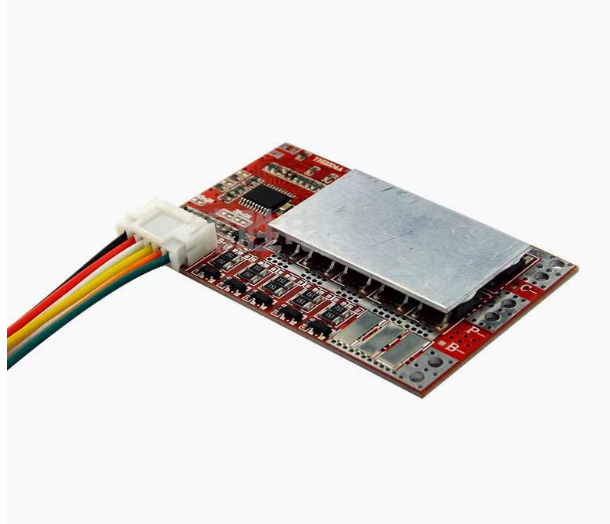
The 3S 3.7V 50A Lithium Battery Protection Board BMS is a high-power safety module designed to protect 3-cell (3S) lithium battery packs from overcharge, over-discharge, and overcurrent conditions. With a 50A continuous discharge rating and balance function, this BMS is engineered for high-drain applications including power tools, e-bikes, electric scooters, and energy storage systems where standard protection boards cannot handle the current requirements.
At the heart of the board is a BMS protection circuit that continuously monitors the voltage of each cell and the total pack current, disconnecting the load or charger if any parameter exceeds safe limits. This protects both the battery pack and your connected devices from damage, extending battery lifespan and ensuring safe operation in demanding applications.
The board provides three critical protection functions:
-
Overcharge protection — Disconnects the charger when any cell voltage reaches approximately 4.25V to 4.3V (for standard lithium) or 3.65V (for LiFePO4), preventing damage from excessive charging.
-
Over-discharge protection — Disconnects the load when any cell voltage drops to approximately 2.5V to 3.0V (for standard lithium) or 2.0V to 2.5V (for LiFePO4), preventing deep discharge that can permanently damage the battery.
-
Overcurrent protection — Disconnects the output when current exceeds 50A, protecting against short circuits and excessive loads.
The 3S configuration means the board manages three cells in series, balancing the voltage across all three cells to ensure they charge and discharge evenly. This cell balancing function is critical for maintaining pack health and maximizing lifespan. Without proper balancing, one cell can become overcharged or over-discharged, leading to premature failure or safety hazards.
The 50A continuous rating makes this board suitable for high-power applications such as power tools, e-bikes, electric scooters, and energy storage systems. This is a significant step up from standard 3S boards that typically max out at 10A–20A, filling an important gap for very high-current 3S applications.
The versatility of this BMS extends to different lithium chemistries. The “polymer” designation indicates compatibility with lithium-polymer cells, while the “iron lithium” reference indicates compatibility with LiFePO4 (lithium iron phosphate) cells. This makes the board suitable for a wide range of battery pack designs, from high-energy polymer packs to high-safety LiFePO4 packs.
Important Note on Chemistry: The protection thresholds differ between standard lithium (3.7V nominal) and LiFePO4 (3.2V nominal) chemistries. Always verify the BMS variant matches your specific battery chemistry. Using a standard lithium BMS with LiFePO4 cells (or vice versa) will result in incorrect protection thresholds and potential battery damage.
The board features a solder pad design that supports both direct soldering and spot welding. The exposed pads allow you to solder wires directly to the board, while also being compatible with spot-welded nickel strips for professional battery pack assembly. The board includes B+, B-, BM1, BM2 (mid-points), P+, and P- pads for battery and output connections.
Important Note: This BMS is designed for 3S (3-cell) 50A lithium battery packs. For higher-current applications, a BMS with a higher current rating should be used. Always verify the voltage and current ratings match your application before installation. Ensure all wiring and connections are rated for the maximum current your application will draw.
Whether you are building a high-power 3S battery pack for a power tool, assembling an e-bike battery, or adding safety protection to an energy storage system, the 3S 3.7V 50A Lithium Battery Protection Board BMS provides a reliable, high-power solution. It is suitable for individual makers, engineers, and businesses purchasing in bulk for product development or industrial applications.
Features
-
3S triple-cell protection — Manages three cells in series with cell balancing
-
50A continuous discharge — Very high-power capability for demanding applications
-
Balance function — Ensures even charge and discharge across all three cells
-
Multi-chemistry compatible — Works with lithium-polymer and LiFePO4 cells
-
Comprehensive protection — Overcharge, over-discharge, and overcurrent protection
-
Solder pad design — Supports both direct soldering and spot welding
-
Compact PCB design — Sized for high-power battery packs
-
Wide application range — Power tools, e-bikes, e-scooters, energy storage
Technical Specifications
| # | Parameter | Specification |
|---|---|---|
| 1 | Compatible Battery | 3S lithium-polymer / LiFePO4 |
| 2 | Nominal Voltage | 3.7V per cell (lithium) / 3.2V per cell (LiFePO4) |
| 3 | Continuous Discharge Current | 50A |
| 4 | Overcharge Protection Voltage | ~4.25V – 4.3V per cell (lithium) / ~3.65V (LiFePO4) |
| 5 | Over-discharge Protection Voltage | ~2.5V – 3.0V per cell (lithium) / ~2.0V – 2.5V (LiFePO4) |
| 6 | Balance Function | Yes |
| 7 | Connection Type | Solder pads (spot welding supported) |
| 8 | Module Dimensions | Compact PCB for 3S packs |