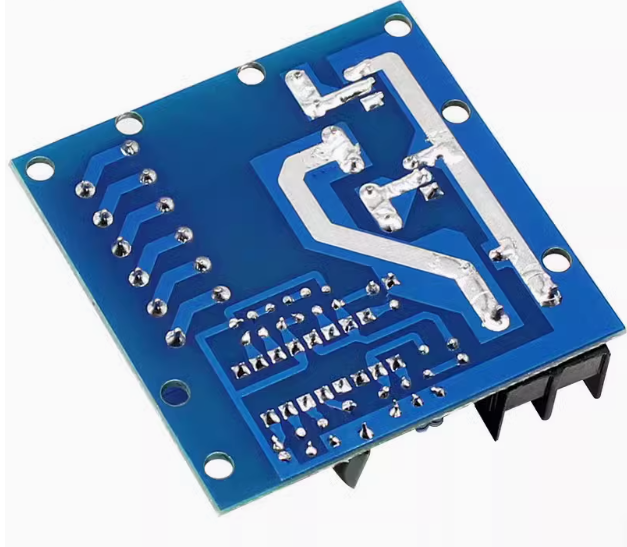
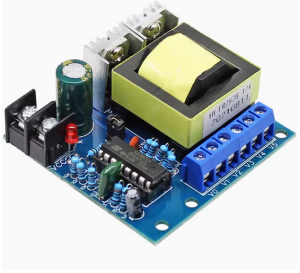
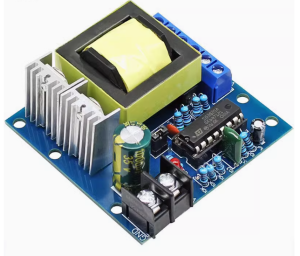
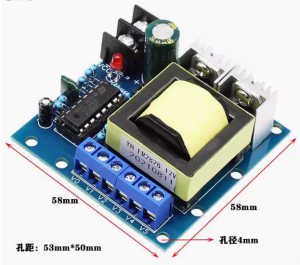
150W Micro Inverter Module – DC 12V to AC 220V Converter Board with Transformer (Battery Compatible)

SKU: FA2185-1
Power Rating

150W

Input Voltage

DC 12V

Output Voltage

AC 110V/172V/200V/220V (selectable taps)

Output Waveform

High-frequency square wave

Output Frequency

Approximately 20kHz

Quiescent Current

Approximately 0.05A

Protection

None

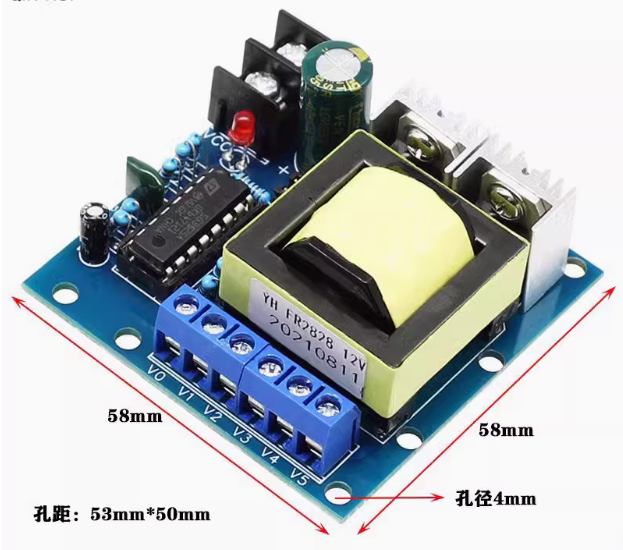
Board Dimensions

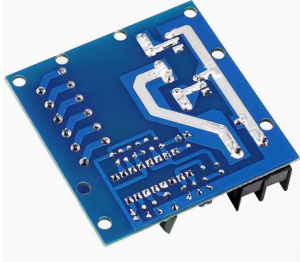
Approximately 10cm × 4cm × 3cm

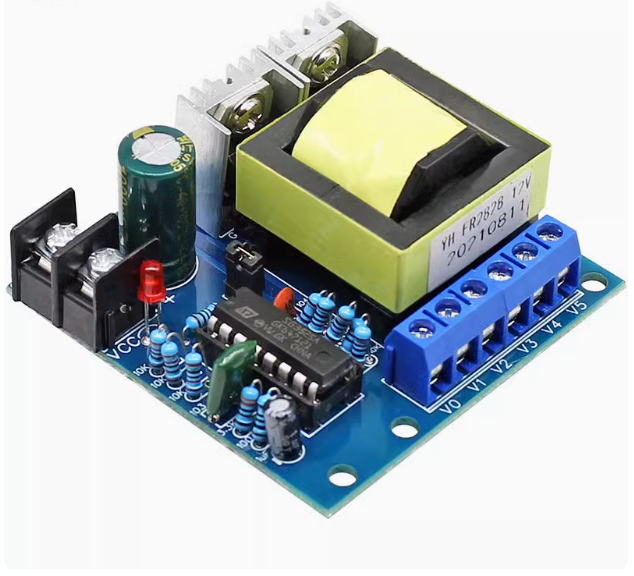
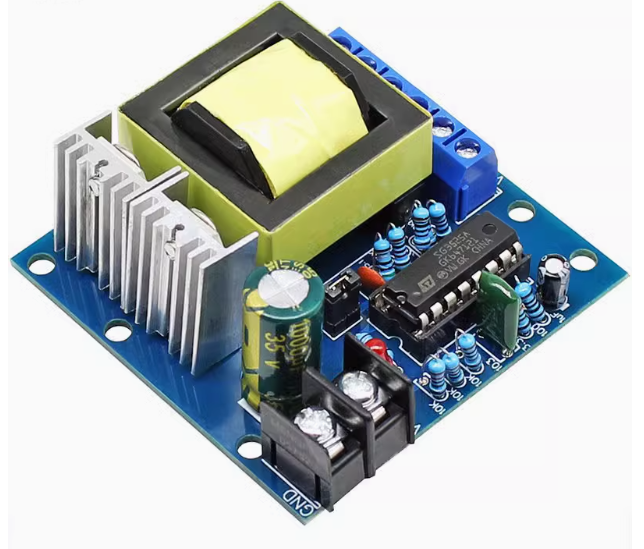
The 150W Micro Inverter Module is a compact, high-frequency DC-to-AC power converter designed for DIY electronics, portable power applications, and battery-powered projects. It converts DC 12V input into AC 110V/220V output, making it suitable for powering small electronic devices, lighting, and chargers from a 12V battery source.

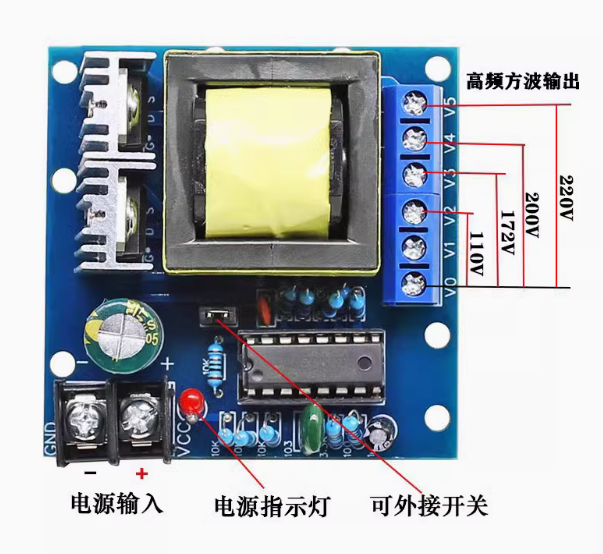
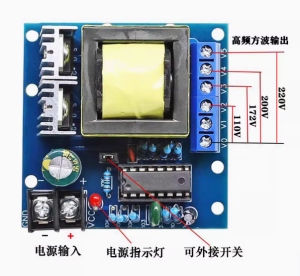
At the heart of the module is a high-frequency square wave inverter circuit that steps up the 12V DC input to approximately 220V AC. The module features multiple output voltage taps (V0–V5) that allow you to select different AC voltage levels — typically 110V, 172V, 200V, and 220V — by connecting to different terminal pairs . This flexibility makes the module adaptable to a range of low-power devices.

The module is designed for electronic DIY work and serves as a pre-stage inverter board for projects requiring AC power from a battery . It is widely used in night camping, night market vendor stalls, emergency power for family trips, and as a companion product for manufacturer control cabinets . The compact PCB design and included transformer make it easy to integrate into custom enclosures and portable power stations.

Important Technical Note: This module produces a high-frequency square wave AC output (approximately 20kHz), not a pure sine wave . This means it is not suitable for inductive loads such as electric motors, fans, or coil transformers. For devices like LED lights, phone chargers, and DVD players, it is recommended to connect to the lower voltage taps (110V or 172V) and use a fast recovery diode in series on the output to protect sensitive electronics .

The module has no built-in protection circuits for overload or short-circuit, so careful operation is required . For sustained operation above 100W, additional heat dissipation is recommended . The input power source and wiring must be capable of handling the required current.

Whether you are a maker building a portable power station, a student learning about inverter circuits, or a business purchasing in bulk for product development, the 150W Micro Inverter Module provides a practical, cost-effective foundation for DC-to-AC conversion projects.


Features

  • DC 12V to AC 220V conversion — Converts battery power to usable AC voltage

  • Multiple output voltage taps — Selectable 110V/172V/200V/220V outputs via terminal pairs

  • High-frequency square wave output — Operates at approximately 20kHz

  • Compact PCB design with transformer — Ready for integration into custom projects

  • Quiescent current approximately 0.05A — Low standby power draw

  • Wide application range — DIY electronics, camping, emergency power, vendor stalls

  • Battery compatible — Designed for 12V battery input

  • Suitable for low-power devices — LED lights, phone chargers, DVD players (with recommended protection)


Technical Specifications 

# Parameter Specification
1 Power Rating 150W
2 Input Voltage DC 12V
3 Output Voltage AC 110V/172V/200V/220V (selectable taps)
4 Output Waveform High-frequency square wave
5 Output Frequency Approximately 20kHz
6 Quiescent Current Approximately 0.05A
7 Protection None
8 Board Dimensions Approximately 10cm × 4cm × 3cm

Usage

Getting Started

  1. Connect DC input — Connect a 12V DC power source (battery or regulated supply) to the input terminals. Observe correct polarity — reverse connection will damage the module . Ensure the power source and wiring can handle the required current.

  2. Select output voltage — Connect your load to the appropriate terminal pair for the desired AC voltage:

    • V0–V2 = 110V

    • V0–V3 = 172V

    • V0–V4 = 200V

    • V0–V5 = 220V

  3. For small electronic loads — When connecting LED lights, phone chargers, or other sensitive electronics, use the lower voltage taps (110V or 172V) and add a fast recovery diode in series on the output to protect the device .

  4. Power on and test — Apply DC input power. The module will begin converting power. Note: Many common multimeters will not accurately measure the high-frequency square wave output — readings may be higher or lower than actual voltage .

  5. Monitor temperature — For operation above 100W or extended runtime, add a heat sink or cooling fan to prevent overheating .

Important Safety Notes

  • No built-in protection — Do not overload or short-circuit the output. The module has no protection circuits .

  • Not for inductive loads — Do not connect electric motors, fans, or coil transformers .

  • Input current requirements — The power supply and wiring must be capable of handling large currents.

  • Heat management — For sustained high-power operation, enhanced cooling is essential.

Typical Applications

  • DIY electronics projects — Inverter stage for custom power supplies

  • Night camping and outdoor activities — Portable AC power from 12V battery

  • Night market vendor stalls — Power for small equipment and lighting

  • Emergency power — Backup AC power for small devices during trips

  • Electronic hobby kits — Learning about inverter circuits and power conversion

  • Manufacturer control cabinets — Companion power module for equipment

Notes for Business Buyers

  • Cost-effective — Low unit cost makes it practical for volume production and educational kits.

  • Compact form factor — Easy integration into portable power stations and custom enclosures.

  • Multiple output taps — One module supports various voltage requirements.

  • Suitable for bulk purchasing — Ideal for product development, educational programs, and DIY kit suppliers.

Q: What is the 150W Micro Inverter Module used for?

It is a DC-to-AC converter that transforms 12V battery power into AC voltage for powering small electronic devices, lighting, and chargers in DIY projects, camping, and emergency power applications.

Q: What is the input and output voltage?

Input: DC 12V. Output: AC 110V/172V/200V/220V (selectable via terminal taps) .

Q: What type of output waveform does it produce?

It produces a high-frequency square wave (approximately 20kHz), not a pure sine wave

Q: Can I use this module to power a fan or motor?

No. The high-frequency square wave output is not suitable for inductive loads such as electric motors, fans, or coil transformers .

Q: How do I connect a phone charger or LED light?

Connect to the lower voltage taps (110V or 172V) and add a fast recovery diode in series on the output to protect the device .

Q: Why does my multimeter show a different voltage than expected?

Many common multimeters cannot accurately measure high-frequency square wave AC. The readings may be higher or lower than the actual voltage .

Q: Does the module have protection against overload or short circuit?

No. This module has no built-in protection circuits. Do not overload or short-circuit the output .

Q: How much heat does it generate?

For operation above 100W or extended runtime, the module may get hot. Adding a heat sink or cooling fan is recommended .

Q: What is the quiescent current?

The quiescent current is approximately 0.05A (50mA) .

Q: Can I purchase in bulk for a product development project?

Yes. This module is suitable for both individual users and business purchasing, including DIY kit suppliers, educational institutions, and product development teams.