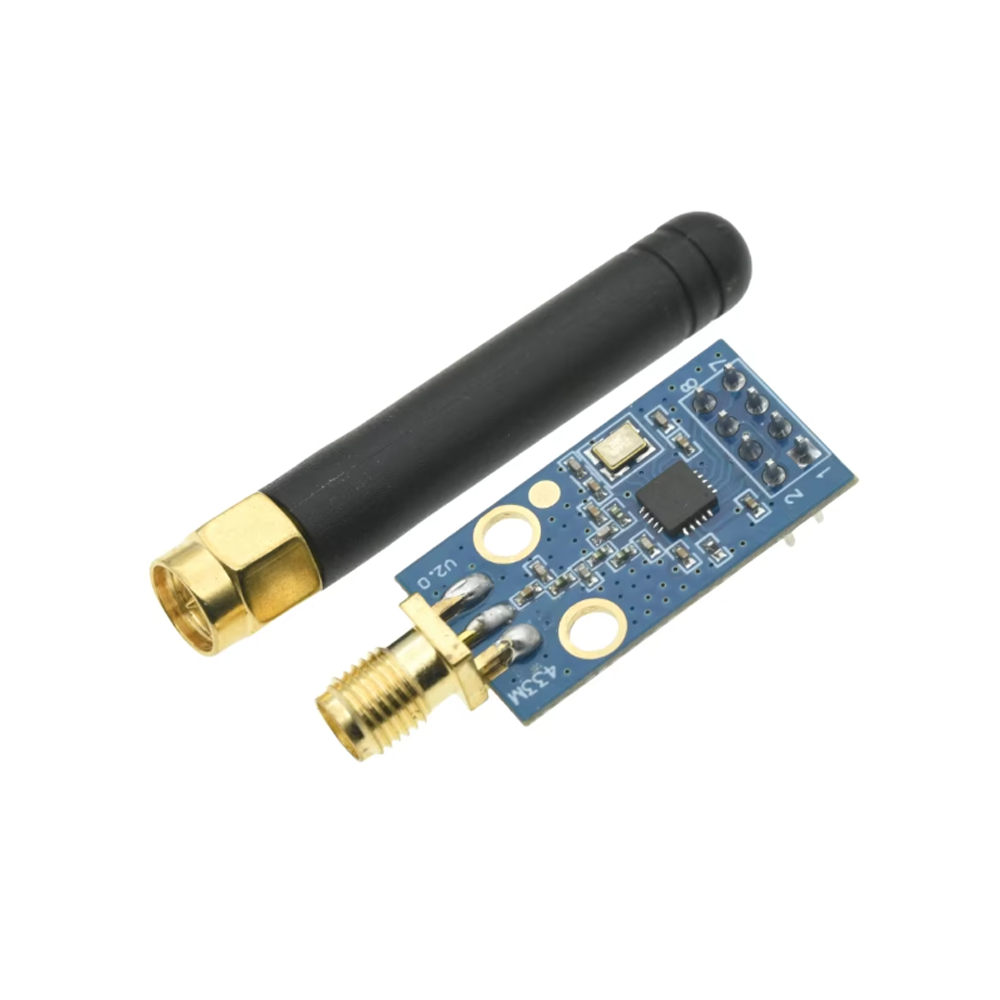
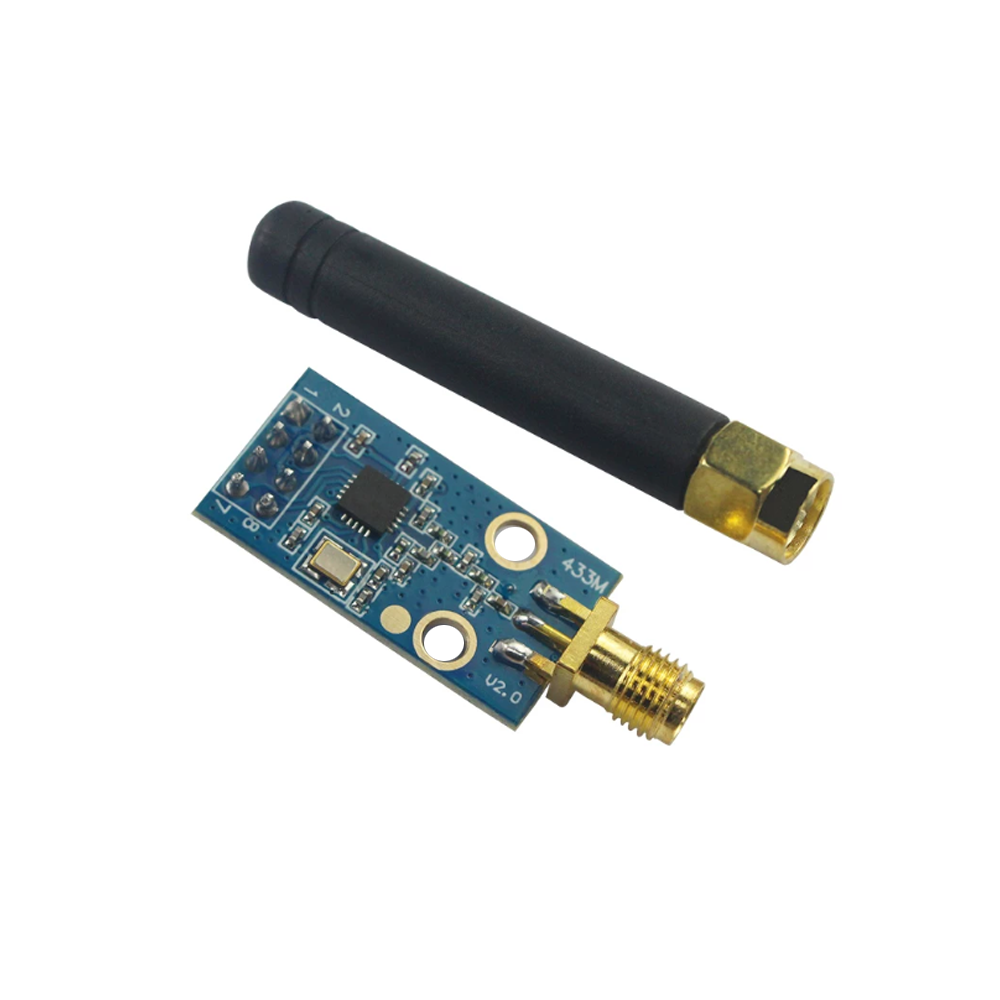
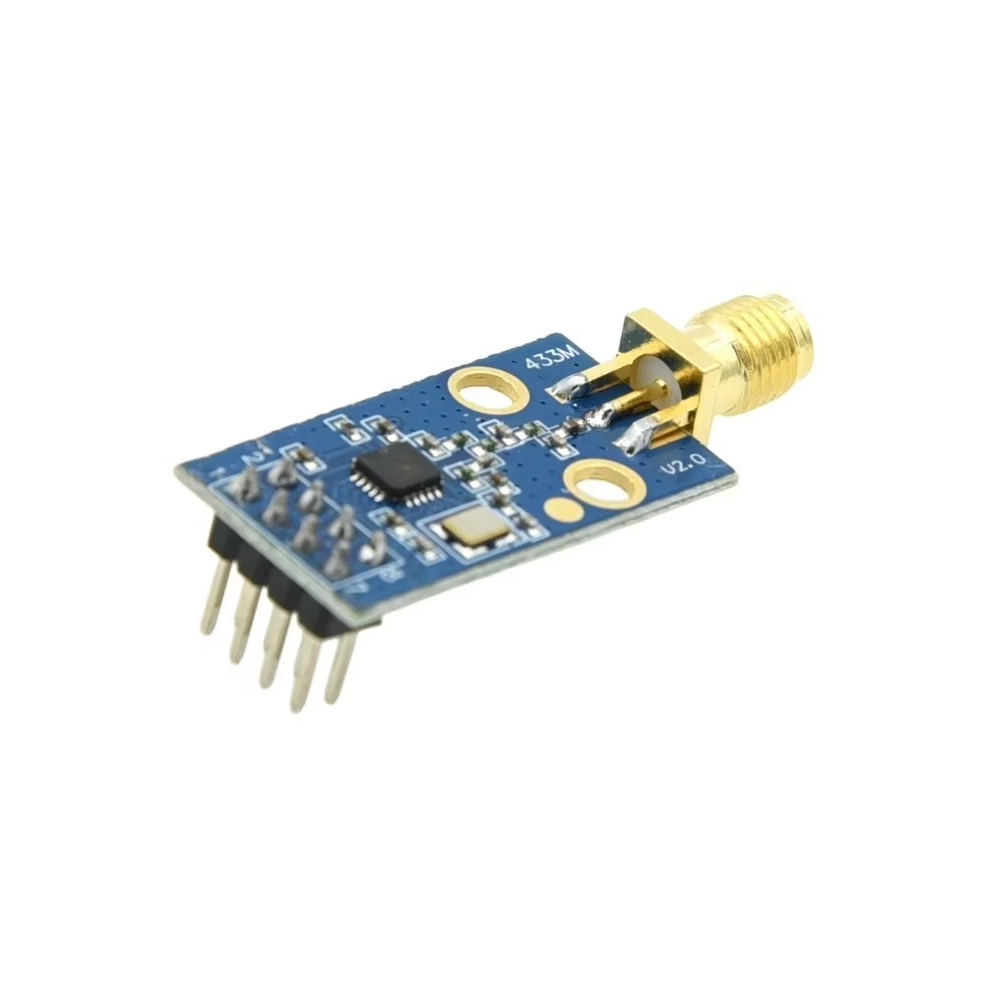
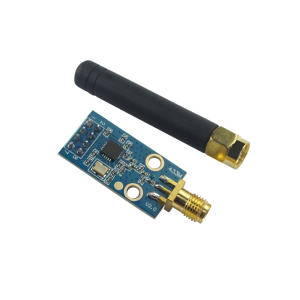
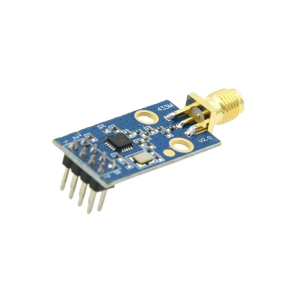
CC1101 Wireless Module SMA with Adhesive Rod Antenna 433M

SKU: FA2098-0-1
RF Chip

Texas Instruments CC1101

Frequency Band

433MHz (387–464 MHz)

Modulation

2-FSK, 4-FSK, GFSK, MSK, OOK, ASK

Data Rate

1.2 – 500 kbps (programmable)

Output Power

Up to +10 dBm (programmable)

Receiver Sensitivity

-116 dBm @ 1.2 kbps

Operating Voltage

1.8V – 3.6V

Antenna Connector

SMA female + adhesive rod antenna

The CC1101 Wireless Module with SMA Connector and Adhesive Rod Antenna is a complete, ready-to-use RF transceiver solution built around the Texas Instruments CC1101 chip, designed for wireless data transmission in the 433MHz ISM band. Unlike standard modules with PCB antennas, this version features an SMA female connector and includes a high-gain adhesive rod antenna, providing significantly improved range and installation flexibility.

At the heart of the module is the CC1101, a highly integrated, low-power Sub-1GHz RF transceiver. The chip operates in the 300–348 MHz, 387–464 MHz, and 779–928 MHz frequency bands, with this module configured for 433MHz operation. It supports multiple modulation formats including 2-FSK, 4-FSK, GFSK, MSK, OOK, and ASK, giving developers flexibility to balance data rate, range, and power consumption.

The SMA connector allows you to attach the included adhesive rod antenna or any other 433MHz antenna with an SMA male connector. The adhesive rod antenna features a high-gain design and a self-adhesive mounting base, allowing you to position it on walls, equipment enclosures, or metal surfaces for optimal signal reception. This is particularly valuable in industrial environments, metal enclosures, or installations where the module must be placed inside a shielded enclosure.

The module delivers programmable data rates from 1.2 to 500 kbps, with programmable output power up to +10 dBm. The receiver sensitivity reaches -116 dBm at 1.2 kbps, enabling reliable long-range communication. The module also features built-in hardware CRC, forward error correction (FEC) , and data whitening for robust data integrity.

Power efficiency is a key strength. The CC1101 has low current consumption in both transmit and receive modes, and supports multiple low-power modes including sleep and wake-on-radio. This makes it well-suited for battery-powered sensor nodes and energy-harvesting applications.

The module communicates with microcontrollers via a 4-wire SPI interface (SI, SO, SCLK, CSn), making it compatible with Arduino, ESP32, STM32, and other popular platforms. Additional pins include GDO0, GDO1, and GDO2 for interrupt and status signaling.

The module operates from 1.8V to 3.6V and is widely used in wireless sensor networks, home automation, industrial monitoring, remote keyless entry, and automatic meter reading systems.

Whether you are building a wireless sensor node, a remote control system, or an IoT gateway, the CC1101 with SMA antenna provides a proven, reliable foundation for Sub-1GHz communication. It is suitable for individual makers, students, and businesses purchasing in bulk for product development or educational programs.


Features

  • Texas Instruments CC1101 chip — Highly integrated, low-power Sub-1GHz RF transceiver

  • 433MHz ISM band — Operates in the 387–464 MHz frequency range

  • SMA female connector — Attach the included adhesive rod antenna or any 433MHz SMA antenna

  • Adhesive rod antenna included — High-gain antenna with self-adhesive mounting base for flexible positioning

  • Multiple modulation formats — 2-FSK, 4-FSK, GFSK, MSK, OOK, and ASK

  • Programmable data rate — 1.2 to 500 kbps

  • Programmable output power — Up to +10 dBm

  • High sensitivity — -116 dBm at 1.2 kbps

  • Low power consumption — Multiple low-power modes for battery-powered applications

  • 4-wire SPI interface — Easy connection to Arduino, ESP32, STM32, and other MCUs


Technical Specifications

# Parameter Specification
1 RF Chip Texas Instruments CC1101
2 Frequency Band 433MHz (387–464 MHz)
3 Modulation 2-FSK, 4-FSK, GFSK, MSK, OOK, ASK
4 Data Rate 1.2 – 500 kbps (programmable)
5 Output Power Up to +10 dBm (programmable)
6 Receiver Sensitivity -116 dBm @ 1.2 kbps
7 Operating Voltage 1.8V – 3.6V
8 Antenna Connector SMA female + adhesive rod antenna

Usage

Getting Started

  1. Power the module — Supply 3.3V to the VCC pin and GND to ground. Important: The CC1101 is not 5V tolerant. Use a 3.3V regulator and level shifters if interfacing with 5V devices.

  2. Connect the antenna — Attach the included adhesive rod antenna to the SMA connector. Position the antenna on a wall, equipment enclosure, or metal surface for optimal signal reception.

  3. Connect the SPI interface — Wire the module’s SPI pins (SI, SO, SCLK, CSn) to your microcontroller’s SPI bus. Connect GDO0 to a digital pin for interrupt handling.

  4. Install the library — Install the ELECHOUSE_CC1101 library or the RadioLib library through the Arduino Library Manager.

  5. Configure the module — Set the frequency, modulation, data rate, and output power in your sketch. Example: ELECHOUSE_cc1101.setMHZ(433.0), ELECHOUSE_cc1101.SetTx().

  6. Test communication — Upload a basic transmit/receive sketch to verify operation. Ensure both modules use identical frequency, modulation, data rate, and sync word settings.

Antenna Placement Tips

  • Adhesive mounting — Use the self-adhesive base to mount the antenna on walls or enclosures.

  • Vertical orientation — Orient the antenna vertically for best omnidirectional performance.

  • Keep away from metal — While the adhesive base allows mounting on metal surfaces, avoid placing the antenna directly against large metal objects.

  • Use the full cable — Avoid coiling the antenna cable tightly, as this can affect performance.

Typical Applications

  • Wireless sensor networks — Remote monitoring and data collection

  • Home automation — Wireless control of lighting, appliances, and HVAC

  • Industrial monitoring — Equipment status and process data transmission in metal enclosures

  • Remote keyless entry — Automotive and access control systems

  • Automatic meter reading — Water, gas, and electricity meter data collection

  • IoT gateways — Sub-1GHz communication for connected devices

Notes for Business Buyers

  • Complete solution — Module, SMA connector, and adhesive antenna included, reducing sourcing complexity.

  • Improved range — External high-gain antenna provides better performance than PCB antennas, especially in enclosed or metal environments.

  • Proven technology — CC1101 is a widely adopted RF transceiver with extensive documentation and community support.

  • Suitable for bulk purchasing — Ideal for IoT product development, industrial monitoring, and sensor network deployments.

Q: What is the CC1101 SMA module used for?

It is a Sub-1GHz RF transceiver with an external SMA antenna for wireless data transmission in IoT projects, sensor networks, remote control systems, and industrial monitoring applications.

Q: What is included with this module?

The package includes the CC1101 module with SMA female connector and an adhesive rod antenna with a self-adhesive mounting base.

Q: What frequency does this module operate on?

This module is configured for the 433MHz ISM band (387–464 MHz).

Q: What modulation formats are supported?

The module supports 2-FSK, 4-FSK, GFSK, MSK, OOK, and ASK modulation formats.

Q: What is the maximum data rate?

The module supports programmable data rates from 1.2 to 500 kbps.

Q: What is the output power and receiver sensitivity?

Output power is programmable up to +10 dBm. Receiver sensitivity is -116 dBm at 1.2 kbps.

Q: Is the CC1101 5V tolerant?

No. The module operates from 1.8V to 3.6V and is not 5V tolerant. Use a 3.3V regulator and level shifters if interfacing with 5V devices.

Q: Can I use a different antenna?

Yes. The SMA female connector allows you to use any 433MHz antenna with an SMA male connector.

Q: What development environments are supported?

The module is compatible with Arduino (using ELECHOUSE_CC1101 or RadioLib), STM32, and other platforms with SPI support.

Q: Can I purchase in bulk for a product development project?

Yes. The CC1101 SMA module is suitable for both individual users and business purchasing, including IoT product development, industrial monitoring, and sensor network deployments.