12V Normally Open Shock Sensor Relay Module for Industrial Equipment Protection

SKU: FA2086-17
Operating Voltage

12V DC

Relay Output

Normally Open (NO)

Sensor Type

Shock / Vibration sensor

Sensitivity Adjustment

Onboard potentiometer

Delay Circuit

Built-in, prevents false triggering

Indication

LED for power and relay status

Terminal Type

Screw terminals

Mounting

PCB with mounting holes

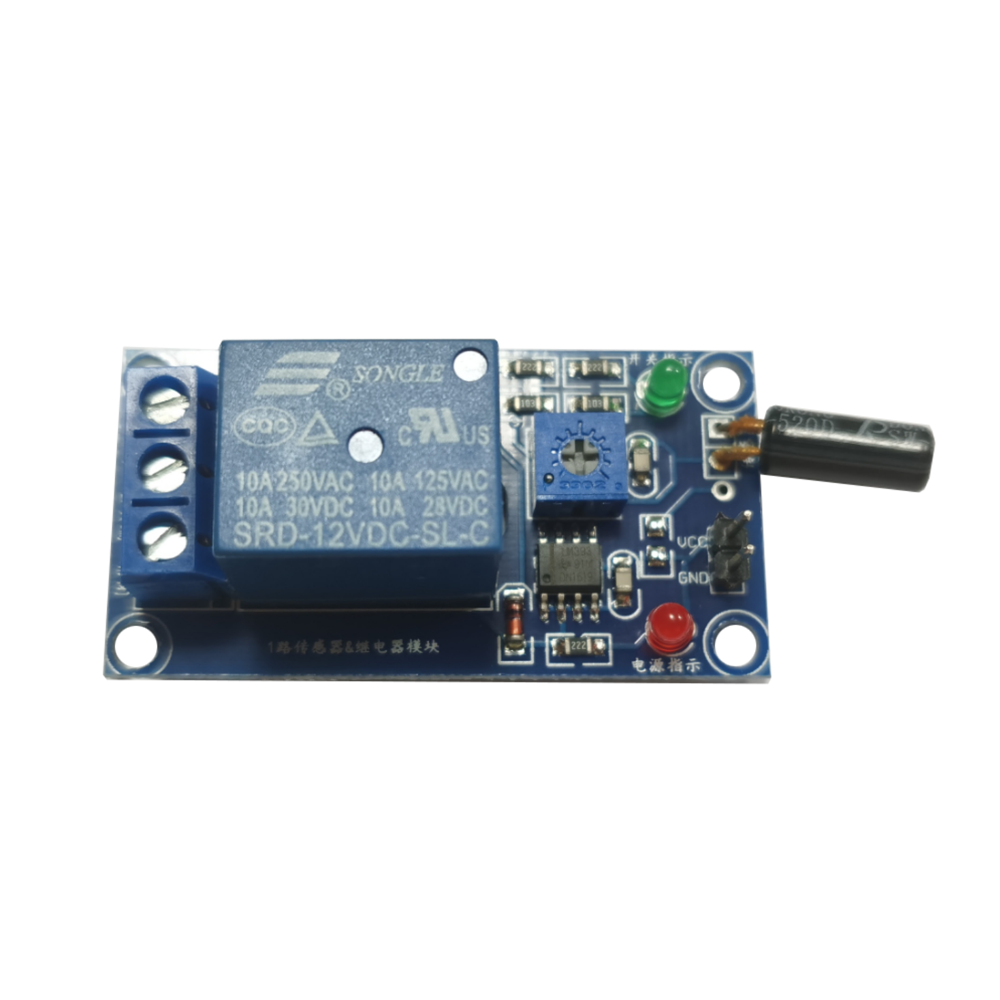
The 12V Normally Open Shock Sensor Relay Module is a compact, reliable vibration detection device designed to protect industrial equipment, machinery, and valuable assets from impact, tampering, and abnormal movement. When the onboard shock sensor detects vibration or physical disturbance above a set threshold, the relay activates, triggering an alarm, shutting down equipment, or sending a signal to a monitoring system.

The module operates from a 12V DC power supply, making it compatible with common industrial control voltages, security systems, and automotive applications. The normally open (NO) relay output provides a dry contact closure when vibration is detected, allowing direct integration with alarm panels, PLCs, buzzers, lights, and other control devices.

The onboard shock/vibration sensor uses a precision mechanism to detect physical disturbances. When the sensor is triggered, the relay energizes for a configurable period, then automatically resets when vibration ceases. The module includes a built-in delay circuit that prevents false triggering from brief, harmless vibrations and ensures the relay remains active long enough to trigger downstream equipment.

The module features onboard sensitivity adjustment, allowing you to fine-tune the detection threshold for different applications. A potentiometer controls the sensitivity, from highly sensitive (detects even slight vibrations) to less sensitive (requires significant impact). This adjustability makes the module suitable for a wide range of environments, from sensitive laboratory equipment to heavy industrial machinery.

LED indicators provide visual feedback for both power status and relay activation, making it easy to verify operation and troubleshoot connections. The module uses screw terminals for secure wiring of power, sensor input, and relay contacts, and the compact PCB design includes mounting holes for easy installation on equipment enclosures, walls, or control panels.

Whether you are protecting expensive machinery from tampering, monitoring equipment for abnormal vibration, or building a vibration-triggered alarm system, the 12V Shock Sensor Relay Module provides a practical, cost-effective solution. It is suitable for individual engineers, facility managers, and businesses purchasing in bulk for industrial protection applications.


Features

  • 12V DC operation — Compatible with common industrial and security system voltages

  • Normally open relay output — Dry contact closure for alarm panels, PLCs, and control devices

  • Onboard shock/vibration sensor — Detects physical disturbances and impact

  • Adjustable sensitivity — Potentiometer controls detection threshold for different applications

  • Built-in delay circuit — Prevents false triggering and ensures reliable relay activation

  • LED indicators — Visual feedback for power status and relay state

  • Screw terminals — Secure wiring for power, sensor, and relay connections

  • Compact PCB with mounting holes — Easy installation on equipment, walls, and panels


Technical Specifications

# Parameter Specification
1 Operating Voltage 12V DC
2 Relay Output Normally Open (NO)
3 Sensor Type Shock / Vibration sensor
4 Sensitivity Adjustment Onboard potentiometer
5 Delay Circuit Built-in, prevents false triggering
6 Indication LED for power and relay status
7 Terminal Type Screw terminals
8 Mounting PCB with mounting holes

Usage

Getting Started

  1. Mount the module — Secure the module to equipment, a wall, or a control panel using the mounting holes. Ensure the sensor is positioned to detect the vibrations you want to monitor.

  2. Connect power — Supply 12V DC to the power input terminals. Observe correct polarity. The power LED should light up.

  3. Adjust sensitivity — Turn the potentiometer to set the detection threshold. Start with mid-range and adjust based on testing.

  4. Connect the relay output — Wire the normally open relay contacts to your alarm panel, PLC, buzzer, or other control device.

  5. Test the system — Gently tap or vibrate the surface the module is mounted on. The relay should activate and the status LED should light up. Adjust sensitivity as needed.

Sensitivity Adjustment Tips

Sensitivity Level Potentiometer Position Application
High Turn clockwise Sensitive equipment, tamper detection
Medium Mid-range General equipment monitoring
Low Turn counter-clockwise Heavy machinery, high-vibration environments

Typical Applications

  • Industrial equipment protection — Detect tampering, impact, or abnormal vibration

  • Security systems — Vibration-triggered alarms for doors, windows, and safes

  • Machinery monitoring — Detect abnormal vibration indicating wear or failure

  • Automotive anti-theft — Detect impact or movement of parked vehicles

  • Asset protection — Monitor valuable equipment for unauthorized movement

  • Laboratory equipment — Protect sensitive instruments from disturbance

Notes for Business Buyers

  • Adjustable sensitivity — One module adapts to different equipment and environments, reducing inventory SKUs.

  • Reliable detection — Built-in delay circuit prevents false alarms from brief vibrations.

  • Easy integration — Normally open relay output interfaces directly with existing alarm and control systems.

  • Suitable for bulk purchasing — Ideal for industrial facilities, security installers, and equipment manufacturers.

Q: What is the 12V Shock Sensor Relay Module used for?

It is a vibration detection device for protecting industrial equipment, machinery, and assets. When vibration is detected, the relay activates to trigger alarms or control systems.

Q: What is the difference between normally open (NO) and normally closed (NC) relays?

Normally open (NO) contacts are open by default and close when the relay activates. Normally closed (NC) contacts are closed by default and open when the relay activates. This module uses NO output.

Q: How do I adjust the sensitivity?

Use the onboard potentiometer. Turn it clockwise to increase sensitivity (detects smaller vibrations) or counter-clockwise to decrease sensitivity (requires stronger impact).

Q: What is the built-in delay circuit for?

The delay circuit prevents false triggering from brief, harmless vibrations and ensures the relay remains active long enough to trigger downstream equipment.

Q: What can I connect to the relay output?

The normally open relay contacts can connect to alarm panels, PLCs, buzzers, lights, sirens, and other control devices that accept a dry contact closure.

Q: What power supply does this module require?

It operates from 12V DC. Ensure your power supply provides stable 12V and sufficient current for the module and any connected devices.

Q: Does the module work with 24V systems?

This module is designed for 12V DC operation. For 24V systems, a voltage regulator or a different module variant would be required.

Q: How do I test the module?

After powering the module, gently tap or vibrate the surface it is mounted on. The relay should activate and the status LED should light up.

Q: What is the maximum load the relay can switch?

The relay rating depends on the specific variant. Check the product label for the exact rating. For inductive loads like motors, keep load current below 60–70% of the rated value.

Q: Can I purchase in bulk for an industrial project?

Yes. This module is suitable for both individual users and business purchasing, including industrial facilities, security installers, and equipment manufacturers.