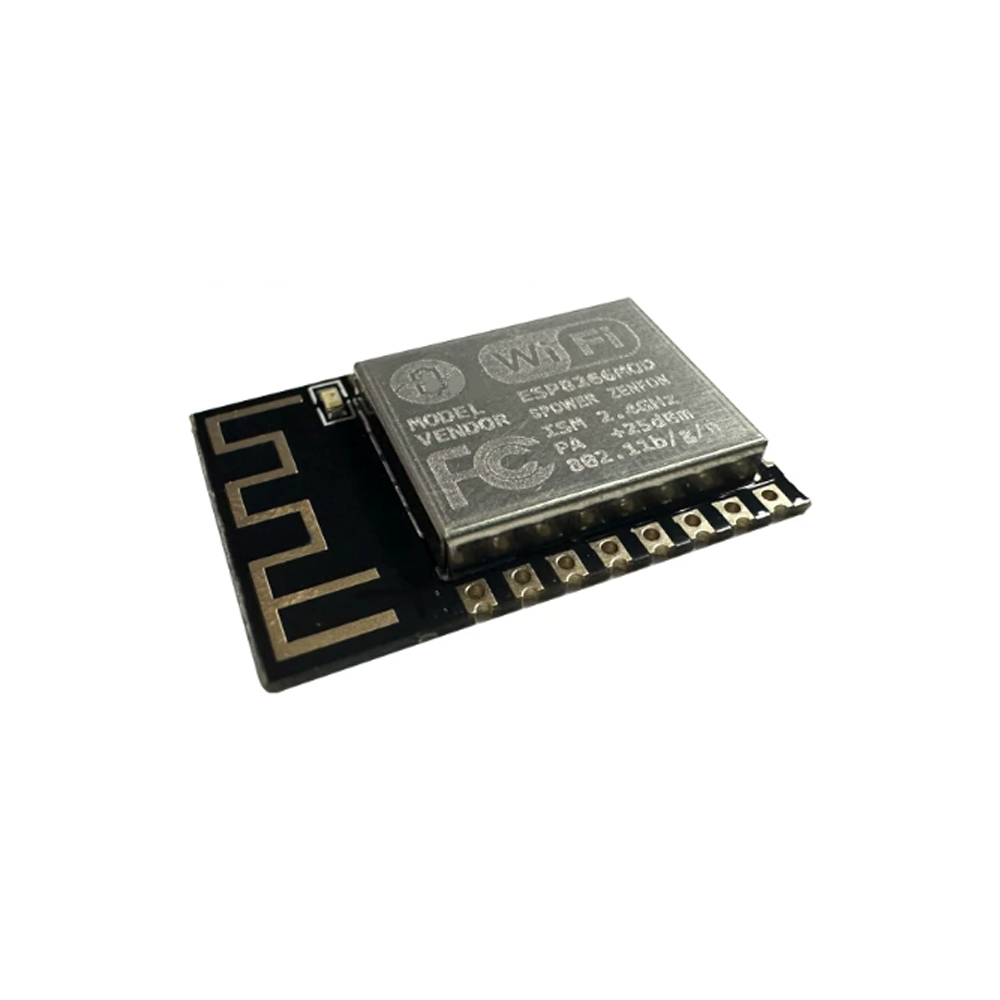
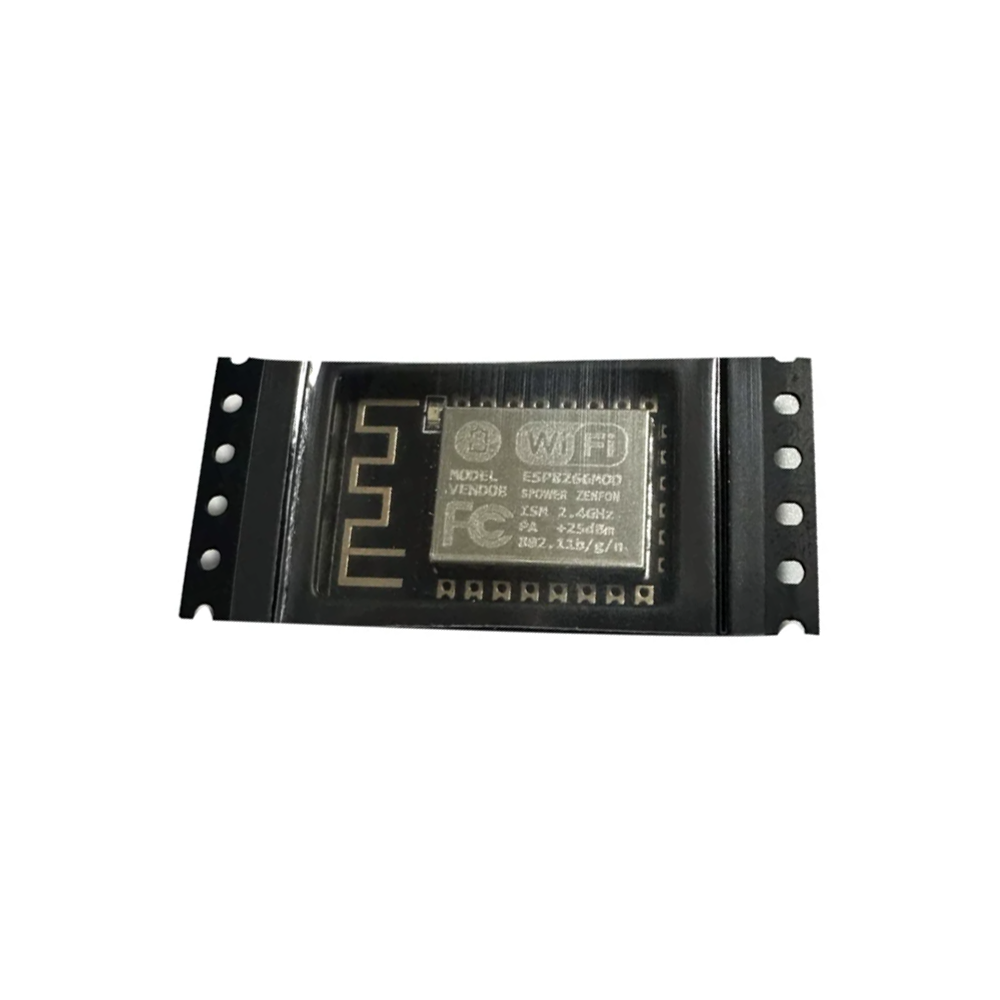
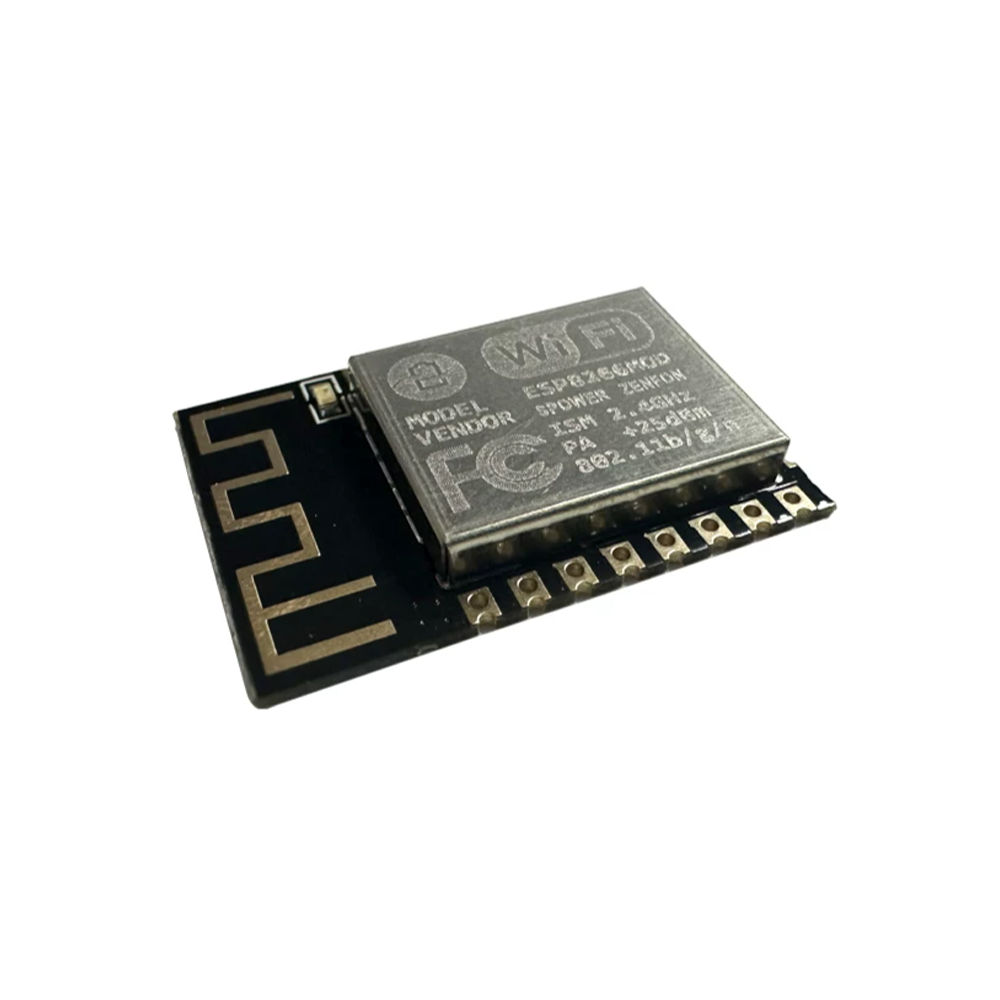
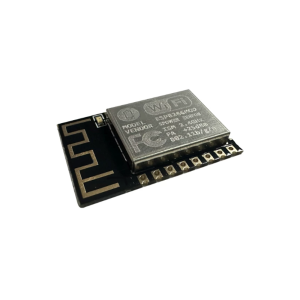
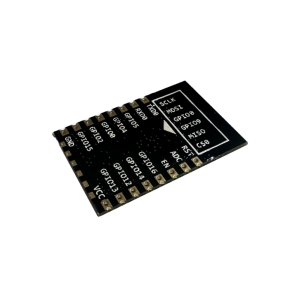
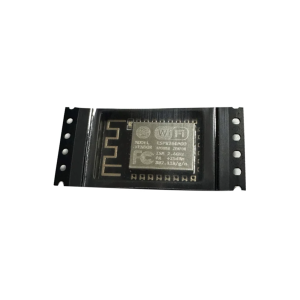
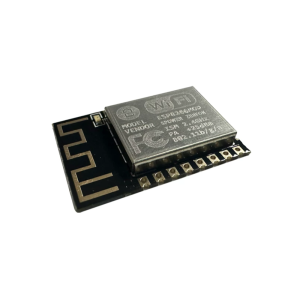
The ESP-12 WiFi Module is a compact, low-power wireless transceiver built around the Espressif ESP8266EX chipset, designed to add WiFi connectivity to microcontroller projects, IoT devices, and embedded systems. As one of the most widely adopted WiFi modules in the maker and professional communities, the ESP-12 offers a proven combination of performance, affordability, and extensive ecosystem support.
At its core is the ESP8266EX, a highly integrated 32-bit Tensilica L106 RISC processor running at up to 80 MHz (overclockable to 160 MHz). The chip integrates 4 MB of SPI flash, 80 KB DRAM, and 32 KB instruction RAM, providing sufficient resources for WiFi protocol stacks and user applications. The module supports IEEE 802.11 b/g/n wireless standards with WiFi Direct (P2P) , soft-AP , and station mode capabilities.
The ESP-12 features a complete and self-contained WiFi networking solution, allowing it to either host an application or offload all WiFi networking functions from another application processor. When the ESP-12 is used as a WiFi adapter, it can be connected to any microcontroller via UART (TX/RX) , and the onboard AT command firmware enables simple configuration and data transmission.
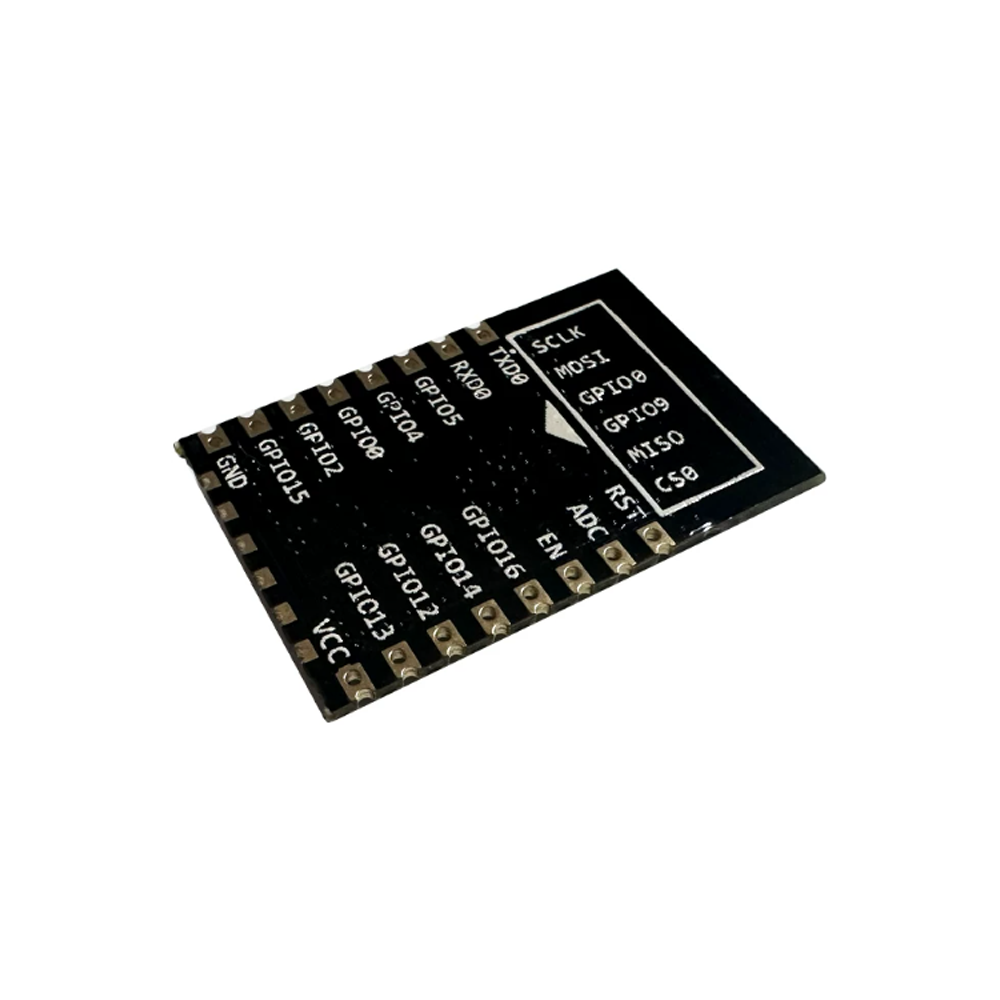
With 20 available GPIO pins, the ESP-12 exposes a rich set of interfaces including UART, SPI, I2C, PWM, and ADC . The module also supports over-the-air (OTA) firmware upgrades and serial bootloading , making it easy to update deployed devices without physical access.
The module operates from 3.0V to 3.6V (3.3V typical) and consumes an average of 80mA during normal operation, dropping to less than 10µA in deep sleep mode. This makes it suitable for battery-powered IoT applications. The compact 16 × 24 × 3 mm form factor and castellated edge pads allow for easy soldering directly onto PCBs or use with standard 2.54mm pin headers.
The ESP-12 has achieved FCC, CE, and TELEC certifications , ensuring compliance for international markets. It is supported by Arduino IDE, ESP-IDF, and MicroPython , with extensive community libraries and examples available.
Whether you are building a smart home device, a wireless sensor node, or a cloud-connected IoT product, the ESP-12 provides a practical, cost-effective foundation for WiFi connectivity. It is suitable for individual makers, students, and businesses purchasing in bulk for product development or educational programs.
Features
-
ESP8266EX chipset — 32-bit Tensilica L106 RISC processor at up to 80 MHz (160 MHz overclockable)
-
IEEE 802.11 b/g/n WiFi — Supports station mode, soft-AP, and WiFi Direct (P2P)
-
4 MB SPI Flash — Ample storage for firmware and data
-
Complete WiFi networking solution — Can host applications or offload WiFi functions from another MCU
-
AT command firmware — Simple UART-based configuration and data transmission
-
20 GPIO pins — Exposed for UART, SPI, I2C, PWM, and ADC
-
OTA firmware upgrades — Update deployed devices without physical access
-
Compact form factor — 16 × 24 × 3 mm with castellated edge pads for direct PCB soldering
-
Ultra-low power consumption — Less than 10µA in deep sleep mode
-
Wide development support — Arduino IDE, ESP-IDF, and MicroPython compatible
Technical Specifications
| # | Parameter | Specification |
|---|---|---|
| 1 | Chipset | Espressif ESP8266EX |
| 2 | Processor | 32-bit Tensilica L106 RISC @ 80 MHz (160 MHz max) |
| 3 | Flash Memory | 4 MB SPI Flash |
| 4 | Wireless Standard | IEEE 802.11 b/g/n |
| 5 | Operating Voltage | 3.0V – 3.6V (3.3V typical) |
| 6 | Operating Current | 80mA average; <10µA deep sleep |
| 7 | GPIO Count | 20 pins |
| 8 | Dimensions | 16 × 24 × 3 mm |