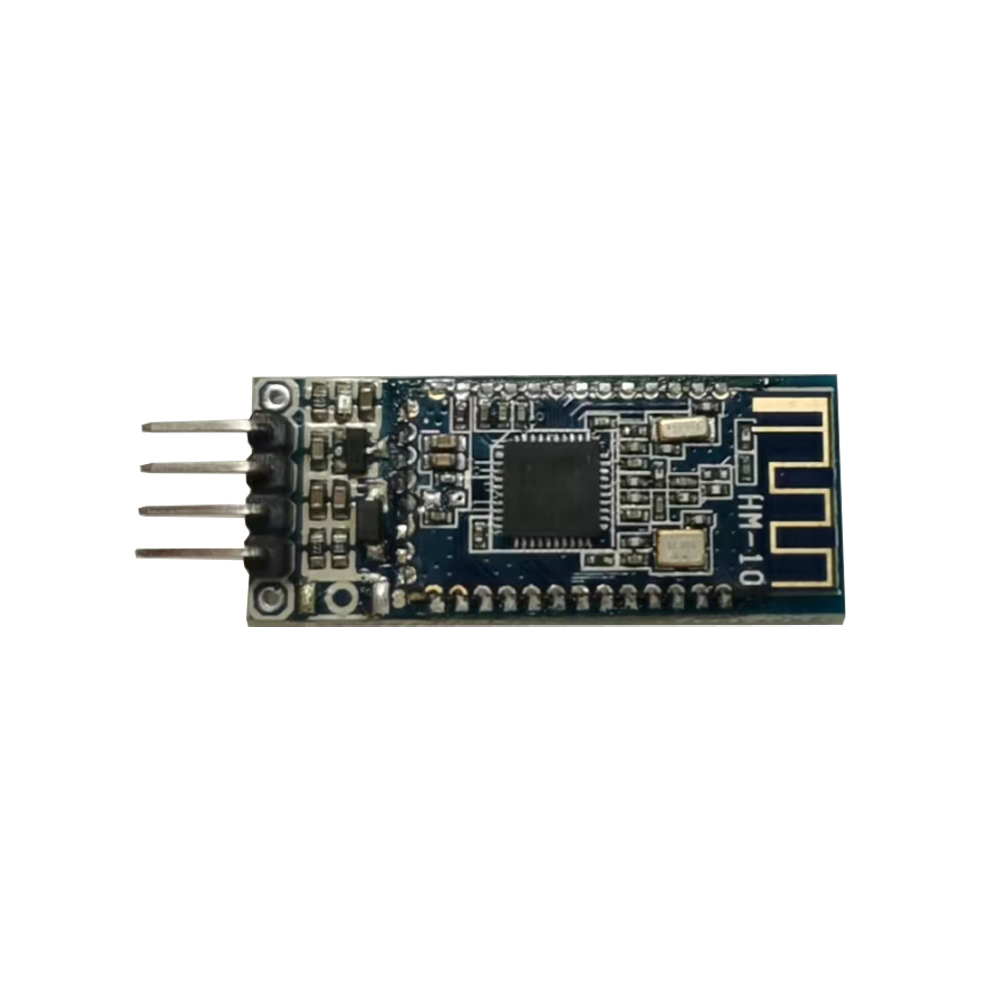
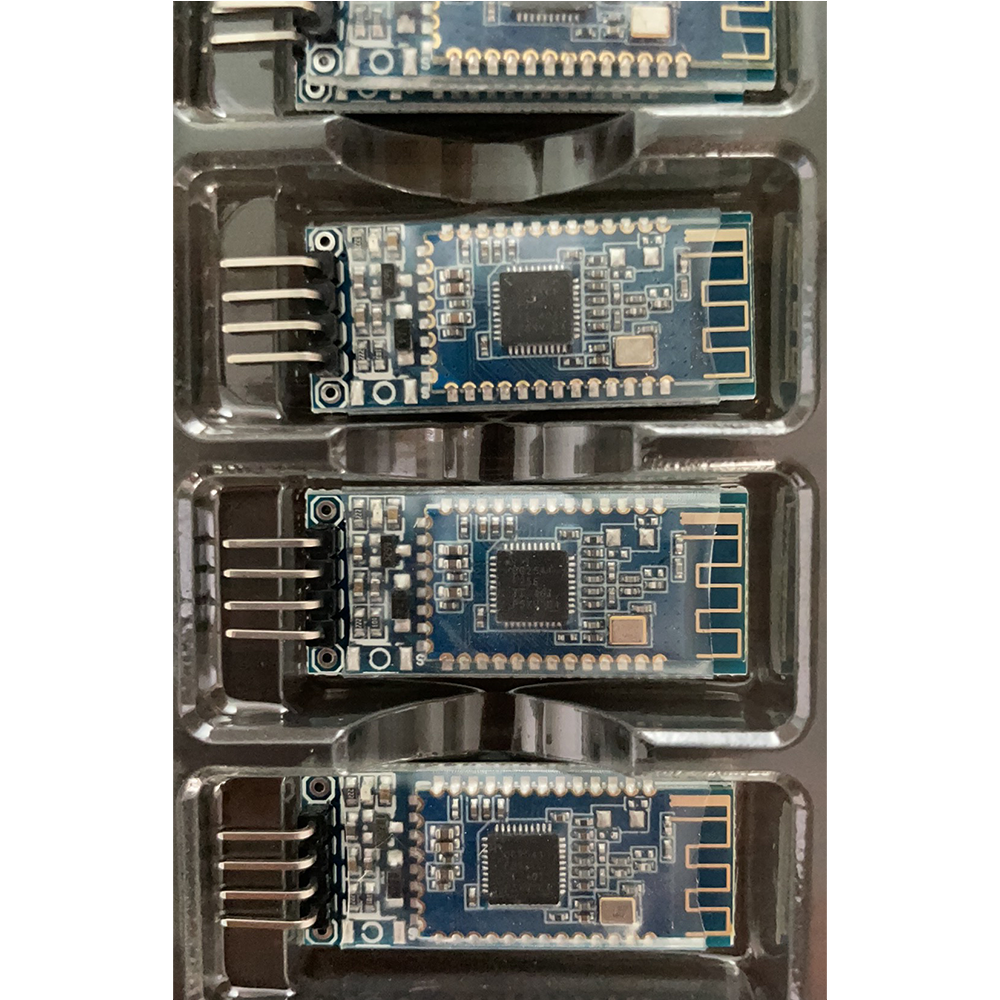
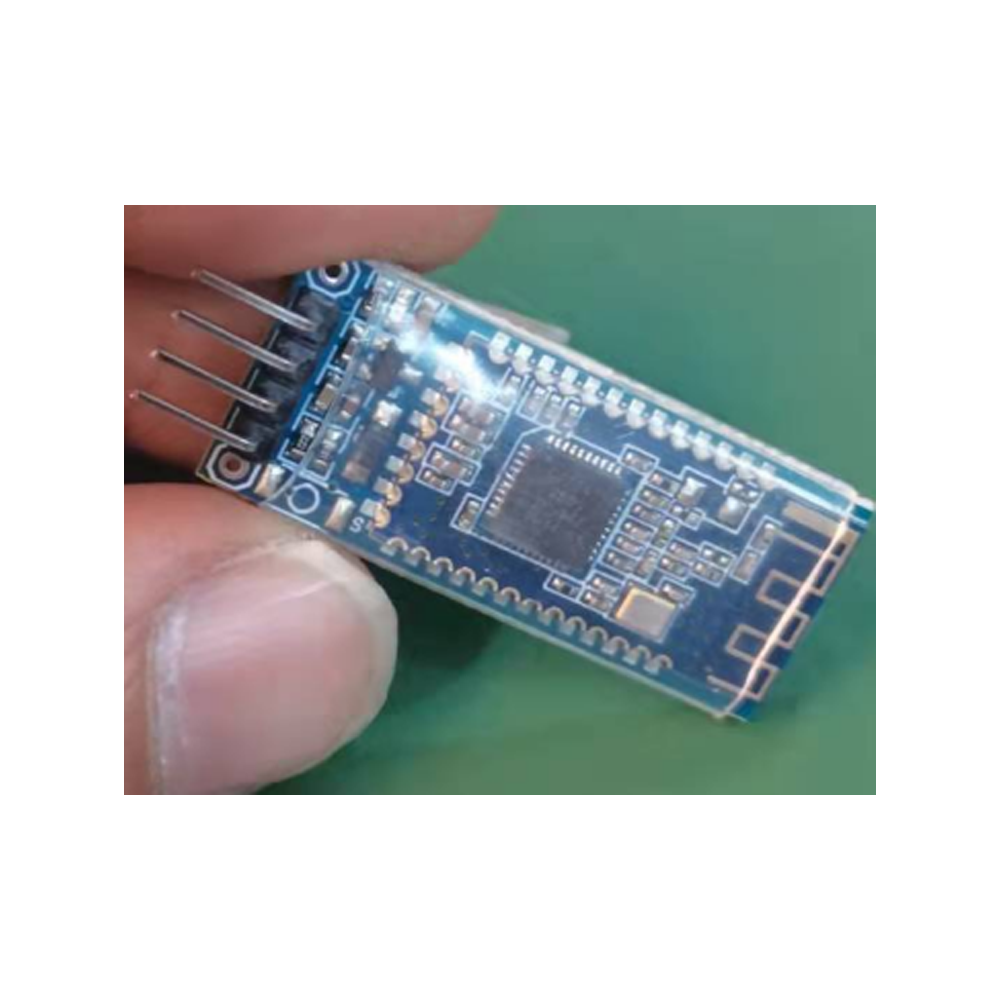
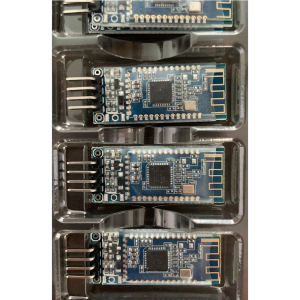
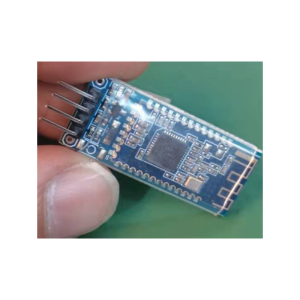
HM-10 Bluetooth 4.0 BLE Module (V3) – HC-05 Pin-Compatible, 4-Pin UART Interface

SKU: FA2043-0
Bluetooth Version

Bluetooth 4.0 BLE

Chipset

TI CC2540/CC2541

Operating Frequency

2.4GHz ISM band

Input Voltage

3.6V – 6V DC (onboard regulator)

Logic Level

3.3V UART

Default Baud Rate

9600 (data mode and AT mode, V3 firmware)

Effective Range

Approx. 10 meters in open area

Interface

4-pin UART (VCC, GND, TX, RX)

The HM-10 Bluetooth 4.0 BLE Module (V3) is a compact, low-power wireless serial transceiver built around the Texas Instruments CC2540/CC2541 chip, designed to add Bluetooth Low Energy (BLE) connectivity to microcontroller projects. Its HC-05 pin-compatible 4-pin UART interface makes it a practical drop-in replacement for classic Bluetooth modules while offering the advantages of BLE — including compatibility with iOS devices, lower power consumption, and faster connection establishment.

The HM-10 operates as a transparent serial bridge, meaning data sent from your microcontroller over UART is transmitted wirelessly to a connected device, and data received wirelessly is output on the module‘s TX pin. This makes it ideal for replacing physical serial cables in short-range applications, remote control projects, and wireless sensor networks.

One of the HM-10’s most significant advantages over the HC-05/HC-06 is iOS compatibility. Because it uses Bluetooth 4.0 Low Energy (BLE) rather than Classic Bluetooth SPP, the HM-10 can communicate with iPhones and iPads through BLE-compatible apps. Android devices can also connect using BLE terminal apps.

The module supports master and slave modes, allowing it to either initiate connections to other BLE devices or wait for incoming connections. This flexibility enables peer-to-peer communication between two HM-10 modules, as well as connection to smartphones, tablets, and computers.

Configuration is handled through AT commands sent over the UART interface. The default baud rate is 9600 in data mode, and 9600 in AT command mode for most HM-10 V3 firmware versions. Common AT commands allow you to query and set the device name, baud rate, PIN code, and operating mode.

The module operates from 3.3V logic and accepts a supply voltage of 3.6V to 6V thanks to its onboard regulator, making it compatible with both 3.3V and 5V microcontrollers. The compact form factor and low power consumption make it suitable for battery-powered and wearable applications.

Whether you are building an iOS-compatible wireless controller, a BLE sensor node, or a low-power data logger, the HM-10 provides a proven, cost-effective foundation for Bluetooth Low Energy communication. It is suitable for individual makers, students, and businesses purchasing in bulk for product development or educational programs.


Features

  • Bluetooth 4.0 BLE — Low Energy protocol with iOS and Android compatibility

  • HC-05 pin-compatible — 4-pin UART interface allows drop-in replacement for classic Bluetooth modules

  • Master/Slave capable — Configure as central or peripheral device via AT commands

  • Transparent serial bridge — Wireless replacement for physical serial cables

  • iOS compatible — Works with iPhone and iPad through BLE terminal apps

  • AT command configuration — Query and set device name, baud rate, PIN, and mode

  • Wide voltage range — 3.6V to 6V supply with onboard regulator

  • Compact form factor — Small footprint suitable for embedded and wearable projects

  • Low power consumption — BLE technology extends battery life in portable applications

  • Status LED — Visual indication of connection and operating state


Technical Specifications

# Parameter Specification
1 Bluetooth Version Bluetooth 4.0 BLE
2 Chipset TI CC2540/CC2541
3 Operating Frequency 2.4GHz ISM band
4 Input Voltage 3.6V – 6V DC (onboard regulator)
5 Logic Level 3.3V UART
6 Default Baud Rate 9600 (data mode and AT mode, V3 firmware)
7 Effective Range Approx. 10 meters in open area
8 Interface 4-pin UART (VCC, GND, TX, RX)

Usage

Getting Started (Data Mode)

  1. Connect power and serial — Connect VCC to 3.6–6V, GND to ground. Cross-connect the serial lines: module TX to your microcontroller’s RX, module RX to your microcontroller‘s TX.

  2. Power the module — The status LED should blink, indicating the module is advertising and ready for connection.

  3. Pair with a phone or computer — Search for BLE devices. The module appears as “HMSoft” or a configured name (default). No pairing code is typically required for BLE.

  4. Open a BLE terminal app — Use a BLE terminal app (Android) or a BLE serial app (iOS) to connect and exchange data.

  5. Send and receive data — Data sent from the app is transmitted wirelessly to the module and output on its TX pin. Data received on RX is transmitted back to the app.

Entering AT Command Mode

  1. Connect the module via UART to a USB-to-TTL adapter.

  2. Open a serial terminal at 9600 baud, 8N1 (V3 firmware default).

  3. Send AT commands — Commands must end with \r\n (carriage return + line feed).

  4. Note: The module must not be connected to another BLE device when sending AT commands.

Essential AT Commands

Command Description Default
AT Test communication Responds OK
AT+NAME? Query device name HMSoft
AT+NAME=NEWNAME Set device name
AT+BAUD? Query baud rate 9600
AT+BAUD4 Set baud rate (4=9600)
AT+PIN? Query PIN code 000000
AT+PIN=123456 Set PIN code
AT+ROLE? Query role 0 (Slave)
AT+ROLE1 Set Master mode
AT+RESET Restart module

Typical Applications

  • iOS-compatible wireless control — Control projects from iPhone or iPad

  • BLE sensor nodes — Low-power wireless data collection

  • Wearable devices — Compact BLE connectivity for portable electronics

  • Remote control projects — Wireless command and control for robots and systems

  • Data logging — Transmit sensor data wirelessly to a phone or computer

  • Two-module peer-to-peer links — Configure one as master and one as slave for direct communication

Notes for Business Buyers

  • iOS and Android compatible — Unlike HC-05, the HM-10 works with both major mobile platforms.

  • Low power consumption — BLE technology extends battery life in portable applications.

  • HC-05 pin-compatible — Simplifies migration from classic Bluetooth modules.

  • Suitable for bulk purchasing — Ideal for educational kits, prototyping, and BLE product development.

Q: Is the HM-10 compatible with iPhone and iPad?

Yes. The HM-10 uses Bluetooth 4.0 BLE, which is natively supported by iOS. You can communicate with it using BLE terminal apps available on the App Store.

Q: What is the difference between the HM-10 and HC-05?

The HC-05 uses Classic Bluetooth 2.0 with SPP, which is not compatible with iOS. The HM-10 uses Bluetooth 4.0 BLE, which works with both iOS and Android. The HM-10 is pin-compatible with the HC-05, making it a drop-in replacement.

Q: What is the default baud rate and device name?

Default baud rate is 9600 (V3 firmware), and the default device name is HMSoft.

Q: How do I enter AT command mode?

Connect the module via UART to a USB-to-TTL adapter, open a serial terminal at 9600 baud, 8N1, and send AT commands ending with \r\n. The module must not be connected to another BLE device.

Q: Why does the module not respond to AT commands?

Common causes include: wrong baud rate (V3 firmware uses 9600 for AT mode), missing \r\n at the end of commands, or the module being connected to another BLE device.

Q: Can I connect two HM-10 modules to each other?

Yes. Configure one as Master (AT+ROLE1) and the other as Slave (AT+ROLE0). They will auto-connect after power-up.

Q: Can I use this module with a 5V microcontroller?

Yes. The onboard regulator accepts 3.6V to 6V, making it compatible with 5V systems. The UART logic level is 3.3V, which is safe for 5V MCU inputs.

Q: What is the effective range of the HM-10?

The effective range is approximately 10 meters in open areas. Range may be reduced by walls, metal objects, and interference.

Q: Does the HM-10 support Bluetooth Mesh?

No. The HM-10 is a point-to-point BLE module. For mesh networking, consider modules based on the ESP32 or nRF52 series.

Q: Can I purchase in bulk for a school or company?

Yes. This module is suitable for both individual users and business purchasing, including classroom kits, prototyping labs, and BLE product development.